


Who were President Atatürk's ministers?



GENERAL OVERVIEW OF THE MINISTERS
Those who served in the executive branch during the Atatürk era also constituted the most influential segment of the political elite.
There were also those who were only members of parliament. For example, Yunus Nadi and Ruşen Eşref. These were elites who did not hold government positions.
Some members of the government had been part of the Council of Ministers since the National Struggle, had gained the trust of Mustafa Kemal Atatürk, proven their loyalty, and solidified their positions.
While some of these individuals served in the government almost continuously, there were also some exceptional names: The most interesting example of these atypical ministers is Esat Sagay. Sagay was Atatürk's German teacher at the War Academy.
Some of the ministers were his very old friends. Two friends from the Manastır Military High School come to mind first: Kazım Özalp and Fethi Okyar.
Apart from these, there were also names he had known since he was a young staff officer, such as Dr. Tevfik Rüştü Aras. Among Atatürk's elite cadre were also those who crossed to Anatolia on the Bandırma Ferry and were in the Army Inspectorate headquarters. Dr. Refik Saydam is the most famous example of these.
YOUNG REVOLUTIONARIES
They joined the National War of Independence at a very young age. They were young members of the Society for the Defense of Rights. It would not be wrong to describe these individuals as fiery revolutionaries. They were among those who organized local resistance against the occupation. In addition to civil organization, they were also involved in the armed struggle.
For example, Mahmut Esat Bozkurt, Mustafa Necati, Dr. Reşit Galip, and Vasıf Çınar should be evaluated within this group. A common feature of them all is that they passed away at a young age. The ministries they were appointed to were the Ministry of Justice and the Ministry of National Education.
Mustafa Necati served as Minister of Justice and Minister of National Education. He was a lawyer. He was a member of the Grand National Assembly of Turkey (TBMM) from the first term onwards. He played an important role in the Law on Unification of Education and the Alphabet Reform. He was a member of parliament in the 1920, 1923, and 1927 assemblies. Mustafa Necati passed away suddenly in 1929.
Vasıf Çınar was a friend of Mustafa Necati. Together, they organized congresses. They published newspapers in favor of the national struggle. After the liberation, Vasıf Çınar became a member of parliament and a minister: Minister of National Education (Maarif Vekili). He served as an ambassador in Warsaw and Prague. He passed away shortly after being appointed as ambassador to Moscow. The Soviets brought Vasıf Çınar's body to Turkey with a grand ceremony.
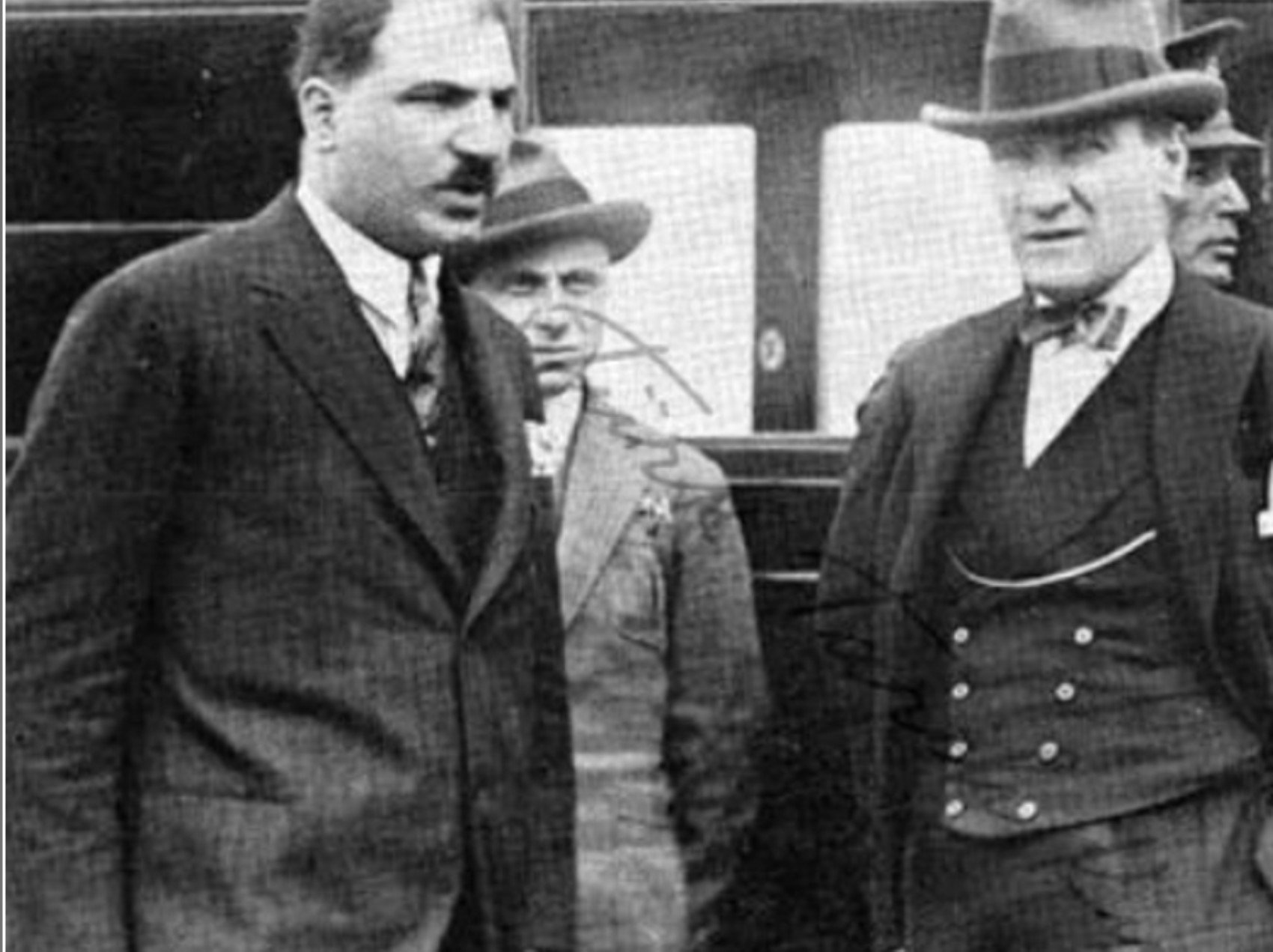
(Mustafa Necati)
Dr. Reşit Galip, as Minister of National Education, was the architect of the Darülfünun reform. He significantly purged the faculty and structure of Istanbul University and rebuilt it on the basis of republican ideology. Dr. Reşit Galip was a member of the TBMM starting from the Second Assembly. After carrying out the university reform in 1933, he passed away in 1934 at the age of 41.
We remember Mahmut Esat Bozkurt in our revolutionary history as the Minister of Justice who defended Turkey at the Permanent Court of International Justice in The Hague. Mahmut Esat Bey personally defended Turkey in the Lotus case.
Mahmut Esat Bey was a member of parliament from the first assembly onwards. He had served as Minister of Economy during the years of the national struggle: 1922-1923. He took part in Atatürk's team of young revolutionaries. He served as Minister of Justice between 1924 and 1930. He is one of the leading figures of the Turkish legal revolution. After Mahmut Esat Bozkurt, Yusuf Kemal Tengirşenk was appointed as Minister of Justice.
THOSE FROM THE TURKISH HEARTHS
It would also have been possible to open this heading as elites originating from the Turkish Hearths (Türk Ocakları). Among them, the most well-known are Ahmet Ferit Tek and Hamdullah Suphi Tanrıöver.
Both were later given diplomatic assignments and sent abroad. In my opinion, both had problematic relationships within the Kemalist cadres. We know that Hamdullah Suphi Bey had hesitations regarding the revolutions, even if he did not share these views in public.
Ahmet Ferit Tek's political life could be the subject of a long article. Let us suffice here by saying that he was one of the leading names in the Türk Yurdu and Turkish Hearth circles. He had been a Young Turk since the Abdulhamid era. He had a long experience in Europe; you could also call it a life of exile. As a Young Turk opposed to the tyranny of Sultan Hamid, he spent many years in Europe, North Africa, Egypt, and Russia. Ahmet Ferit Tek was the founder of the National Constitutional Party (Milli Meşrutiyet Fırkası) during the Armistice period.
Ahmet Ferit Tek was a member of the Grand National Assembly of Turkey in its first and second terms. After serving as Minister of the Interior for a time at the beginning of the War of Independence, he served as the representative of the Ankara government in Paris. After the liberation, he became Minister of the Interior again during the Second Assembly period.
During his ministry after the proclamation of the Republic, Tek's political activities during the constitutional and armistice periods became a subject of debate. He was severely criticized due to his hesitant stance at the beginning of the War of Independence and his views on certain commanders. He resigned from the ministry.
After 1925, he continuously served within the Ministry of Foreign Affairs. He worked in diplomatic cadres until his retirement. He did not attempt to return to politics. He served as ambassador in London, Paris, and Tokyo.
As for Hamdullah Suphi Bey, he was the son of Suphi Pasha. I do not believe he held very positive views about Atatürk. However, he somehow took his place among the elite of the Kemalist era due to being a very famous writer and a constitutionalist elite. He was a member of parliament continuously from the First Assembly until the Democrat Party era. In the 1930s, he was sent to Bucharest as an ambassador.
In the 1920s, there were relatively short terms for Ministers of National Education. As I have stated, his background as a distinguished son of a pasha from the Turkish Hearths (Türk Ocakları) and his recognition as a writer are the reasons he was part of the early Republican elite. In my opinion, Atatürk's attitude toward Hamdullah Suphi Bey was similar to his attitude toward Ahmet Ağaoğlu: assigning various tasks but maintaining a certain distance.
THOSE FROM THE COMMITTEE OF UNION AND PROGRESS
There are two people worth mentioning under this heading: Şükrü Kaya and Abdülhalik Renda. Both held administrative positions during the era of the Committee of Union and Progress (İttihat ve Terakki) government. They were not part of the political elite of the Unionists, but rather within the bureaucratic cadre.
After the Second Parliament, both rose within the Kemalist elite and became part of the ruling class.
Şükrü Kaya had been exiled to Malta due to allegations regarding the Armenian deportations. He served as a member of parliament starting from the Second Grand National Assembly of Turkey (TBMM). He is among those who served as Minister of the Interior and Secretary-General of the party. The position of CHP Secretary-General was quite significant, as it meant being responsible for the party organization. He served as Minister of Foreign Affairs in the government formed by Fethi Okyar in 1924.
He served as Minister of the Interior from 1927 to 1938. We can say this was the most critical political position in terms of the domestic policy of the single-party regime. I believe we can understand the profile of Şükrü Kaya and his place within the state by looking at his position next to President Atatürk and Prime Minister Bayar at the 1937 opening of the Singeç Bridge (Tunceli-Pertek).
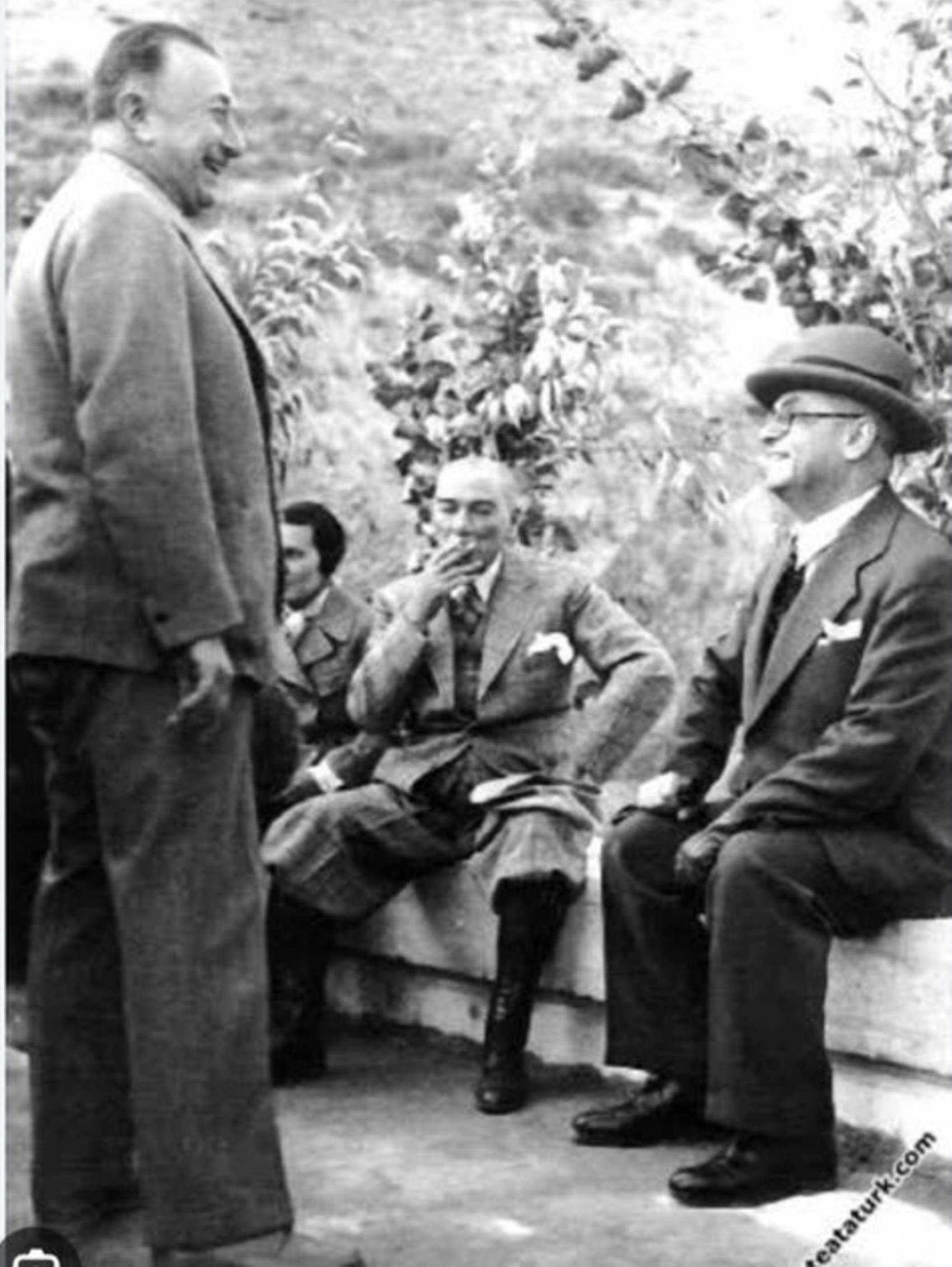
(Şükrü Kaya, Atatürk, Bayar, at the Singeç Bridge)
After İsmet Pasha left the premiership, he was not assigned to any further positions after 1939, as he was one of the executors of the plan to prevent İnönü's presidency, alongside Dr. Tevfik Rüştü Aras.
Abdülhalik Renda was a governor during the final period of the Committee of Union and Progress government. During the armistice, he was among those exiled to Malta on charges of deportation. He is one of those whose career rose steadily starting from the Second Parliament. He first served as Minister of Finance, then as Minister of National Defense, and finally as Speaker of the Grand National Assembly of Turkey (TBMM).
Abdülhalik Renda is the person who served as Speaker of the TBMM after Kazım Özalp Pasha. If we take a look at the order of TBMM speakers, Renda's rise within the political elite gains meaning. The order of TBMM speakers is: Gazi Mustafa Kemal Pasha, Ali Fethi Bey (Okyar), Kazım Pasha (Özalp), and Abdülhalik Renda. Upon Atatürk's passing, it was Abdülhalik Renda who, in his capacity as Speaker of the Parliament and Acting President, convened the TBMM with the agenda of electing a new president.
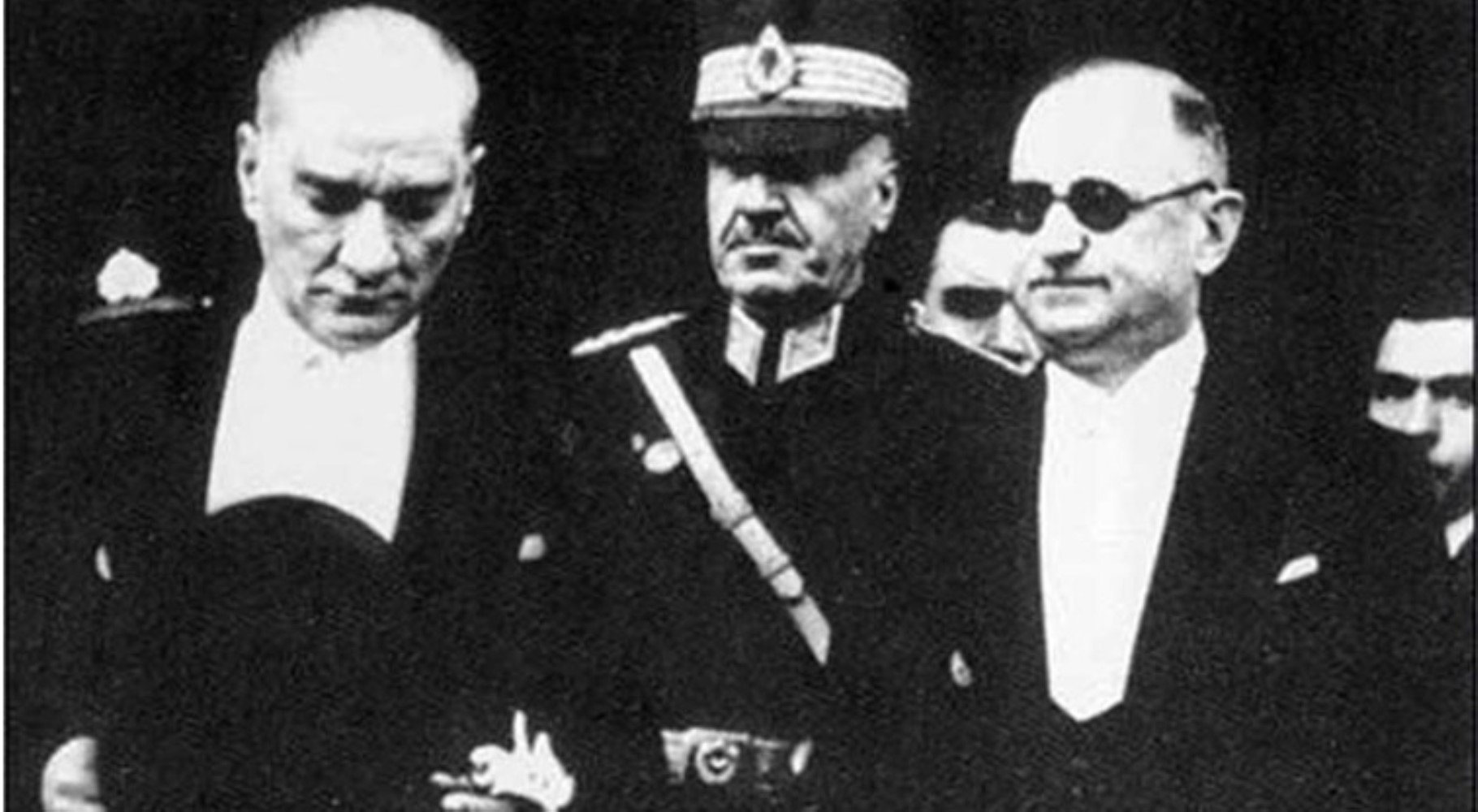
(Abdülhalik Renda)
ATATÜRK'S PERMANENT MINISTERS
Two permanent figures: Atatürk's Minister of Foreign Affairs and Minister of Health. Both were medical doctors. Regardless of who held the office of Prime Minister, they were politicians who continuously occupied their ministerial seats independently of them. For this reason, we can call these two politicians Atatürk's permanent ministers. These individuals are Dr. Tevfik Rüştü Aras and Dr. Refik Saydam.
Dr. Tevfik Rüştü Aras was a member of parliament from 1920 to 1939. He was a friend of Atatürk from Thessaloniki and a graduate of the Beirut Medical School. They met when he was a young officer. I believe Tevfik Rüştü Bey held an important position within the Committee of Union and Progress organization even at that time. Starting with the delegation led by Ali Fuat Pasha, he traveled to Russia four times. According to the British, he was pro-Russian. His daughter married Fatin Rüştü Zorlu. In the 1930s, when İsmet Pasha went to Russia, Tevfik Rüştü Aras also appears in the photos of the honorary box during the May 1st ceremonies.
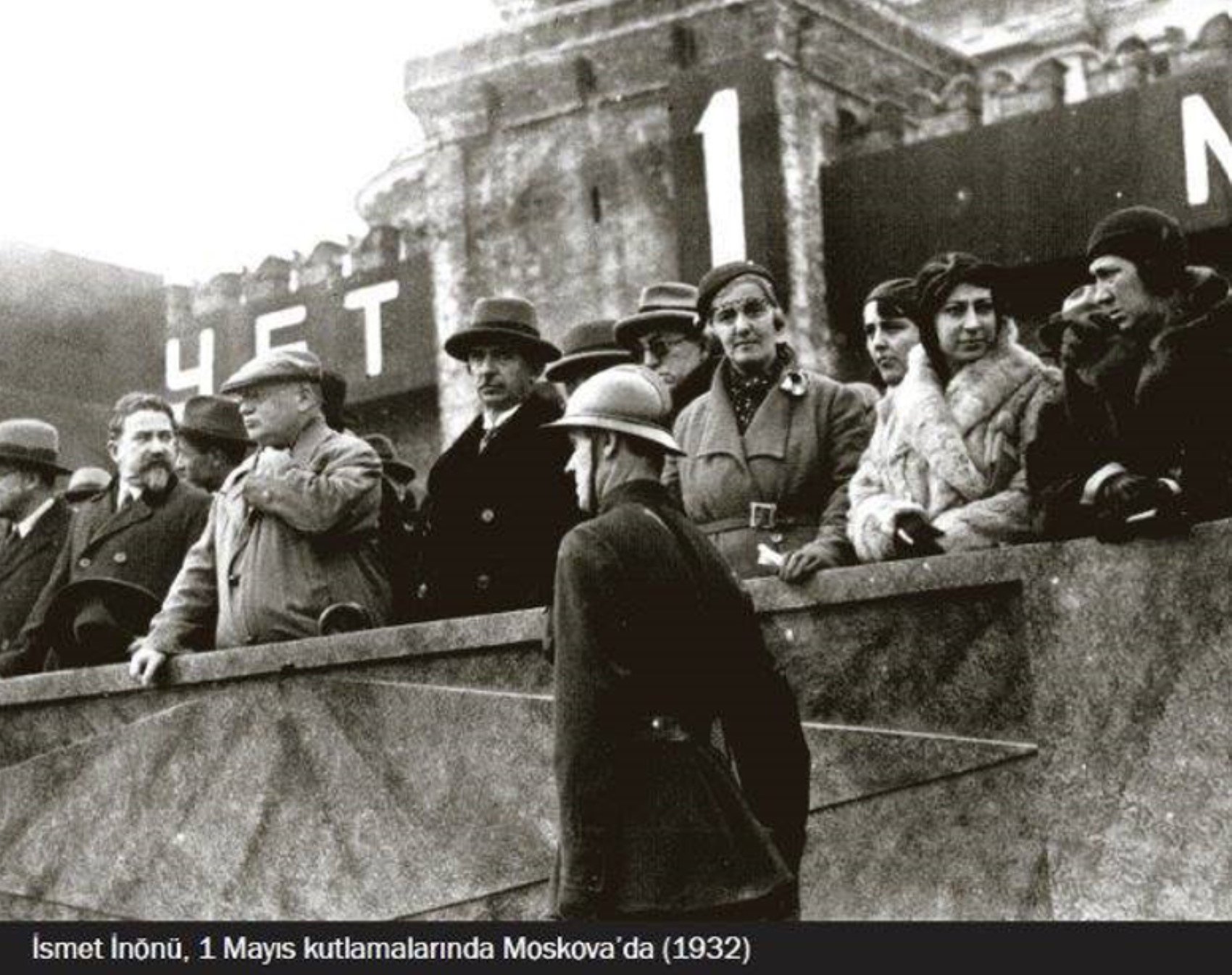
(Tevfik Rüştü Aras behind İnönü)
He also possessed something that all those who had known Atatürk since very early times had: a tendency to not take İsmet Pasha seriously, or even to belittle him.
This is the reason he was sent (exiled) to London as ambassador in 1939. The person who served as ambassador after him—during the war years—would be Rauf Orbay.
Tevfik Rüştü Aras served continuously as Minister of Foreign Affairs during the Atatürk era, negotiating, making decisions, and implementing foreign policy directly with the President without consulting Prime Minister İnönü. This attitude drew the reaction of İnönü, for instance, regarding the Montreux Convention and maritime security in the Mediterranean.
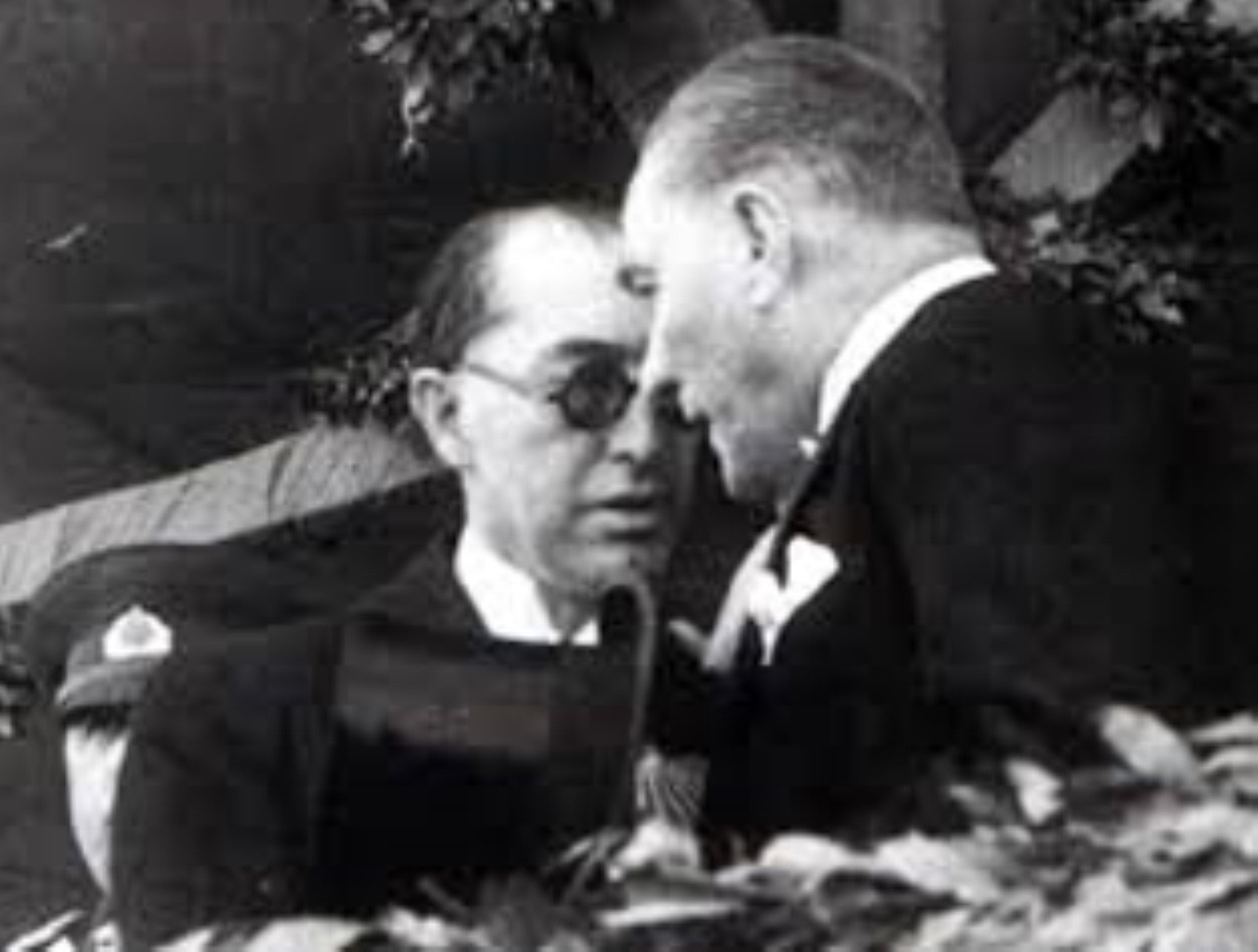 (Tevfik Rüştü Aras, 1933)
The second physician whose tenure as minister was uninterrupted is Dr. Refik Bey (Saydam). He served continuously as Minister of Health from 1925 until the autumn of 1937, when he was appointed Prime Minister by İnönü. When İsmet Pasha left the premiership, he did not wish to take part in the Celal Bayar cabinet and withdrew.
He was a member of the Health Board of the Ninth Army headquarters that set out for Samsun with Atatürk. At that time, he held the rank of Major (Medical). His superior as a physician on the board was Colonel İbrahim Tali Bey (Öngören). He entered Parliament in 1920 as the deputy for Bayazıt. He served as the deputy for Istanbul after 1923. He is the pioneer of the Turkish public health revolution and the founder of the Turkish Institute of Hygiene (Hıfzıssıhha).
He waged a very successful battle against the major public health problems of the early republican period. He is the most important figure in the history of the fight against tuberculosis, typhoid, trachoma, syphilis, and malaria.
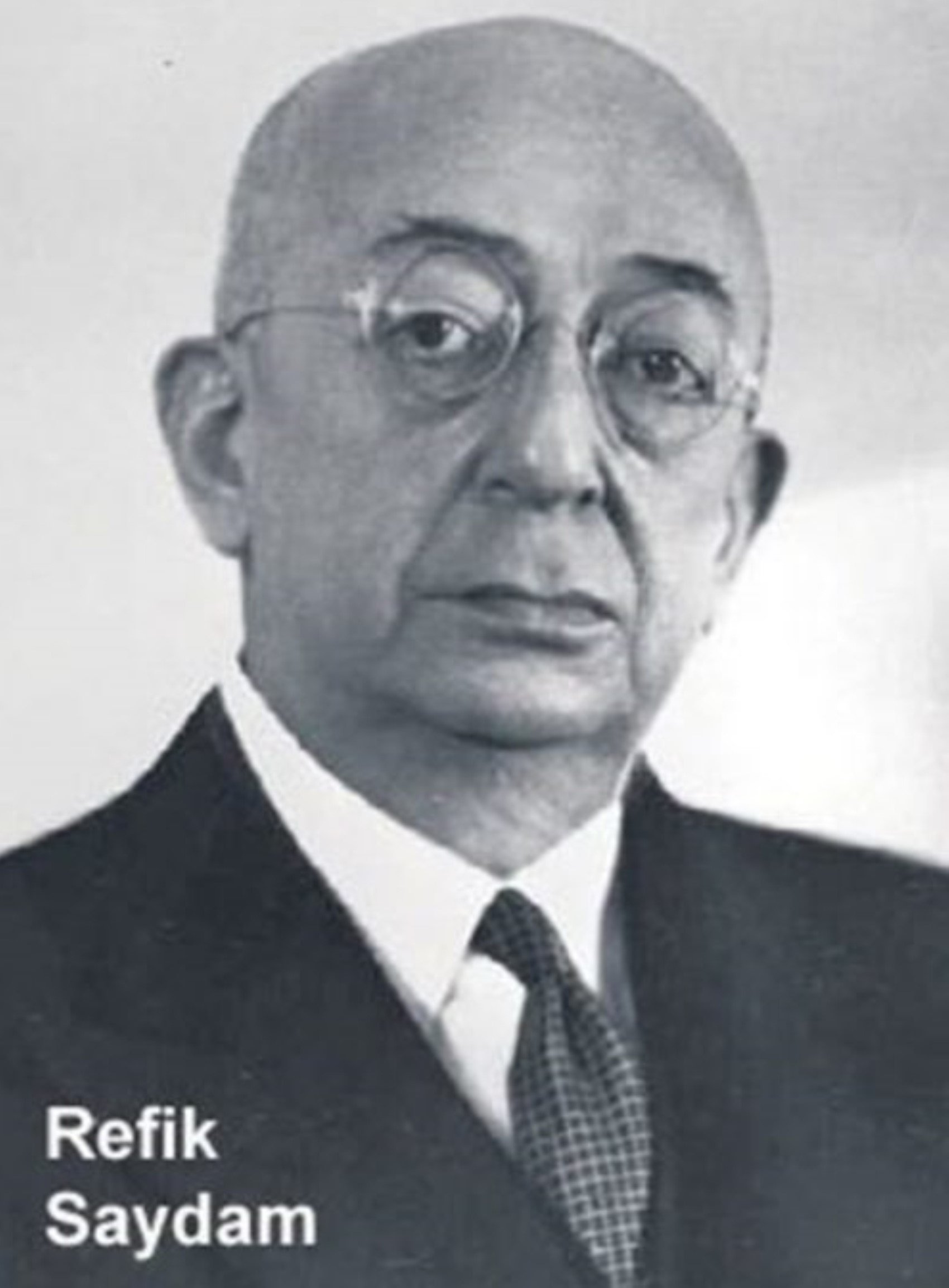
From the very first days of the National Struggle, Dr. Refik Bey was a highly successful figure at every level of the organization dealing with the health problems of the army and the civilian population. He is Atatürk's Minister of Health.
ECONOMY AND FINANCE FIGURES
Atatürk's economic and financial figures were Hasan Fehmi Ataç, Hasan Saka, and Celal Bayar.
Hasan Fehmi Bey was the Minister of Finance during the War of Independence. He was from Gümüşhane and had been a member of parliament since the Ottoman Chamber of Deputies.
As for Hasan Saka, he had experience with the Ottoman Court of Accounts (Divan-ı Muhasebat). During the Constitutional Era, he was sent to France to study economics and finance, and he served as a deputy for Trabzon in the First Grand National Assembly. He was a member of the delegation to Lausanne and a member consulted specifically on financial matters. He served as a deputy from 1920 to 1950 and held the positions of Minister of Finance and Minister of Economy in Ankara governments.
He was the person who signed the United Nations Charter on behalf of the Republic of Turkey at the San Francisco Conference. During the transition to multi-party political life, it would again be Hasan Saka whom İsmet Paşa appointed as prime minister twice.
Celal Bayar served as the Minister of Economy in the Council of Deputies during the War of Independence, became the founder of İş Bankası in 1924, served as Minister of Economy starting in 1932, and became Atatürk's final prime minister in 1937. We would later see him as the founder of the Democrat Party and the third president of Turkey.
MINISTERS OF JUSTICE
Many famous names served in the Ministry of Justice; the Minister of Justice during the Republican Revolution was Seyit Bey. He was a law professor who joined the Assembly in its second term. He had been elected to the fourth term of the Ottoman Chamber of Deputies, which gave him the right to join the First Assembly, but he did not participate. He became the Minister of Justice in Fethi Bey's 5th Council of Deputies and retained his position in the first İsmet Paşa (İnönü) government. He played a very important role in the abolition of the Caliphate and later retired from politics.
The politicians appointed as Minister of Justice during the Atatürk era, in chronological order, are: Mahmut Esat Bozkurt (1924-1930), Yusuf Kemal Tengirşenk (1930-1933), and Şükrü Saraçoğlu (1933-1938).
MINISTRY OF NATIONAL DEFENSE
During the National War of Independence—starting from 1920—the Minister of National Defense was Fevzi Pasha. Later, Kazım Özalp took over. Fevzi Pasha was appointed as Chief of the General Staff. This status quo was maintained for many years. From 1927 to 1930, Abdülhalik Renda held this position. Then, Zekai Apaydın became the Minister of National Defense (1930-1935). When Abdülhalik Renda became the Speaker of the Grand National Assembly of Turkey (TBMM), Kazım Özalp Pasha was reappointed to the Ministry of National Defense.
MINISTRY OF PUBLIC WORKS
Important figures who served as Minister of Public Works (Nafıa Vekili) include Behiç Erkin, Recep Peker, Hilmi Uran, and Ali Çetinkaya. Behiç Bey, who served as the General Manager of Railways throughout the National War of Independence, also served as a diplomat. He became the ambassador to Hungary. Ali Çetinkaya was the commander (a Colonel at the time) of the unit that fired the first bullet at the enemy in Ayvalık. Recep Peker and Hilmi Uran served as Ministers of the Interior and as party general secretaries. Peker is a figure whom İnönü brought to the Prime Ministry.
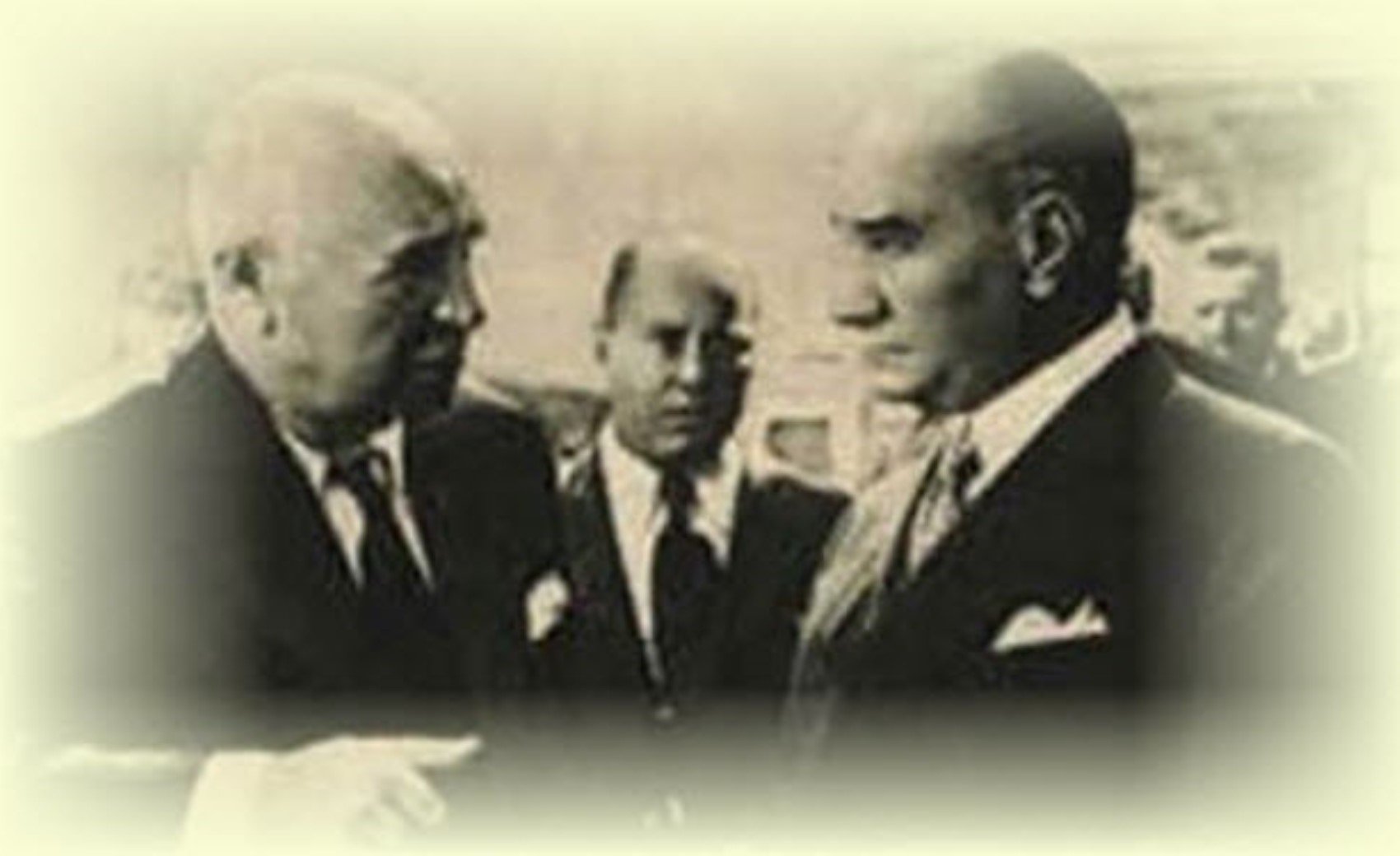
(Ali Çetinkaya, Minister of Public Works)
ESTABLISHED AND ABOLISHED MINISTRIES
The ministry that maintained its existence after the Republican revolution but was later abolished is the Ministry of Sharia and Foundations (Şeriye Vekaleti). Its first and only minister was Mustafa Fevzi Sarhan. Another ministry that was established and then abolished after the Republic was the Ministry of the Navy (Bahriye Vekaleti). İhsan Eryavuz, who was convicted in the Yavuz-Havuz case, served in this ministry for a time. Later, the ministry was abolished.
The Ministry of Customs and Monopolies was also one of the ministries established after the 1929 Great Depression. While Celal Bayar became the Minister of Economy in 1932, the Ministry of Customs and Monopolies was established in 1931. Ali Rana Tarhan was appointed to head it.
What is the significance of this? Ali Rana Tarhan was appointed by İnönü to lead the independent group. Tarhan was one of the representatives of the liberal economic school in Turkey.
CHRONOLOGY OF REPUBLICAN GOVERNMENTS
The chronology of republican governments that took office during Atatürk's lifetime can be summarized as follows.
1. İsmet Pasha: October 30, 1923 - March 6, 1924 (Resignation due to the requirement to form a new government following the 1924 revolution laws)
2. İsmet Pasha: March 6, 1924 - November 22, 1924 (Resignation due to opposition from the Progressive Republican Party - TCF)
3. Ali Fethi Okyar: November 22, 1924 - March 3, 1925 (Sheikh Said rebellion, Law on the Maintenance of Order)
4. İsmet Pasha: March 3, 1925 - November 1, 1927 (Resignation due to the 3rd Term Grand National Assembly of Turkey elections)
5. İsmet Pasha: November 1, 1927 - September 27, 1930 (Resignation due to the establishment of the Free Republican Party)
6. İsmet Pasha: September 27, 1930 - September 4, 1931 (Resignation due to the 4th term Grand National Assembly of Turkey elections)
7. İsmet Pasha: From 1931 until the 1935 elections
8. İsmet Pasha: March 1, 1935 - November 11, 1937 (Resignation due to a disagreement with Atatürk)
9. Celal Bayar: November 11, 1937 - November 11, 1938 (Resignation and reappointment following İnönü's election as president)
ON GOVERNMENTS AND MINISTERS
The first government of the Republic could have been formed by Fethi Bey. Given that he was elected head (prime minister) of the 5th Council of Deputies in the summer of 1923. Gazi Mustafa Kemal Pasha, as the leader of the Defense of Rights group and Speaker of the Grand National Assembly, had pointed to his old friend Ali Fethi Okyar. It could have been the same after the proclamation of the Republic. But it did not happen. Why?
I believe there was a political rationale behind the first government of the Republic being formed by İsmet Pasha. Despite the transition to the republican regime, the supremacy of the Assembly and the system of the unity of powers continued to exist. The heart of the system continued to be the Grand National Assembly.
For the position of Speaker of the Grand National Assembly, which became vacant upon his own election as president, Atatürk chose his closest friend: This name was Ali Fethi Bey.
This means the following: In the autumn of 1923, the two most important positions in the Republic of Turkey were the President of Turkey and the Speaker of the Grand National Assembly of Turkey. The Council of Ministers and the Prime Minister ranked third.
It is incorrect to compare the governments of the Atatürk era with the governments of the multi-party political life that began after 1946. If one must compare the early republican regime and Mustafa Kemal Atatürk with something, it is the old regime. It is Abdul Hamid II, Sultan Mehmed V, and Sultan Mehmed VI. It is the monarchy, the sultanate, and feudalism. His era signifies the republican revolutions.
It must be stated immediately that the Turkey after 1950 is also a product of the republic and the Atatürk revolutions. Just as the republic is a threshold of the Turkish revolution, multi-party political life is another threshold of the Atatürk revolutions. It is a consequence. In this regard, it is sufficient to look at the speeches and statements of his last prime minister, Celal Bayar. Bayar, Turkey's third president and the first president of the multi-party period, was Atatürk's last prime minister. Most of the leaders of the Democrat Party were political actors who had served as CHP deputies and were raised within the CHP organization. The development of democratic political life in Turkey should be viewed from this perspective.
Although the system appears to be a parliamentary government based on the separation of powers in terms of the procedures applied, this is not the reality. The foundation of the regime is the leader of the CHP and the founding leader, Atatürk. He is also the head of state and the natural head of the executive branch. The prime ministers (İnönü, Okyar, Bayar) acted on his behalf in executive matters.
The governments formed by İsmet Pasha, Fethi Okyar, and Celal Bayar were established with individuals indicated and approved by the party leader. From 1923 to 1938, the main actor of the system was Gazi Mustafa Kemal Atatürk, the leader of our national war of liberation and the Turkish revolution. He was the source of legitimacy and the reference for the prime minister and the ministers.
Would you like to get notifications about new developments and save news?
- NotificationsNew developments and breaking news
- SaveNews is stored in the app
Most Read
Statement from Nihat Zeybekci on the fund investigation

New 75,000-seat stadium plan for Fenerbahçe
Interpol and MIT tracking yields results in Izmir
ID convenience for KPSS candidates

2027 Budget: Taxes for the people, tax exemptions for capital
The reality of Akkuyu and the longing for national nuclear power

To whom and how was the Petition of Intellectuals submitted? Who accepted the petition?

The Çanakkale robbery -1- How was the Troy treasure smuggled out?

Artificial intelligence and the new imperialism

Ministry investigation into unauthorized promotional messages