


Why is Menderes’s Medal of Independence dated 1931?



A PICTURE THAT MOVES ME
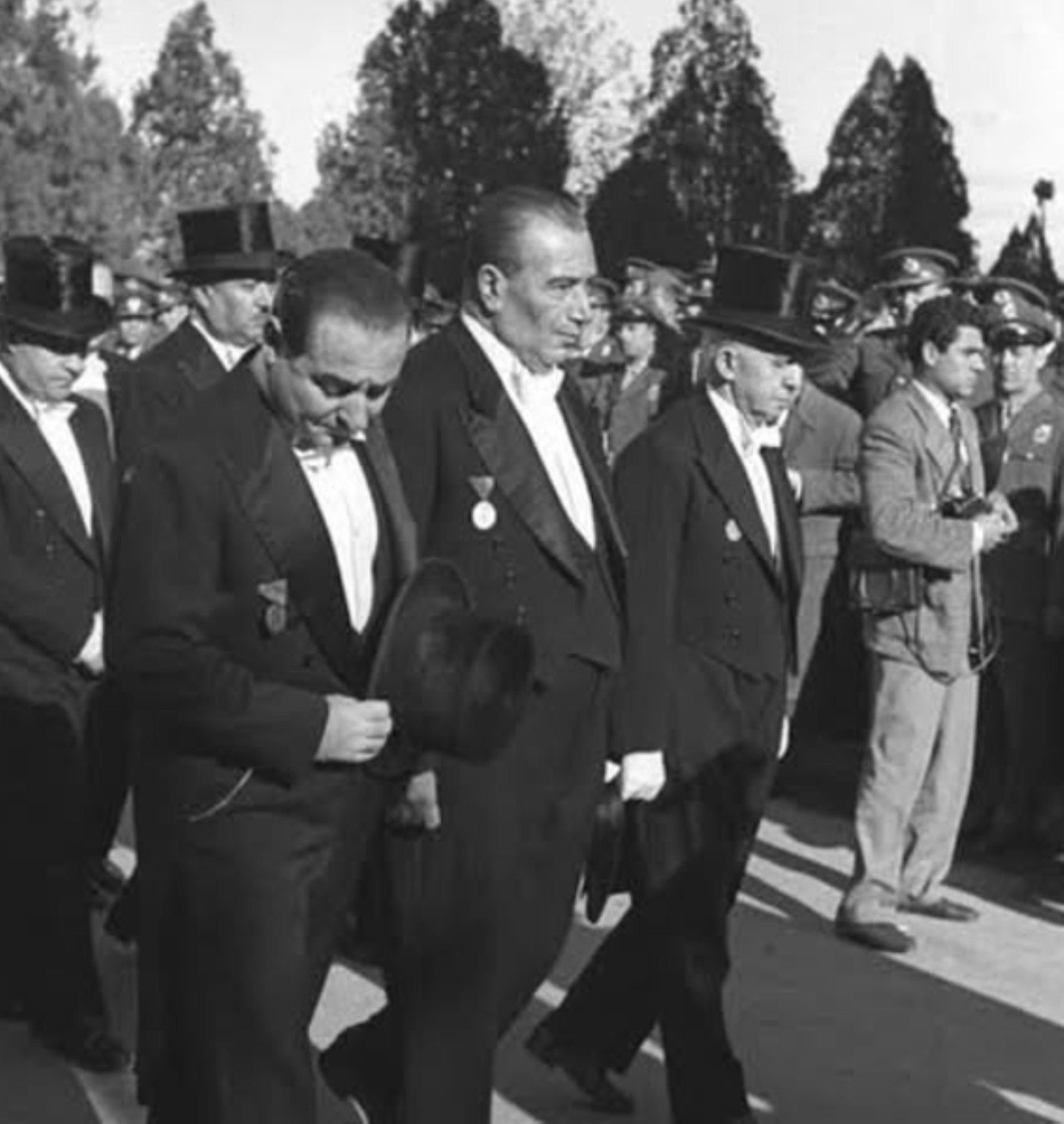
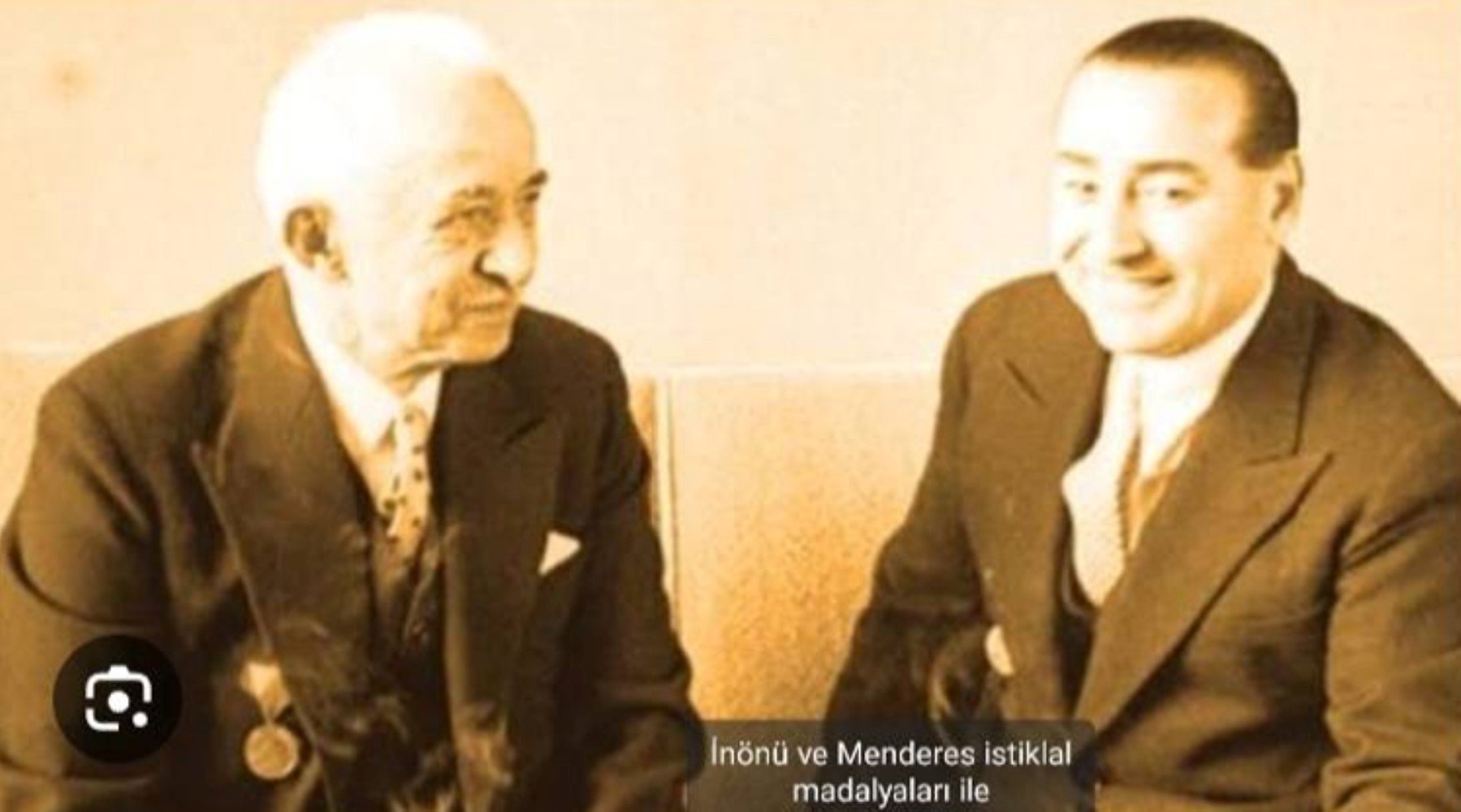
There is a picture I like. From the 1950s. The Democrats are in power. Bayar, Menderes, Koraltan, and İnönü are all wearing their Medals of Independence. They are together. Bayar is the President, and İnönü is the leader of the main opposition party. There are other pictures that appear to have been taken on the same day. They must have been taken during the transfer of the Great Atatürk to Anıtkabir. At the Grand National Assembly of Turkey (TBMM), in the cortege, and at Anıtkabir. Makbule Hanım is also in some of them.
The aspect that moves me in these pictures is this: They are all proudly wearing the Medal of Independence, which is the symbol of the victory of the National Struggle.
Bayar and Koraltan have been members of the TBMM since the First Assembly. İsmet Paşa is as well. He is the deputy for Edirne, Chief of General Staff, and commander of the Western Front. According to the Law on the Medal of Independence, they have undoubtedly earned the medal. By the decision of the TBMM.
I wanted to clarify the question marks that came to my mind as a result of my research regarding Adnan Bey's medal and share my thoughts. Especially after reading the words of a conservative citizen I saw today, who said, “the leftist mentality had a hero of the War of Independence with a medal hanged,” I wanted to examine for which acts of heroism Menderes earned the Medal of Independence. I reached some conclusions. I would like to share them.
AN ORPHANED CHILD: HACI ALİ PAŞAZADE ADNAN
Hacı Ali Paşa, to whom Sultan Abdülhamid granted vast lands with the rank of mirimiran (civil pasha), was Adnan Menderes's grandfather. Menderes used to introduce himself as Hacı Ali Paşazade. The property was approximately 40,000 dönüms.
Landlordism in Anatolia emerged with the deterioration of the timar system. The root of Menderes's landlordism, however, lies in the benevolence of Sultan Hamid. According to rumor, Hacı Ali Paşa was of Tatar origin and was rewarded by Sultan Hamid for his services in the 1878 Ottoman-Russian War, and this vast land was given to him.
The parts of this vast property near the Çine Stream are fertile lands. The property also included the village of Çakırbeyli. After years spent with war and security problems, the land of the Çakırbeyli Farm had been occupied by villagers over time. It was being cultivated. The deaths of his mother, father, and brother found Menderes at a very young age. At eight, he was left alone with his grandmother, Fitnat. Ali Adnan was not of an age to fight a property battle against the villagers. His grandmother took him to İzmir to educate him. The farm remained in the hands of the stewards.
As for the main issue, this vast land, which was in the possession of Hacı Ali Paşa's heirs, was located around the Çine Stream. Swamps and marshes left the people facing a major health problem: malaria. Just as in Çukurova.
Adnan Bey's mother, Tevhide Hanım, his father, İbrahim Ethem Bey, and his older sister Selime, who was a few years older than him, had died of tuberculosis. He was left an orphan. He was raised by his grandmother, Fitnat Hanım. The fact that his entire family died of tuberculosis left a traumatic-melancholic trace on him.
Grandmother Fitnat Hanım first sent Adnan to a high school (İdadi). Then to the İzmir American College. His grandmother was always by his side. Even when he was sent to the reserve officer school, she did not leave her grandson alone.
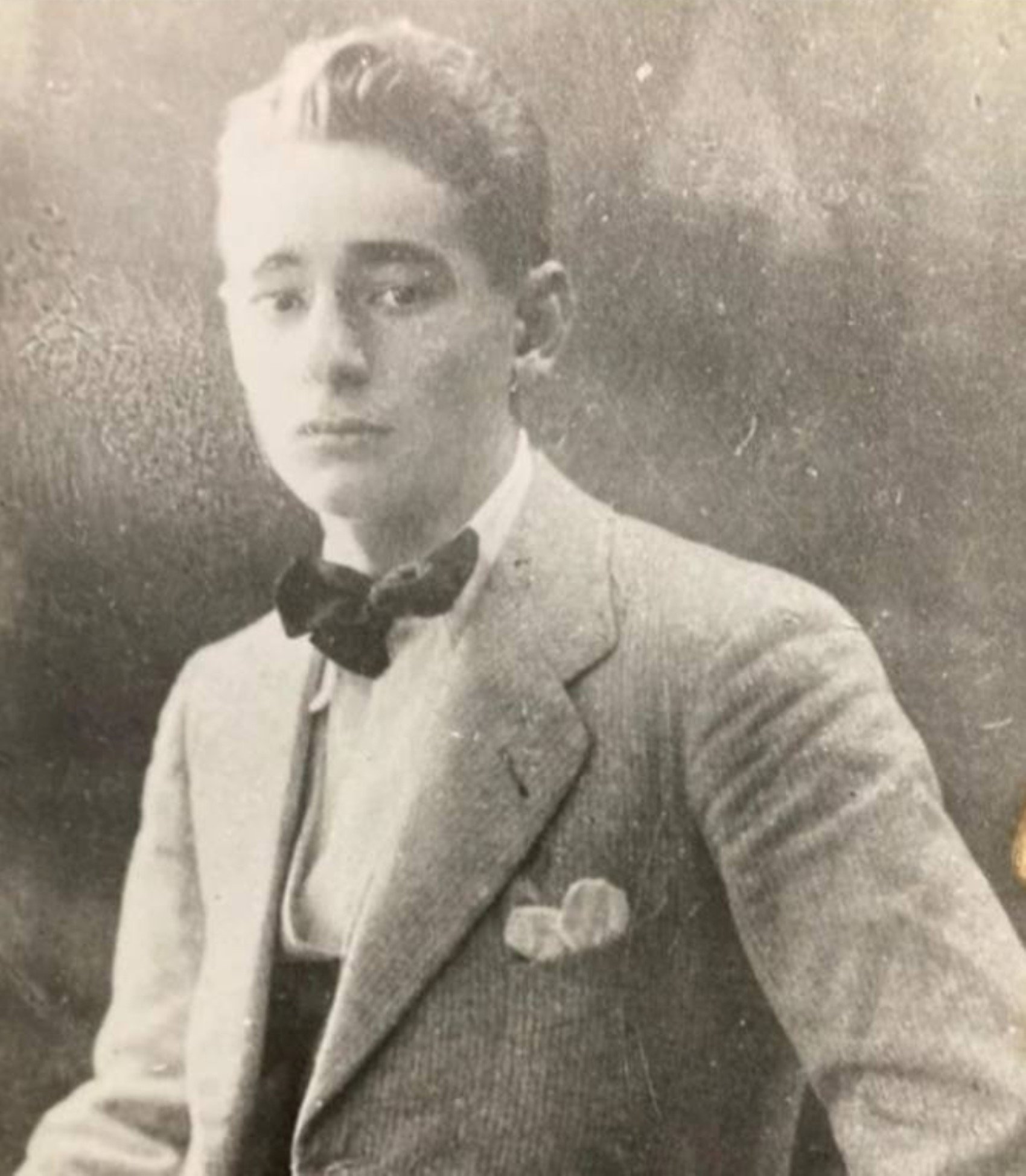
FROM AMERICAN COLLEGE TO RESERVE OFFICER TRAINING SCHOOL
The year must have been 1916 when Menderes was called to military service as a reserve officer candidate. Since he was born in 1899, he was 17 years old. He was still a student at the Kızılçullu American College. Together with his friend Ethem, they were sent to the training school in Istanbul. 19th Draft. Registration number 20,737. Şevket Süreyya Aydemir describes him as a delicate young man who could easily fall ill. His youth pictures already show this.
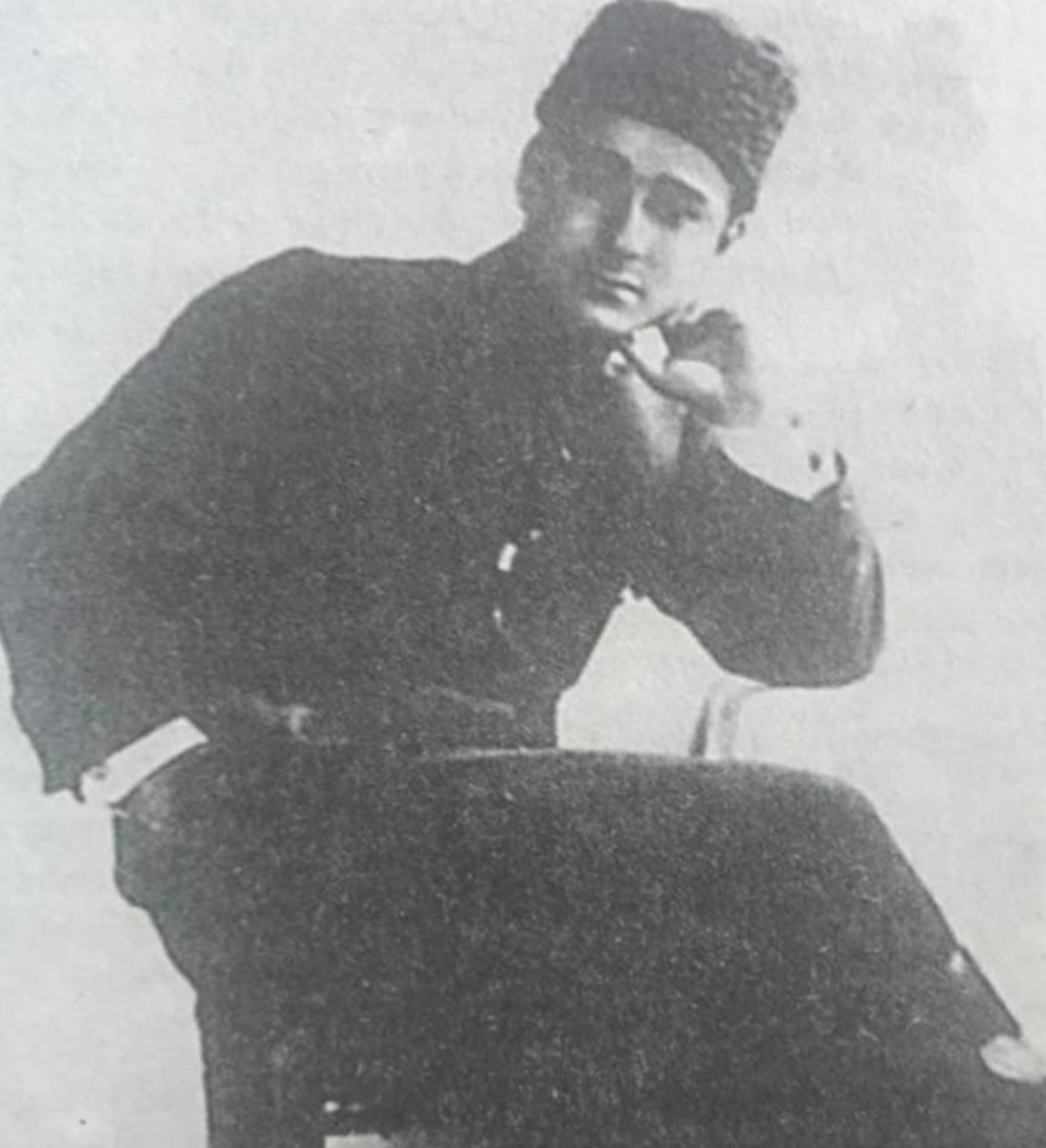
MENDERES IN THE FIRST WORLD WAR
It is possible to summarize it as follows: Adnan Bey was conscripted while studying at the İzmir Kızılçullu American College with his friend Ethem. He was sent to Istanbul. To the reserve officer training school. Hacı Ali Paşazade Adnan Bey, the sole heir of the Çakırbeyli Farm, joined the army with those born in 1899. While still a high school student. Since there was no one left in the family except his grandmother, she also came to Istanbul with her only grandson. While her grandson Ali Adnan was training for reserve officer duty around Maltepe-Erenköy, he was staying at the Şahinpaşa Hotel. Sadly, his grandmother also died during this time. His father had also died while receiving treatment in Istanbul. He too from tuberculosis. Since everyone in the family (his mother Tevhide, his father İbrahim Ethem, his sister Melike) died of tuberculosis, Adnan Bey always had a fear of dying from tuberculosis—for this reason. When the reserve officer training school finished, he was sent from Haydarpaşa to the Syrian Front. The young reserve officer Adnan fell ill in Kozan. The diagnosis was toxic malaria. That is, Tropica. He was treated there in a field hospital. When he recovered, the war was over. His aunt's husband was a pasha in İzmir. Probably with his mediation, he was sent to the 17th Corps in İzmir.
Meanwhile, his friend Ethem, who was sent to the Gallipoli Front, also came to İzmir. He, too, had not participated in any serious engagement. He had reached the front as the Allies were withdrawing.
HE CONTRACTS MALARIA WHILE GOING TO THE SYRIAN FRONT
After his reserve officer training, Menderes was sent to the Syrian Front. The front was under the command of Cemal Pasha. Adnan Bey fell ill in Pozantı during the dispatch. The logistics command separated him from the convoy. He was admitted to a field hospital. His illness was diagnosed as Tropica (toxic malaria). Meanwhile, there was also a typhoid epidemic in the army. Especially on the Eastern front.
When his treatment was finished, he was extremely weak and exhausted. His aunt's husband, Nihat Pasha, had him transferred to the 17th Corps in İzmir near the time of the armistice. Meanwhile, his friend Ethem also came to İzmir from the Gallipoli Front. When the armistice was declared, they were demobilized.
The two young friends continued to attend the American College for a while after being demobilized. Before finishing school, they decided to return to the Koçarlı Çakırbeyli Farm to revive the “Bey lands.”
HE CONTRACTS TYPHOID AND MALARIA DURING THE ARMISTICE
He fell ill again during the armistice. They suspected tuberculosis in İzmir. He was overcome by a great delusion. His entire family had died of tuberculosis. Eventually, it was understood that it was black fever (typhoid). After returning to the Çakırbeyli Farm, the malaria recurred. Malaria was very common in the region due to the swamps. Villages were being decimated by the disease.
Meanwhile, the Ankara Government sent a commander to Söke. The goal was to establish support battalions. Ethem and Adnan Bey were invited as reserve officers. After responding to the call of Lieutenant Colonel Osman Bey, he fell ill. Malaria bouts started again.
The Italian occupation in the region did not pose an obstacle to these developments. The commander of the Italian detachment at the Bataköy Bridge (Captain Aldo Moro) sent them to the headquarters in Çine to be treated. Probably because they knew English, a servant was assigned to them. They were taken under treatment in the Italian hospital. The specialist doctor brought from Antalya found Adnan Bey's condition particularly critical. And he wanted to send him to Rhodes.
Medical Major Adil Bey came to the region. He took over Adnan and Ethem and began treating them at the Çine Nuri Bey Inn. After a long quinine cure, Adnan and Ethem recovered. Probably after this final recovery, they must have actually participated in the call to join the support units.
In summary, Adnan Menderes spent a significant period of time during the national struggle as a patient. He had, in order, tropica, black fever, tropica again, and liver inflammation, and was treated. It is said that Menderes's liver inflammation recurred after he became prime minister.
There is also another story, I read it in Şevket Süreyya. During one of these illnesses, he was cared for by Circassian women in a vineyard house in Koçarlı under the supervision of Military Dr. İsmail Hakkı Bey. He was cured.
WHERE WAS MENDERES DURING THE NATIONAL STRUGGLE?
Menderes was not in the sovereign territory of the Ankara Government throughout our National War of Liberation. He was a demobilized reserve officer after the Armistice of Mudros. From Mudros to Mudanya, he spent his life trying to revive the Çakırbeyli Farm and struggling with successive illnesses. After the Ankara government was established, he does not appear to have had an application to join the regular army (kuva-yı nizamiye) as a reserve officer. This is what I understand from what has been written. However, hundreds of reserve officers went to Anatolia and joined the army. Adnan and Ethem Bey continued to stay in the Italian occupation zone. For personal reasons. The Çakırbeyli Farm, where he is said to have organized local resistance, was his own property. It is not clear how many people the Ayyıldız gang, which he is said to have founded, consisted of and who it fought against. I could not obtain any information regarding this gang's hot contact with the enemy.
WHAT MIGHT MENDERES HAVE DONE DURING THE ARMISTICE?
The Greek occupation began to expand in the summer of 1919. The Kuvayı Milliye (National Forces) began to resist the Greek army. These were local militia forces led by names such as Yörük Ali Efe, Postlu Mestan Efe, and Demirci Mehmet Efe. I have not come across any information that Menderes had an active contact with these groups. The south of the Menderes Valley was an Italian sphere of influence. The Greek Army did not head there. The clashes always took place north of the Menderes river.
For this reason, the Koçarlı Çakırbeyli Farm did not suffer from Greek occupation. There was no conflict with the Italian occupation forces either. On the contrary, it served a function. The presence of the Italians in the region limited the Greek occupation.
The Italians displayed an attitude that would win the hearts of the local people regarding humanitarian aid, hospital services, and travel safety. Even after the TBMM Government was established, they turned a blind eye to arms purchases made from Europe via Italian ships. The Greeks could not intervene with Italian ships.
One of the most important issues of the armistice was military deserters and banditry. Most of the information regarding the nature of the Ayyıldız Gang, which Adnan Bey is said to have founded, seems exaggerated to me. It is not clear where/in which actions this gang was involved.
Meanwhile, upon the easing of the Italian occupation, the Ankara Government sent a commander to Söke. The goal: to establish support battalions under the command of former reserve officers. The personnel consisted of volunteers. This attempt can be likened to the Mobile Gendarmerie organization. Adnan Bey was also among the reserve officers called.
But in the meantime, Adnan Bey falls ill once again. He suffers from successive illnesses. Malaria and Typhoid. He lies ill for a long time. He is taken to Çine. There is an Italian military hospital there. The doctor there finds the situation critically fatal. He wants to send him to Rhodes. A Turkish physician intervenes and takes responsibility for Adnan Bey's treatment. I think results were achieved when the quinine cure was applied. Adnan Bey recovers once again.
Meanwhile, the Great Greek offensive, which began with the Battle of Kütahya-Eskişehir, was thwarted by the Victory of Sakarya; a balance was established on the Western front. (Autumn 1921) There is a general calm. I estimate that Adnan Bey was in a state of convalescence in Çakırbeyli during this period.
When the Greek headquarters could not get results from the offensive, it went on the defensive; it began to implement the plan to wear down the Turks by strengthening the fortifications. It is waiting for the Turkish front to split by spreading the work over time. This mutual waiting will last for nearly a year. Meanwhile, the Turkish Commander-in-Chief Mustafa Kemal Pasha was striving to maximize military power to deliver the final blow to the enemy.
A status quo had been established, and the parties were waiting for the counter-move. What is certain is this: The Çakırbeyli Farm was outside the battlefield.
The Great Offensive was carried out by the 1st and 2nd Armies. That is, by the Kuvayı Nizamiye (regular army). There is no possibility that the volunteer support battalions under the management of reserve officers in Koçarlı participated in this operation.
After the great victory was achieved, Adnan Bey worked as a censorship officer and translator in İzmir. Şevket Süreyya Aydemir and other sources write this.
The conclusion I judge from this whole process is this: I find the probability that reserve officer Ali Adnan Bey actively participated in an armed conflict against the occupying forces until 1922 to be very low. Maybe I could be wrong. But this is my conviction.
THE NATURE OF THE AYYILDIZ GANG
The organization of this gang by Adnan and Ethem was, in my opinion, for the security of the Çakırbeyli Farm. It is said that Artillery First Lieutenant Selami Bey was also among them. The first lieutenant must have been someone who served in the First World War. Perhaps he too had served as a reserve officer and was demobilized as a first lieutenant.
During these dates, the Italians had bicycle units in the region. They call this Berseglieri Cekista. There are some militia forces in Köşk and Umurlu. Circassian Captain İbrahim Bey, one of the militia commanders, frequently stops by the Çakırbeyli Farm.
The surroundings are full of military deserters and bandits. There is rape and looting. The support battalions that Lieutenant Colonel Osman Bey, sent from Ankara, tried to establish with reserve officers must have been founded to deal with them. Support battalions consist of volunteer cavalrymen who join the unit with their own horses. The region is under the dominance of the Italians. They do not object to the organization of the nationalists.
The real issue is north of the Menderes Valley. The Greek occupation is expanding. Instead of Kuvayı Milliye, an attempt is being made to establish Kuvayı Nizamiye (Regular Army). Establishing a regular army is not an easy task. Financial resources and arms procurement are needed. Until September of that year, the military situation and internal political balances are very critical. Greek King Constantine comes as far as Kütahya and sets up headquarters. He is determined to defeat the Turks. The Great Greek Offensive, which began with the Kütahya-Eskişehir battles, could only be stopped with the Battle of Sakarya.
At this time, Adnan Bey is a young reserve officer under the Koçarlı gendarmerie command. The Çakırbeyli Farm is in Koçarlı. Before the great offensive, he is the Aide-de-Camp of the Infantry Regiment among the vineyards. Let me state my opinion. I doubt that such a regiment actually existed there. After the victory, he was a censorship officer and translator in İzmir. Adnan Bey's contribution to the national struggle consists of these.
ALİ İHSAN SABİS PASHA'S EXAGGERATED MENDERES INTERPRETATION
There are two sectarian pashas in the national war of liberation: Sakallı Nurettin Pasha and Ali İhsan Sabis Pasha. The function of both has been to cause trouble. I will write later why I think so.
I read it in Şevket Süreyya Aydemir's book “Menderes's Drama.” According to the story told by the Pasha, while escaping from the Malta exile and passing through Anatolia via Kuşadası, he stopped by Adnan Bey's farm in Koçarlı, saw him as a fiery nationalist, and wanted to make him a commander. A strange explanation indeed. On what authority and how was Sabis Pasha, who had no duty at that date, going to make this assignment? Adnan Bey had already received a call for support battalions. There is no need for this. He also has no authority yet. The reason for these explanations is Adnan Bey's premiership.
The truth about Ali İhsan Sabis Pasha is as follows: After returning from the Malta exile, the Pasha was appointed to the command of the First Army due to his seniority and career. He was removed from his post after a while because he constantly caused problems for the front command. His life after this decision was spent with hostility towards Atatürk and İnönü. He was an extremely incompatible general who was unnecessarily harsh towards the military. A conservative publishing house published his memoirs. For known reasons. You can guess.
The Pasha later became a deputy from the DP. His expectations were very high. He was probably expecting to be the minister of defense. When his expectations were not met, his relationship with the party management deteriorated. Eventually, he wrote letters containing insults to Adnan Bey. He was convicted. The conclusion I draw from the story told is this: Sabis Pasha wants to say that when Menderes became prime minister, I was the one who discovered him.
WHERE IS THE ÇAKIRBEYLİ FARM?
Aydın was occupied by the Greeks on May 27, 1919. Upon this development, the public began to migrate to the Italian occupation zone by crossing the Menderes valley in a panic.
After a while, the Kuvayı Milliye took back Aydın. The Greek army came with larger forces and forced the Kuvayı Milliye to retreat. Aydın fell under occupation again.
Seeing that Greece was favored at the Paris Conference, the Italians began to indirectly support the Anatolian movement so that the Greek army would be unsuccessful.
When we examine the maps of the period, we see that the Italian sphere of influence was quite wide. But the Italians did not have an armed force strong enough to control this area. On the other hand, they had internal political issues. Mussolini was marching to power. Let's remember the Great March on Rome.
The Koçarlı, Çakırbeyli Farm, where Menderes's farm was located as a young landlord in his twenties, was under the control of the Italians. It was a land that the Greeks could not pass through due to the agreement between the Allies.
DIRECTION OF THE GREEK OFFENSIVE
There were two major Greek operations north of the Menderes Valley: the first in the summer of 1920. The second in the spring of 1921. The second was much more violent. It lasted until autumn. Greek King Constantine tried very hard to get results. He was unsuccessful against the Turkish commander-in-chief.
While the Greek offensive was continuing, Adnan Bey was either ill. Or he was in the volunteer support battalions established around Çakırbeyli. The war was continuing, intensifying towards the North from the Uşak-Afyon line.
THE REGIME APPLIED BY THE TBMM REGARDING OCCUPIED REGIONS
The TBMM administration established principles regarding places under occupation. It applied a series of sanctions, especially regarding public officials and officers who did not participate in the Anatolian movement.
There are two expressions on this subject: memaliki meşgule and memaliki mühtahlasa. These expressions mean occupied and liberated places. All civil and military officials who continued to stay in the provinces that were occupied were questioned after the liberation. Especially the files of officers and reserve officers who sat in the capital and did not participate in the national struggle were examined in special commissions. The name of these boards: Tetkikat ve Tensikat Kurulu (Investigation and Reorganization Board). Most of those in this situation were dismissed from the army and punished. The same regime was valid for civil cadres, and those who were not dismissed due to their excuses were given provincial duties.
THE INHERITANCE FIGHT OVER MENDERES IN THE RIGHT WING
Adnan Menderes, one of our former prime ministers, is the name most exploited in Turkish politics. The Menderes cult and the Democrat Party have been a source that the Turkish right-wing politics has not been able to exhaust. The dilemma is based on a very simple scheme. On one side, there is Menderes, who represents the “will of the nation,” and other right-wing politicians who follow him. On the other side, there are the coup plotters who are at odds with the nation and their instigator, the CHP. Especially İsmet Paşa.
It has been seen that this simple explanatory model is extremely functional in terms of consolidating the right-wing voter. It is an easy way to mobilize the right-wing voter base. But the model largely contradicts historical facts.
Let me state my opinion immediately: The right in Turkey did not establish democracy and did not make any serious contribution to its development. It only benefited from the general vote. I will write separately why I think so.
Now I will address the development of the process of Menderes being exploited. With the establishment of the '61 democracy, this attitude was initiated by Demirel and the Justice Party. Initially with hesitation. Later in a self-confident manner.
During these dates, the religious right and the racist right were indifferent to the legacy of Menderes and the Democrat Party for ideological reasons.
September 12 completely severed the army from the May 27 ideology. Encouraged by this, Turgut Özal wanted to embarrass Demirel and ensure initiative superiority on the right by organizing the burial of the DP leaders' graves in İmralı into a mausoleum in 1990.
When he himself passed away, he identified himself with the spiritual legacy of Menderes, Polatkan, and Zorlu by bequeathing his burial to a place near the Mausoleum in Topkapı. Since then, the Mausoleum has been the place of pilgrimage for the “discourse of the national will, victim of the coup.”
AKP AND MENDERES
As for my thoughts on the AKP, as I have mentioned on various occasions in my previous articles, the AKP has no similarity to the Democrat Party. Neither class-based, nor ideological, nor political. The Democrat Party was a bourgeois party. The AKP, on the other hand, is the party of the periphery (periphery and suburbs) in the city and town. Ideologically, it is counter-revolutionary.
The only point where the two parties are common is majoritarianism. It is their identification of the majority with the national will. When the old center-right completely collapsed during the AKP's term in power (in my opinion, it was voluntarily liquidated), the ruling party began to act like the right-wing heir of the old dilemma, and set out to be the right-wing heir of the CHP-DP divergence. This political positioning was successful until recent times.
The first symbolic event related to this policy was the transformation of Yassıada, where the DP members were tried, into the Island of Democracy and Freedoms. They drowned the island in concrete. The AKP made this move after switching to the presidential system. What was ironic was the identity of the guest of honor: MHP Chairman Dr. Bahçeli. We know that the MHP joined the ruling front with a sharp turn after the 2014 defeat. Since that date, it has taken a position alongside the government in every step that changed Turkey's political regime. It is even possible to say that it led. Without the MHP, the AKP could not have done any of the things it wanted to do. What was strange was that the founding leader of the MHP, Alparslan Türkeş, was a prominent member of the National Unity Committee. In fact, he was the one who read the coup declaration on the radio. To put it in AKP jargon, he was a pure coup plotter.
But what was ironic beyond strange was that the AKP leader talked about Türkeş's democracy in his speech. The opening of the Island of Freedoms was consecrated with speeches touching on Türkeş's contributions to democracy. This was a ridiculous situation beyond the distortion of history.
As of today, Yassıada has turned into a luxury hotel business hosting wealthy Middle Eastern customers. It has nothing to do with democracy and freedoms. Day trips are possible with a ticket purchased via Biletix. Former TBMM Speaker Hüsamettin Cindoruk had rejected the invitation, saying that a party that wants to “take revenge on the republic” has nothing to do with the Democrats. He had found the opening insincere.
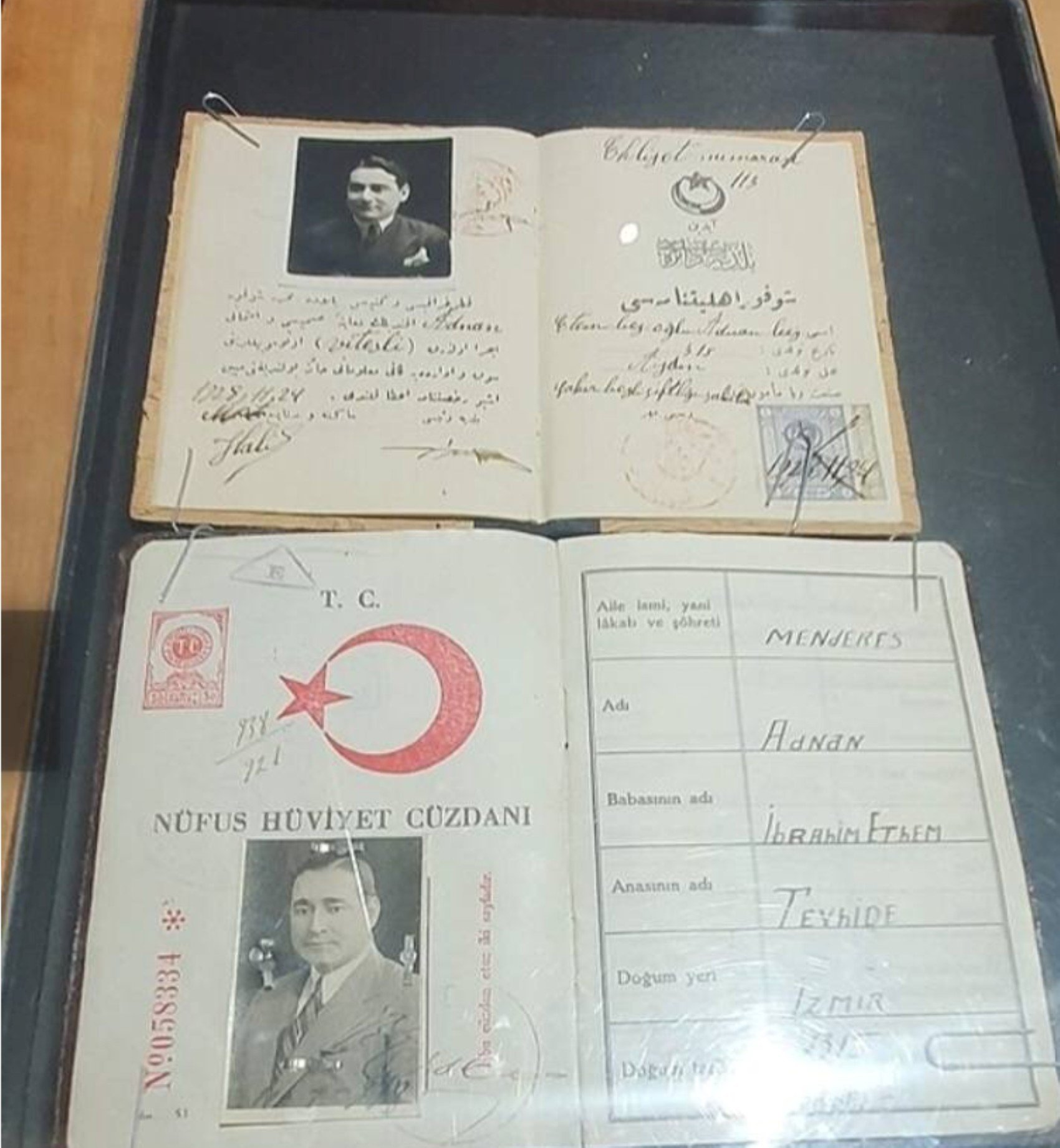
Cindoruk had undertaken the defense of the Democrat Party members in the Yassıada High Court of Justice trials; he had engaged in politics in the DP and AP. It is also useful to remember this.
ÇAKIRBEYLİ DEMOCRACY MUSEUM
Today, there is a Democracy Museum in the Koçarlı district of Aydın, which is Menderes's hometown.
This museum is one of the political maneuvers made by the AKP to be able to completely take over the legacy of the Democrats. In the opening videos in 2022, besides the AKP chairman, the then-interior minister S. Soylu is also seen.
A large land has been allocated for the museum. It has been designed as a replica of the ancestral “Bey mansion” in Çakırbeyli. Care has been taken to leave a magnificent impression on a hill by the Çine Stream.
Personal belongings belonging to Menderes are also exhibited inside and in its large garden. A revisionist effort for the restoration of reputation is sensed in every object. It is very clear that the museum is organized for ideological-political fortification for the government.
The main theme in the Çakırbeyli Democracy Museum, as in Yassıada, is based on the dilemma of Coup Plotters-Democracy heroes. A lot of effort has been made to enrich the museum; there is even the scissors with which Adnan Bey opened the Birecik Bridge.
According to the information I obtained from one of Aydın's local newspapers, there is something like this that has been newly added to the collection. According to the statement of the province's administrative chief, the villagers have handed over two Mauser rifles that Menderes, the leader of the Ayyıldız gang, is said to have used against the Greeks. One must ask how the region, which is an Italian occupation zone, was used against the Greeks. It is interesting to bring two rusty Mausers 100 years later and claim that Menderes used them.
To elevate Menderes to the rank of a saint, there is also a call for the grave of a person who taught him in the village, located in the mosque courtyard, to be turned into a mausoleum.
As can be understood from these two examples, Menderes's tragic end makes it quite difficult to examine the thoughts created around his name. In my opinion, most of what is told consists of legends.
Today, there is an atmosphere of a promenade/fairground around the Koçarlı Çakırbeyli Democracy Museum. It has served a function that enriches the Çakırbeyli village market so far. It has become a “touristic” place that is now encountered everywhere in Turkey. The plane tree, under which it is said that Menderes rested in the shade by the Çine Stream, has been named the democracy plane tree. Menderes has turned into a marketing object in the hands of right-wing politics three-quarters of a century later.
THE WRONG ATTITUDE OF CHP LEADERS
As for the CHP, especially after Kılıçdaroğlu was brought to the chairmanship, it entered a wrong line. An objective attitude towards Turkish history of democracy could not be developed. Party leaders did not own the history of the CHP. Instead of taking a balanced attitude in criticism and self-criticism, it began to display an approach as if all the arguments of the right were correct and justified.
The CHP is a party that is the founder of the Turkish revolution, the state, and democracy. Its founder is Gazi Mustafa Kemal Atatürk. Whatever the cause/whoever the perpetrator, it should certainly have contributed to the healing of past wounds. But it should not have created a perception as if it were responsible for these wounds. Party leaders could not achieve this delicate balance. I see the reason for this as a lack of historical vision.
Self-criticism was certainly possible with correct determinations. Instead of this, coming to the same line with the discourse of innocent Democrats-coup plotters was not politically correct. It was also historically wrong. This attitude was not only incorrect but also dysfunctional in terms of appealing to the right-wing voter. The new chairman of the CHP also continues this wrong line. He also does not seem very knowledgeable about historical subjects.
FREE PARTY CADRES IN CHP
Adnan Bey had actively taken part in the İzmir-Aydın organization of the Free Party (Serbest Fırka) in 1930. The party was closed in a controversial manner. The notables of Aydın and İzmir had shown great interest in the Free Party. They understood freedom as capitalism and the market. They were right in their own way.
Fethi Bey had come to Turkey for summer vacation in August 1930. He was the Paris ambassador. He had been encouraged to establish a party in Yalova. Things did not develop in accordance with Gazi's expectations. The 1930 municipal election results did not satisfy Gazi either. He went on a trip to the region before the 1931 elections.
After the dissolution of the Free Party—interestingly—the cadres who took part in this party took part in the Aydın People's Party (Halk Fırkası) organization. In fact, Adnan Bey became the party's Aydın Provincial Chairman. Atatürk was not very willing to meet with Menderes at first, but he was very pleased with Menderes's four-hour briefing on agriculture and cooperativism. He showed him as a parliamentary candidate in the 1931 elections without him even knowing. This is the source of the saying attributed to Menderes, “Atatürk discovered me.”
Menderes was now the Aydın deputy in the spring of 1931. It had returned to a single party again. I interpret this situation as the CHP's policy of assimilating the potential opposition party's elites by adding them to its cadres. There are even CHP members who complain about this. Saying that all the Free Party members filled the party.
LAW ON THE MEDAL OF INDEPENDENCE
The Law on the Medal of Independence is dated October 30, 1920. Its number is 66. The law was published in the Ceride-i Resmiye (Official Gazette) on April 4, 1921.
It is noteworthy that the law was published with such a delay. The reason must be political and military conditions.
The Law on the Medal of Independence has undergone changes in terms of proposal authorities. When the law was first issued, the medal was earned with the proposal of the Council of Ministers (Heyeti Vekile) and the decision of the TBMM. In later regulations, the authority was given to the Ministry of National Defense. The medals were given with the tripartite decree of the President, the Prime Minister, and the Minister of National Defense. However, while preparing this article, there was a point that caught my attention. There are TBMM decisions regarding the Medal of Independence until the end of the 1940s. In the direction of earning or rejection. I couldn't fully understand why it was like this. A slightly more detailed study needs to be done.
If I need to give information about the development of the legislation, the Law on the Medal of Independence underwent changes in 1923, 1924, 1925, 1926, 1927, 1934, 1939, and 1940. These changes are basically related to the transfer of the medal. There has been no change in the purpose (spirit) of the law in 1920.
In my opinion, the most important points in the law were these: To be actually at the head of a unit or to “show maximum effort for the realization of the sublime purpose” behind the front. Meanwhile, the awarding of the medal had to be based on justification. This is called esbabı mucibe. The names of those who earned the right are published together with their justifications.
The law means to say that staff, commanders, officers, privates, and national heroes (soldiers from general to private) and people who exert maximum effort to reach the sacred goal are entitled to this medal.
ABOUT THE MEDAL OF INDEPENDENCE GIVEN TO MENDERES
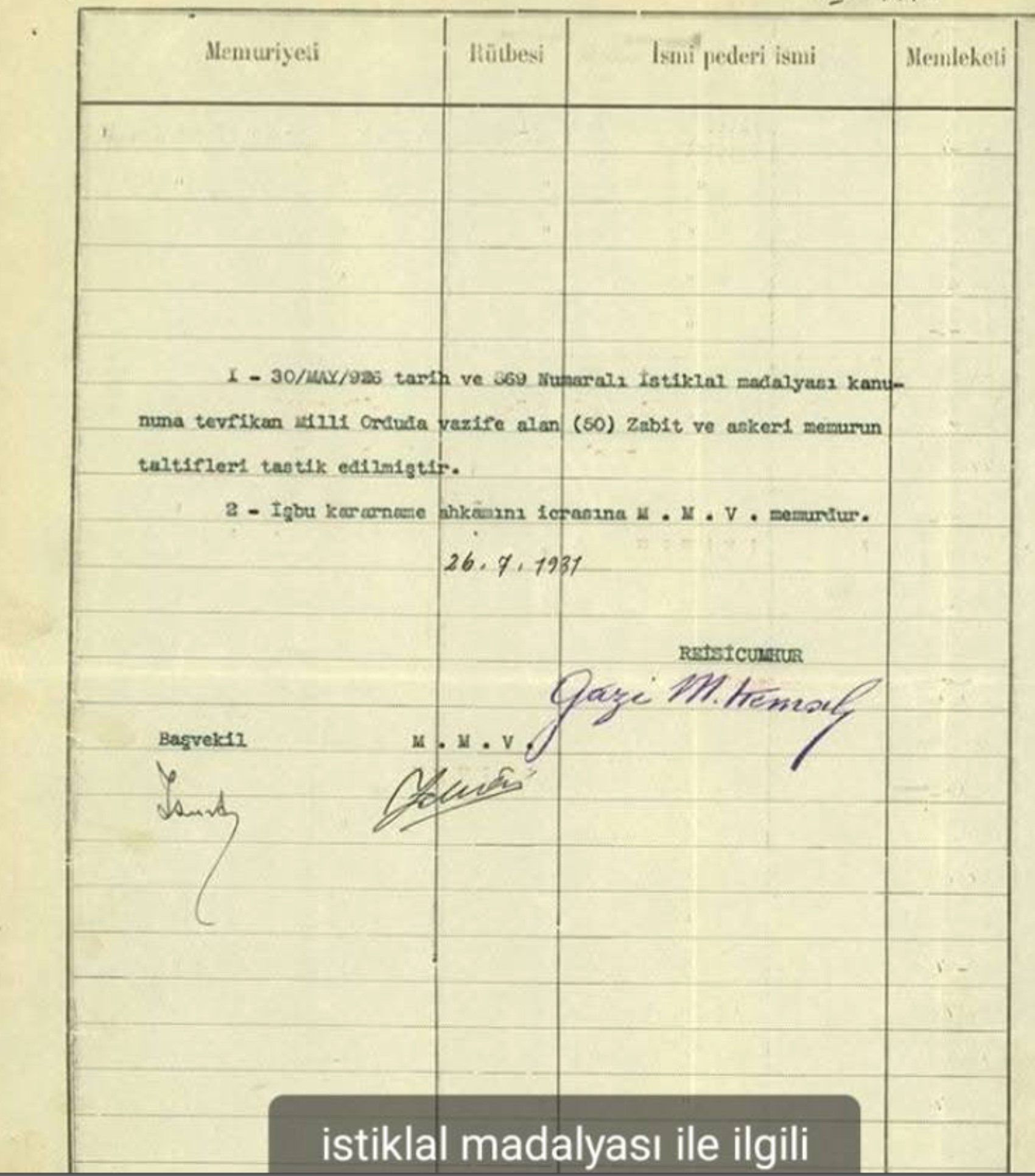
News regarding Menderes's Medal of Independence recently appeared in TRT and Anadolu Agency documentaries. I saw the decree visuals regarding the awarding of the Medal of Independence to 50 people, including Menderes, in the TBMM Library and the Republican Archive. The document dated 26.7.1931 bears the signatures of President Gazi Mustafa Kemal, Prime Minister İsmet Paşa, and Minister of National Defense Zekai Bey (Apaydın).
I COULD NOT FIND IT IN THE OFFICIAL GAZETTE ARCHIVE
All amendments to the Law on the Medal of Independence and laws and decisions regarding the awarding of medals were published in the Official Gazette. But interestingly, I could not find the decree in question in the 1931 official gazettes. Actually, I just wanted to examine the list because I was curious about who the other names were.
In the visual in the TRT news source, it is seen that medal number 16443 was given to Atnan, son of Ethem. Atnan, not Adnan. It must be a typo.
The name following him is Ethem, son of Katri (Kadri). His hometown is recorded as İzmir. The document in the Prime Ministry Republican Archive dated 20.7.1931 was answered on 26.7.1931 as “the decree attached to the prime ministry has been signed and returned, sir.”
WHY WAS THE MEDAL GIVEN TO MENDERES IN 1931?
I interpret the awarding of the Medal of Independence to Adnan Menderes and Ethem Bey as a political decision. Let me explain.
The point that needs explanation in the awarding of the medal to 50 people (a significant portion of whom are reserve officers), including Menderes, is that there is no record of this in the 1931 Official Gazette archive. There is a medal. There is no TBMM decision or government decree in the Official Gazette. What I see are only the documents published in TRT and Anadolu Agency.
Here I would like to touch upon the political dimension of the decision. Law No. 66 was issued in 1920, published in the Official Gazette in 1921, and it was regulated in detail who would be given the medal. Medals began to be given by the decision of the TBMM. The proposal authority was the Council of Ministers through the Ministry of National Defense. Medals were given until 1926. There are changes after this date. But the procedure is the same.
Menderes's participation in the War of Independence has been exaggerated in the right wing. The Menderes construct in the right wing is as follows: Adnan Menderes, who fought heroically as a reserve officer in the First World War and the National Struggle, holder of the medal of independence, owner of the Çakırbeyli farm, İzmir American College graduate Aydın deputy.
Let me write my own opinion: I find Menderes's participation in the national struggle weak and indirect. I am of the opinion that the medal was not given to him due to his reserve officer identity. The medal was not given until 1931. He was shown as a parliamentary candidate by the leader of the CHP in the 1931 elections and was elected. Adnan Menderes, the owner of the Çakırbeyli farm and the young Aydın deputy, was politically awarded the medal “due to necessity” and was equalized with other deputies with medals. Adnan Bey served in the CHP as a deputy and party inspector until 1946. Considering that Menderes was a dynamic single-party deputy during Atatürk's lifetime and the İsmet Paşa period, it is seen that he was a political actor willing to come to the fore before the multi-party political life.
Would you like to get notifications about new developments and save news?
- NotificationsNew developments and breaking news
- SaveNews is stored in the app
Most Read
Statement from Nihat Zeybekci on the fund investigation
New 75,000-seat stadium plan for Fenerbahçe
Interpol and MIT tracking yields results in Izmir
ID convenience for KPSS candidates

2027 Budget: Taxes for the people, tax exemptions for capital

The reality of Akkuyu and the longing for national nuclear power

To whom and how was the Petition of Intellectuals submitted? Who accepted the petition?

The Çanakkale robbery -1- How was the Troy treasure smuggled out?

Artificial intelligence and the new imperialism

Ministry investigation into unauthorized promotional messages