


Yahya Kemal: Diplomat and Member of Parliament



DID YAHYA KEMAL THROW HIMSELF AT THE FEET OF MUSTAFA KEMAL PASHA?
In an article he published, Falih Rıfkı Atay used disparaging expressions about Yahya Kemal. This appeared in the May 2, 1965 issue of Dünya Gazetesi. Similar expressions can also be found in the memoirs of Mina Urgan. Mina Urgan is Falih Rıfkı's stepdaughter. Falih Rıfkı's sentences are exactly as follows: I remember only one man who threw himself to the ground and kissed Atatürk's feet: Yahya Kemal! He kissed them the first time he encountered him in Bursa.
Falih Rıfkı suggests that Yahya Kemal performed this act to atone for fleeing to Bulgaria with money sent to him to cross into Anatolia during the most critical period of the National Struggle. At that time, the army had narrowly escaped collapse during the Battle of Kütahya-Eskişehir. Yahya Kemal, however, had gone to Sofia under the pretext of thermal spa treatment.
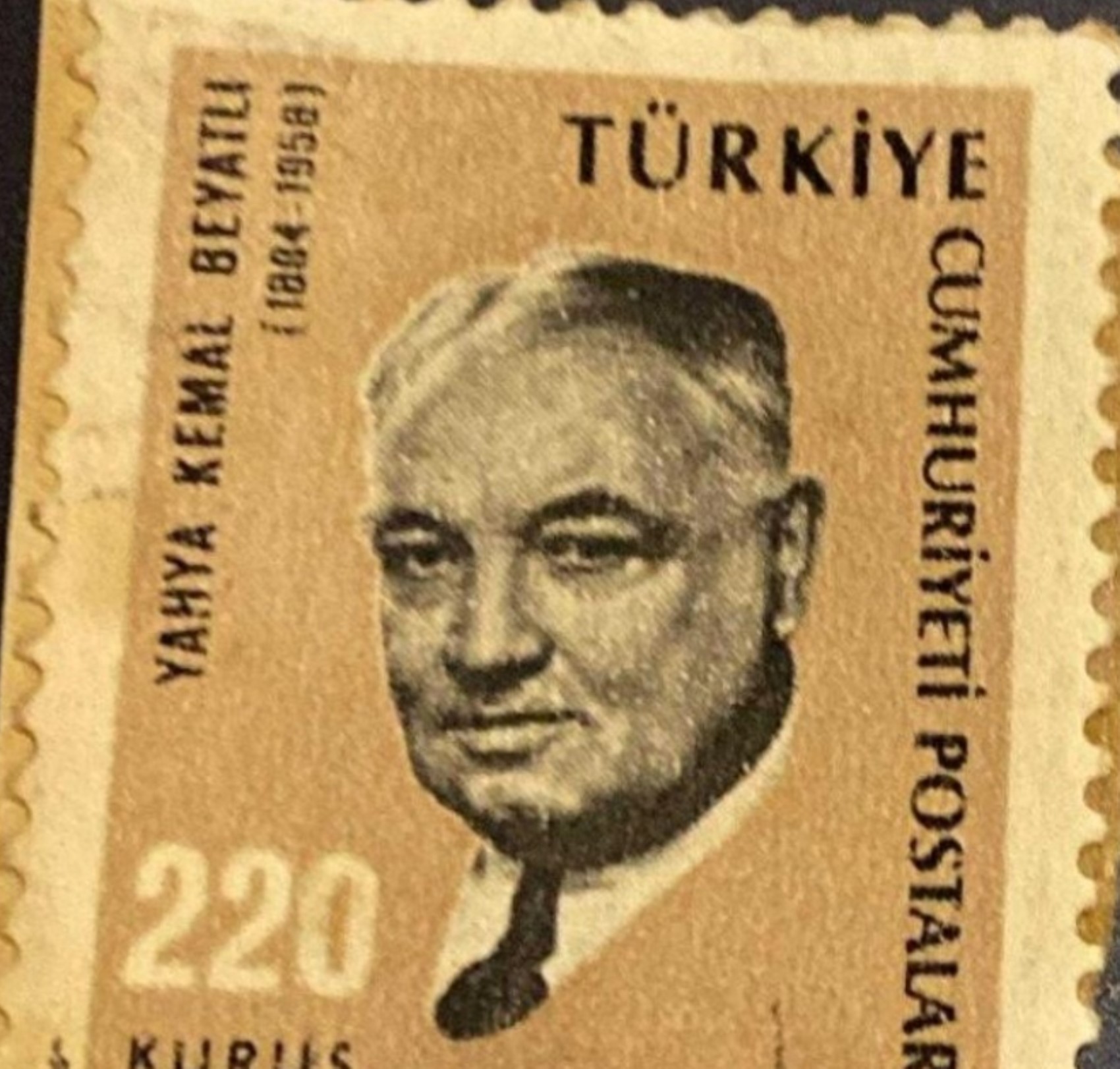
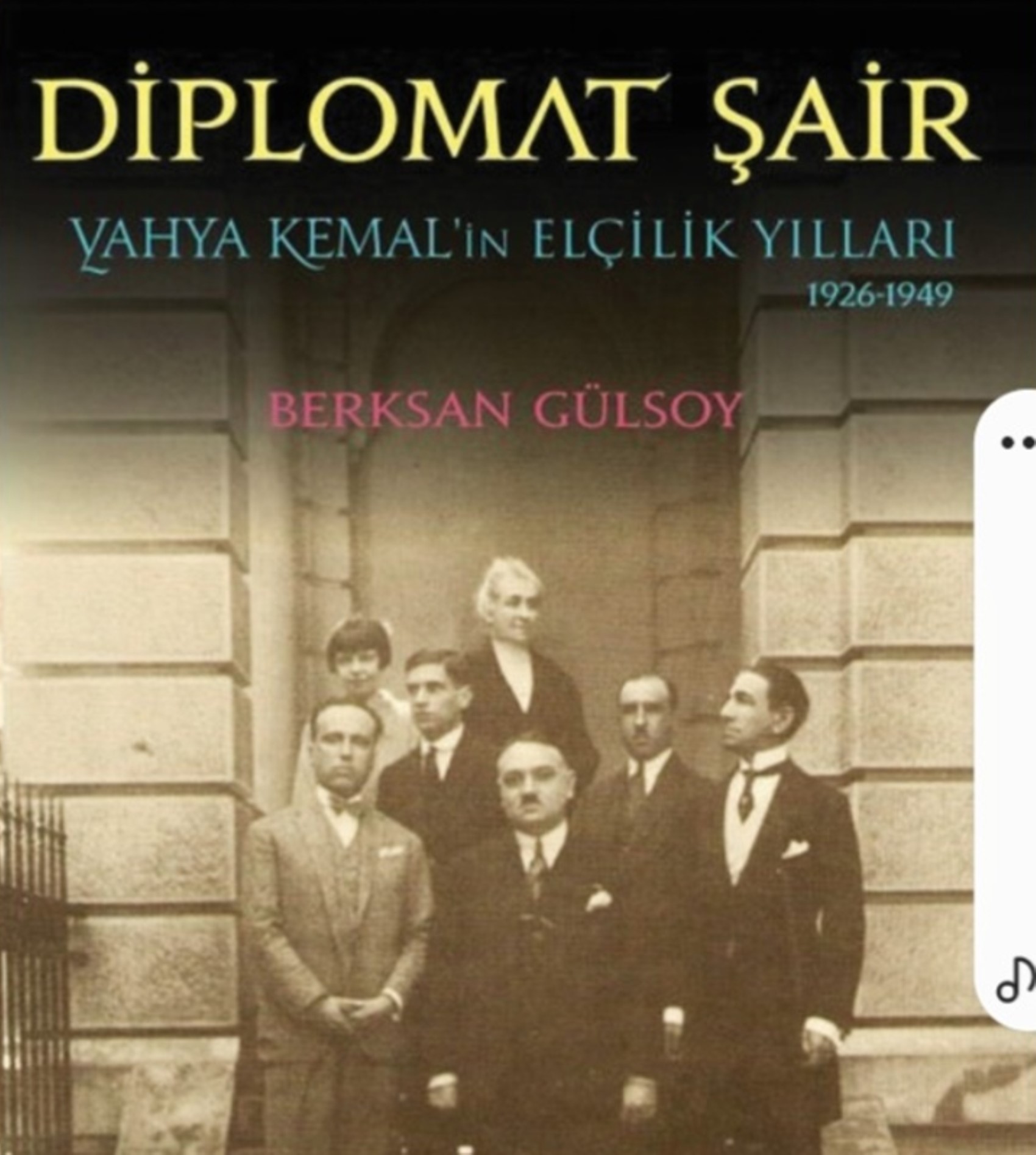
I do not suspect that the event took place in the form of "throwing himself at his feet," but I can say that the poet was always wary of (or afraid of, if you will) Atatürk. I have observed in many photographs Yahya Kemal's attitude of bowing excessively when greeting authority (the sovereign). He behaved this way especially when presenting his letters of credence as a diplomat. I recommend that you examine the photographs.
RELATIONS WITH THE COMMITTEE OF UNION AND PROGRESS - PROFESSORSHIP AT DARÜLFÜNUN
During his days as a Young Turk in Paris, he was in close contact with history, literature, and political circles, such as Ahmet Rıza, Dr. Nazım, and Prince Sabahattin (1903-1912).
He shared the same environment with students studying or specializing at the university. Dr. Tevfik Rüştü Aras and Dr. Nihat Reşat Belger are among these names. Both were doctors. They were receiving specialized training.
Yahya Kemal was involved in political circles from the time of the Constitutional Monarchy. The conflict and competitive nature of politics kept him from being an active politician.
His interest shifted to history and cultural topics. He was never an activist Young Turk.
He studied political science at the Sorbonne. He was not successful in the exams. He turned to literature. In the end, he returned without receiving a diploma in any field. His friend Abdülhak Şinasi Hisar was the same. This seems a bit strange to me.
But he drew attention with his knowledge. Thanks to Ziya Gökalp, he became a professor at Darülfünun. Gökalp had also attended the Veterinary School (Veterinary Faculty) but had not finished or could not finish it. His teaching ability was highly appreciated. Let me remind you: Halide Edip was also appointed as a professor by İnönü to establish the Department of English Language and Literature (1940). She also did not have a university diploma. She was a graduate of the American College.
Ahmet Hamdi Tanpınar and Nihat Sami Banarlı were his oldest students and friends. He also had a very good relationship with Münir Nurettin.
During the Constitutional Monarchy, he was not distant from politicians or the ministers of the Committee of Union and Progress government. But he was not involved in politics.
Except for a few words he said to Talat Pasha towards the end of the war, he had no problems with the government. These words were also about the fate of the war. He had only expressed his concerns.
PRESS ADVISOR TO THE LAUSANNE DELEGATION
The Lausanne negotiations were conducted by the Delegation of Plenipotentiaries (the TBMM delegation authorized to negotiate and sign). We must know that there was a large advisory committee that would provide consulting services to this delegation. This committee was called the "heyeti müşavere" (consultative committee).
They had sat at the negotiating table to reach a final solution to the 200-year-old Eastern Question.
There was one more important point. The delegation had been given a political aspect by the TBMM Government. The document consisted of 14 articles. It was signed by Mustafa Kemal Pasha (Speaker of the TBMM) and Rauf Orbay (Chairman of the Council of Deputies). It was determined in articles on which issues they should be moderate and on which they should be uncompromising. The Delegation of Plenipotentiaries consisted of İsmet Pasha, Dr. Rıza Nur, and Hasan Saka.
In addition to these names, Münir Ertegün, Muhtar Çilli, Veli Bey, Zülfü Bey, Zekai Apaydın, and Celal Bayar were on the advisory committee.
Dr. Nihat Reşat Belger, Ali Fuat Türkgeldi, and Cevat Açıkalın were also included in the delegation.
Cavit Bey, Hayim Nahum Efendi, Tevfik Bıyıklıoğlu, Yusuf Hikmet Bayur, Tahir Taner, Şükrü Kaya, Pirinçcizade Fevzi Bey, Reşit Safvet Atabinen, and the Turkish director of Robert College, Hüseyin Pektaş, were also on the advisory committee.
Some of these names were members of parliament, and some were high-level bureaucrats.
In Lausanne, Yahya Kemal and Ruşen Eşref Ünaydın were present as press advisors. These two names were meaningful choices.
As is understood, there was a fairly large committee of advisors who had knowledge in legal, financial, and administrative matters and the issue of minorities, and who spoke foreign languages well.
In the meantime, let us say that Ali Naci Karacan and Hüseyin Cahit Yalçın also joined the delegation as journalists. Ali Naci followed Lausanne on behalf of Akşam newspaper, and Hüseyin Cahit on behalf of Tanin newspaper.
YAHYA KEMAL'S DIPLOMACY
After the 1922 Bursa meeting, Yahya Kemal joined Gazi Mustafa Kemal Pasha's party. He was invited to Ankara. He joined the Lausanne delegation (delegation of plenipotentiaries) as a press advisor along with Ruşen Eşref Ünaydın.
While the Lausanne negotiations were continuing, the First Parliament decided to renew the elections. The negotiations were interrupted. The delegation returned in April to continue the negotiations. Interruption: February 4, 1923; return: April 23, 1923.
Yahya Kemal was nominated by Gazi Mustafa Kemal Pasha, the leader of the First Group of the Association for the Defense of Rights. He was elected as a member of parliament from Urfa.
As a member of parliament and a commission member, he showed remarkable success in the Syria border negotiations held with the French government.
This diplomatic success led to the belief that he could be utilized in the Ministry of Foreign Affairs (could be employed as an ambassador) during the establishment phase of the republic.
Yahya Kemal had been in France for a long time and had been appointed as a professor at Darülfünun by the Unionists. Being a well-known poet who was fluent in Western and Eastern culture made it easier for him to be given a position in the Foreign Ministry.
In the meantime, there is an important point that should be known. The Republic largely took over the diplomatic staff of the Ottoman Ministry of Foreign Affairs. It added its own staff to this.
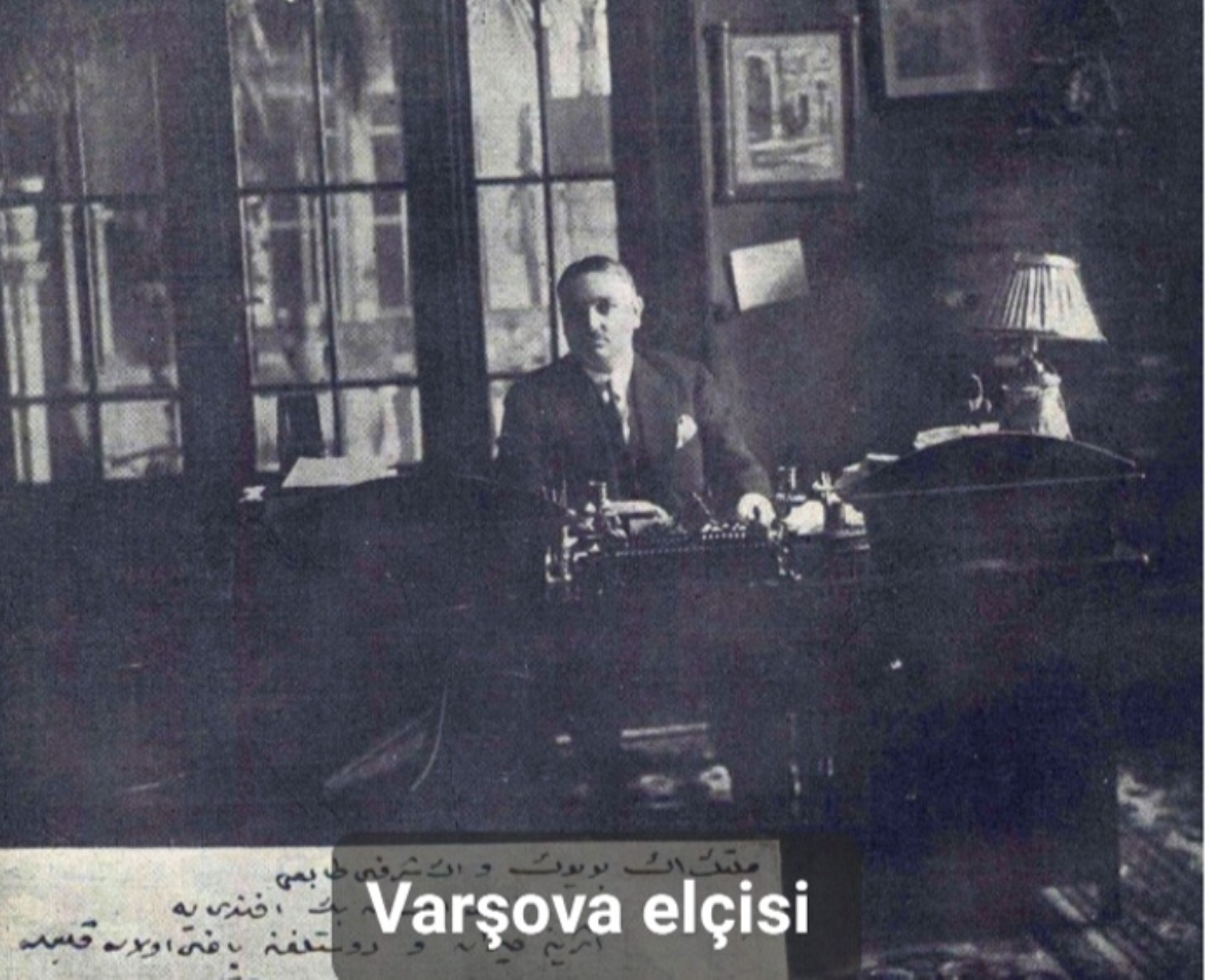
AMBASSADOR TO WARSAW
Most of the new diplomats were the elites of the national war of liberation: There were soldiers as well as civilians. Two examples: Kemalettin Sami Pasha (Ambassador to Berlin) and Vasıf Çınar (Ambassador to Prague).
The First World War had changed the political geography of Europe, and new states had been established. Such as Poland, Czechoslovakia, Austria, Hungary, and the Kingdom of Serbs, Croats, and Slovenes.
It was necessary to appoint diplomatic representatives to these new European states.
Dr. İbrahim Tali Öngören, the doctor of the President (reisicumhur) Mustafa Kemal Pasha, had been appointed to Warsaw.
Dr. Öngören had been in foreign missions since the beginning of the National Struggle. He wanted to return to Turkey and take on internal duties. He was elected as a member of parliament and was brought to the positions of First General Inspectorate.
Yahya Kemal's first diplomatic mission was the Warsaw embassy, which became vacant after Dr. Tali Bey. Our diplomatic mission in Warsaw was at the level of a legation (envoy). (Term of office: June 14, 1926 - March 14, 1929)
Yahya Kemal left a very positive impression in Warsaw. His intellectual qualities aroused admiration. He represented the new Turkey in the best way possible.
It is possible to feel the effect that the Warsaw winters had on him in his poem "Kar musikileri" (Snow Musics). He wrote this poem while listening to a record by Tanburi Cemil Bey under heavy snowfall. The date is 1927.
YAHYA KEMAL FACING THE IZMIR ASSASSINATION TRIALS
Immediately after Yahya Kemal was appointed as the ambassador to Warsaw, an assassination plan against Gazi Pasha was uncovered in Turkey.
Many opponents, including the leadership of the Progressive Party established in 1924, were arrested. There were those who were sentenced to death. From what I understand from what has been written, Yahya Kemal went to Berlin Ambassador Kemalettin Sami Pasha and stated that he was worried about the trials. He said: "This cannot go on like this. You take over the administration. I will handle the civil affairs." If such an event really happened, this is a good indication that Yahya Kemal did not understand politics at all. A strange thought that is difficult to explain, indeed.
Kemalettin Sami Pasha dismissed Yahya Kemal's thoughts because he did not take them seriously. However, he did not neglect to report the incident to the Ministry of Foreign Affairs. Upon this, Yahya Kemal was very afraid that Atatürk would punish him. Yahya Kemal is a suspicious person. He has had a timid nature since childhood. It is normal for him to be afraid. Since Atatürk did not remove Yahya Kemal from his post and later sent him to Madrid as an ambassador, he must not have considered the incident important.
But in my opinion, this event is important for understanding Yahya Kemal's personality.
THE WELCOMING OF THE KARADENİZ STEAMSHIP BY YAHYA KEMAL AT THE PORT OF DANZIG
The idea of the Karadeniz Steamship visiting all European ports was that of President Gazi Mustafa Kemal Pasha. The Karadeniz steamship visited 12 countries and 16 port cities between June 12, 1926, and September 8, 1926. The steamship was painted white in the Haliç shipyards, and its interior was turned into a fairground to exhibit commercial and cultural products. The 86-day journey started from the Galata Wharf. It ended at the same place. The ship returned after stopping at the ports of Barcelona, Le Havre, London, Amsterdam, Hamburg, Stockholm, Helsinki, Leningrad, Danzig, Copenhagen, and Antwerp.
One of the ports visited was the port of Danzig in Poland, where Yahya Kemal was assigned as ambassador.
Turkish Ambassador Yahya Kemal went to Danzig. He welcomed those who came from his country. Among the representatives, there was even a representative of the confectioner Ali Muhittin Hacı Bekir. Turkish delight was served to the guests along with Turkish coffee.
Journalist-writer Vala Nurettin Bey was also on the ship. He was included in the staff because he knew Russian. Va-Nu Bey, Nazım Hikmet, and Şevket Süreyya had studied together at the Moscow University of the Toilers of the East. (1921-1924)
When the ship went to Leningrad, he met with Nazım. Nazım had returned to Russia (by fleeing) due to the 1925 TKP arrests.
Yahya Kemal would invite Va-Nu Bey to Madrid during his embassy in Spain and host him there for a month. Va-Nu Bey's friendship with Yahya Kemal goes back to the armistice period.
When he went to Spain, Yahya Kemal personally took his guest around. He even took him to the Toledo and Escurial castles.
Yahya Kemal's Warsaw embassy went well in terms of representation. He established very good relations there. Poland and Turkey were newly established republics after the First World War.
MADRID EMBASSY
After the Warsaw embassy, where he was tired of the long winters but which was productive in terms of literature, the Republican government assigned the poet to Madrid. As an ambassador. After a while, our Lisbon representation was also given to his charge.
The days in Spain were extremely pleasant for Yahya Kemal. But it is not very easy to say the same things in terms of the embassy mission.
King Alfonso XIII was at the head of the Kingdom of Spain.
Our poet became the most popular diplomat of the Spanish aristocracy with his pleasant conversation and broad culture.
However, there were anti-monarchy republican forces in Spain. In 1931, the king had to abdicate and leave the country.
Diplomats who sympathized with the king and were pro-monarchy left Madrid. They left the capital, went to other cities, and began to watch the developments. They did not support the republicans.
Yahya Kemal created the impression that he was against the republicans as the ambassador of the Republic of Turkey. Atatürk was very angry at this lack of politics of Yahya Kemal. He said, "The representative of the republic should have welcomed the republicans."
Our ambassador, Yahya Kemal, was dismissed from his post as the Spanish embassy and called to the center.
However, he sent an excuse letter stating that he would go to Paris for treatment.
This attitude means that our dismissed Madrid Ambassador disregarded the will of the Turkish Foreign Ministry and the President.
Instead of sending regular reports about Spain, the Turkish ambassador was interested in Andalusian civilization, wandering in Granada and Cordoba, conducting ethnological studies, and did not neglect to have fun.
He was watching flamenco dances and was busy creating the infrastructure for the poem "Endülüs’te raks" (Dance in Andalusia) (cymbals, shawl, and rose).
After being dismissed from the Madrid embassy, he remained unemployed for quite a long time.
He went to Hamdullah Suphi Bey, who was the ambassador in Romania. He actually took refuge with him. He was expecting protection against the Foreign Ministry. After traveling around Europe for quite a long time thanks to his personal connections, he was pardoned by Atatürk through the mediation of Hamdullah Suphi and Yakup Kadri. Both writers were serving as ambassadors in Europe. Yahya Kemal was pardoned, but he was not given a position in the Foreign Ministry. It was ensured that he was elected as a member of parliament.
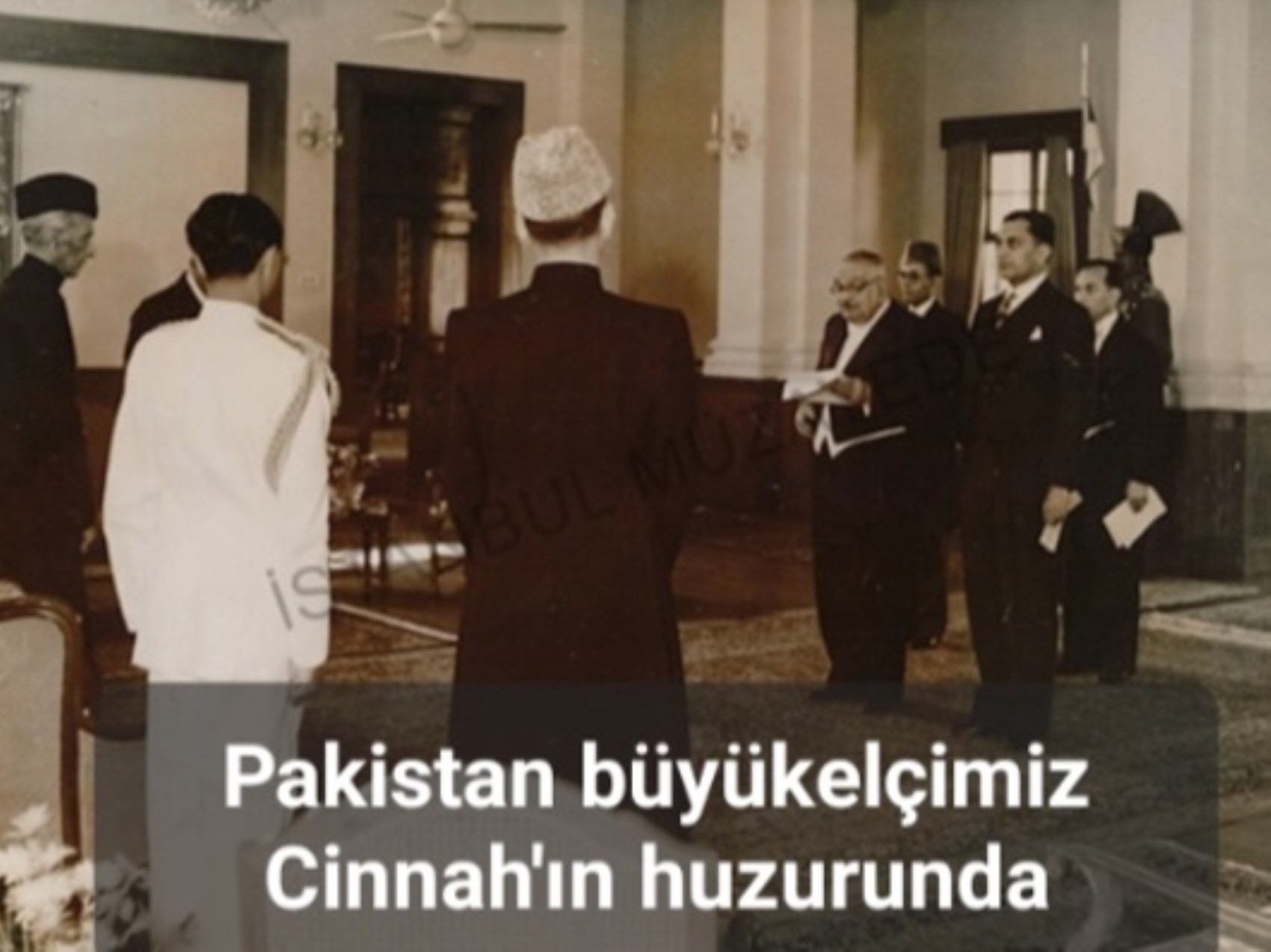
AMBASSADORSHIP IN KARACHI
In the 1946 parliamentary elections, the Democrat Party won Istanbul. Yahya Kemal was the candidate of the CHP. He could not be elected. In Istanbul, Karabekir and Cebesoy had been placed ahead of him on the list. They entered the parliament. Yahya Kemal could not. However, the party administrators had promised him a parliamentary seat. The CHP administrators were embarrassed before him.
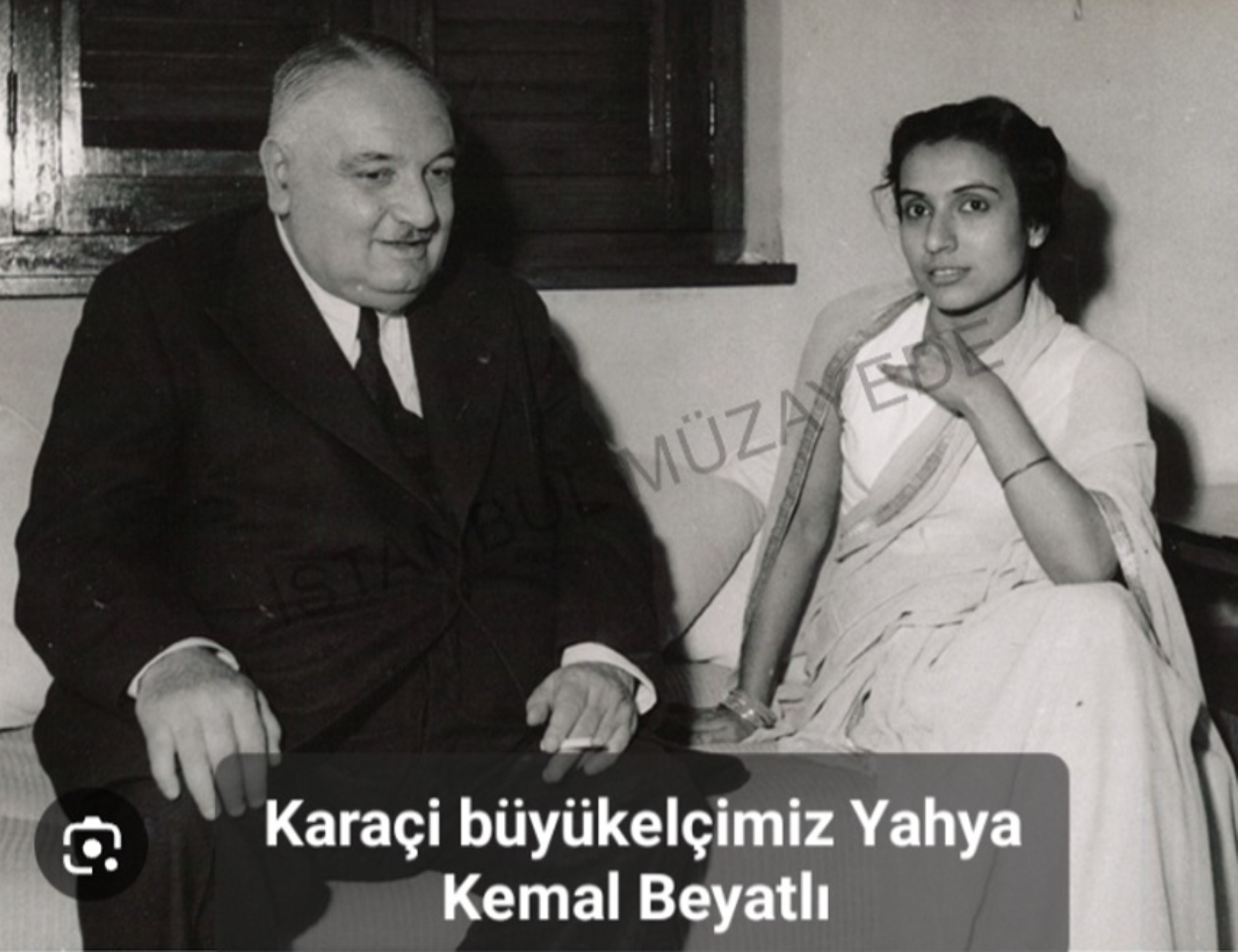
To compensate, Prime Minister Recep Peker and Foreign Minister Necmettin Sadak proposed the Karachi ambassadorship. Pakistan had been newly established by separating from India. A well-known figure was sought who would establish diplomatic contact with this new state. Yahya Kemal was a suitable profile.
For Yahya Kemal, the responsibility of establishing the Turkish mission arose, just as it had in Warsaw.
All ambassadors sent to Pakistan had settled in the rooms of the city's best hotel. A temporary solution had been found by allocating a few rooms for each embassy. The situation was the same for the Turkish ambassador.
He established very good relations with Muhammad Ali Jinnah, the founding head of state of Pakistan. There was a historical friendship relationship between the two countries dating back to the years of the national struggle.
A few weeks after he started his duty as the Karachi ambassador, a document reached him from the personnel department of the Ministry of Foreign Affairs. He was being informed that he would be retired (ex officio) due to the age limit because he had turned 65. The ministry had made this decision based on population records.
However, he thought he was 63 years old according to the Rumi calendar. His date of birth according to the Rumi calendar was 1300.
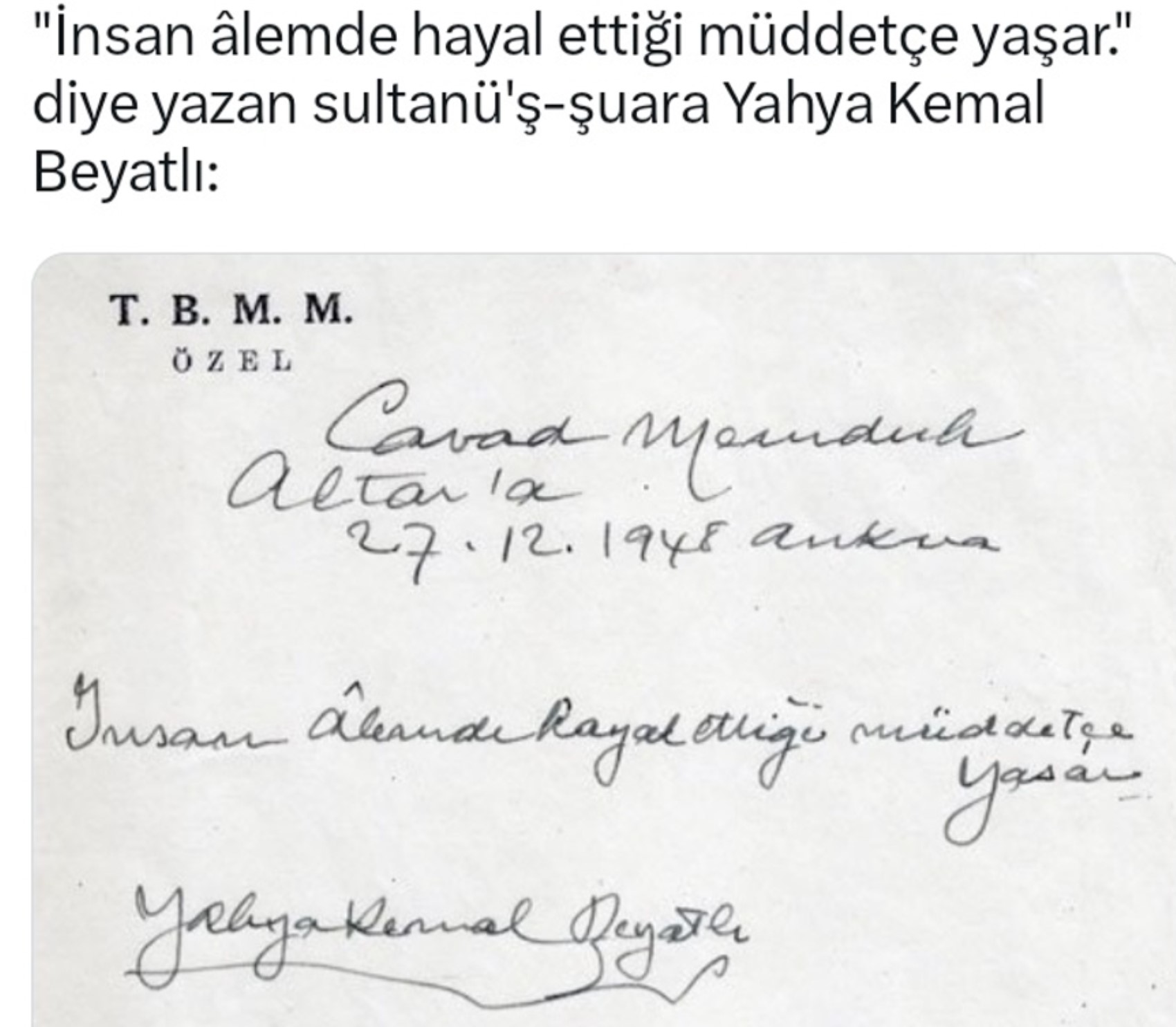
He argued with the ministry for a while. He submitted petitions. The ministry rejected his application. He was retired with the rank of envoy. Yahya Kemal's Pakistan Ambassadorship lasted less than a year. March 4, 1948 - December 27, 1948. He retired at the beginning of 1949.
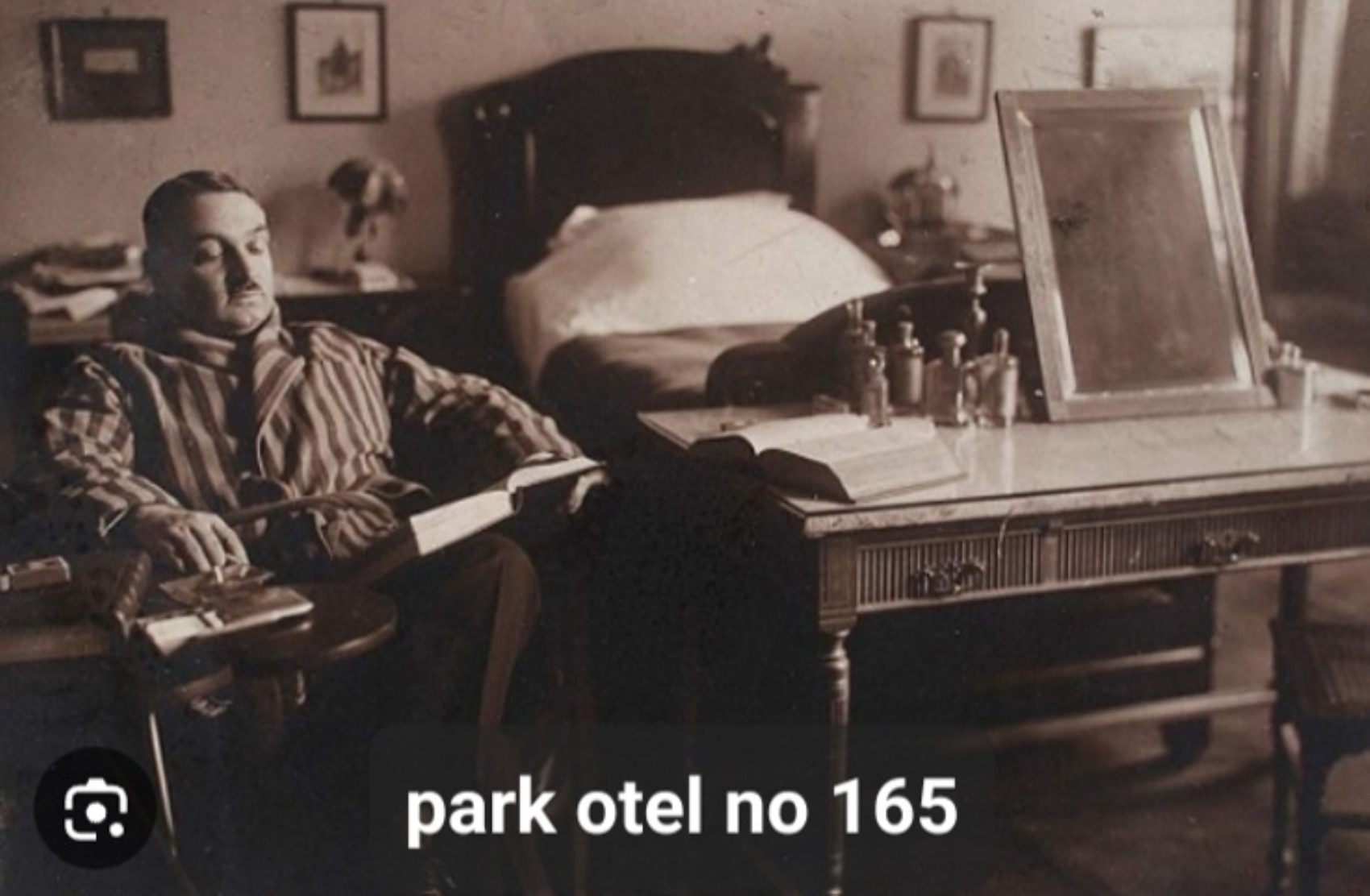
His life after this - as is known - passed at Park Hotel number 165. He spent the last nine years of his life in a hotel room.
If one needs to evaluate the diplomat Yahya Kemal, he was extremely diligent in the Warsaw Embassy. In Madrid, however, he could not analyze the environment of political turmoil well. He could not grasp the political transformation in Spain.
For this reason, he had attracted the reaction of the Turkish Foreign Ministry and Atatürk by giving the impression of a pro-king diplomat. He was called to the center. "He was considered to have resigned because he did not comply with the procedures of the foreign service, and he was dismissed."
The Spanish embassy was diplomatically unsuccessful but very productive in terms of literature. The products (poems) that emerged show this.
It would be correct to interpret his appointment as ambassador to Karachi as a gesture of the CHP government to the poet. It was to ensure his retirement with the title of ambassador, which is the highest-ranking position in the foreign service.
YAHYA KEMAL AS A MEMBER OF PARLIAMENT
Yahya Kemal was elected as a member of parliament from Urfa in the second term of the TBMM. (1923)
He resigned in 1926 and moved to diplomacy. He was dismissed due to his attitude in Madrid.
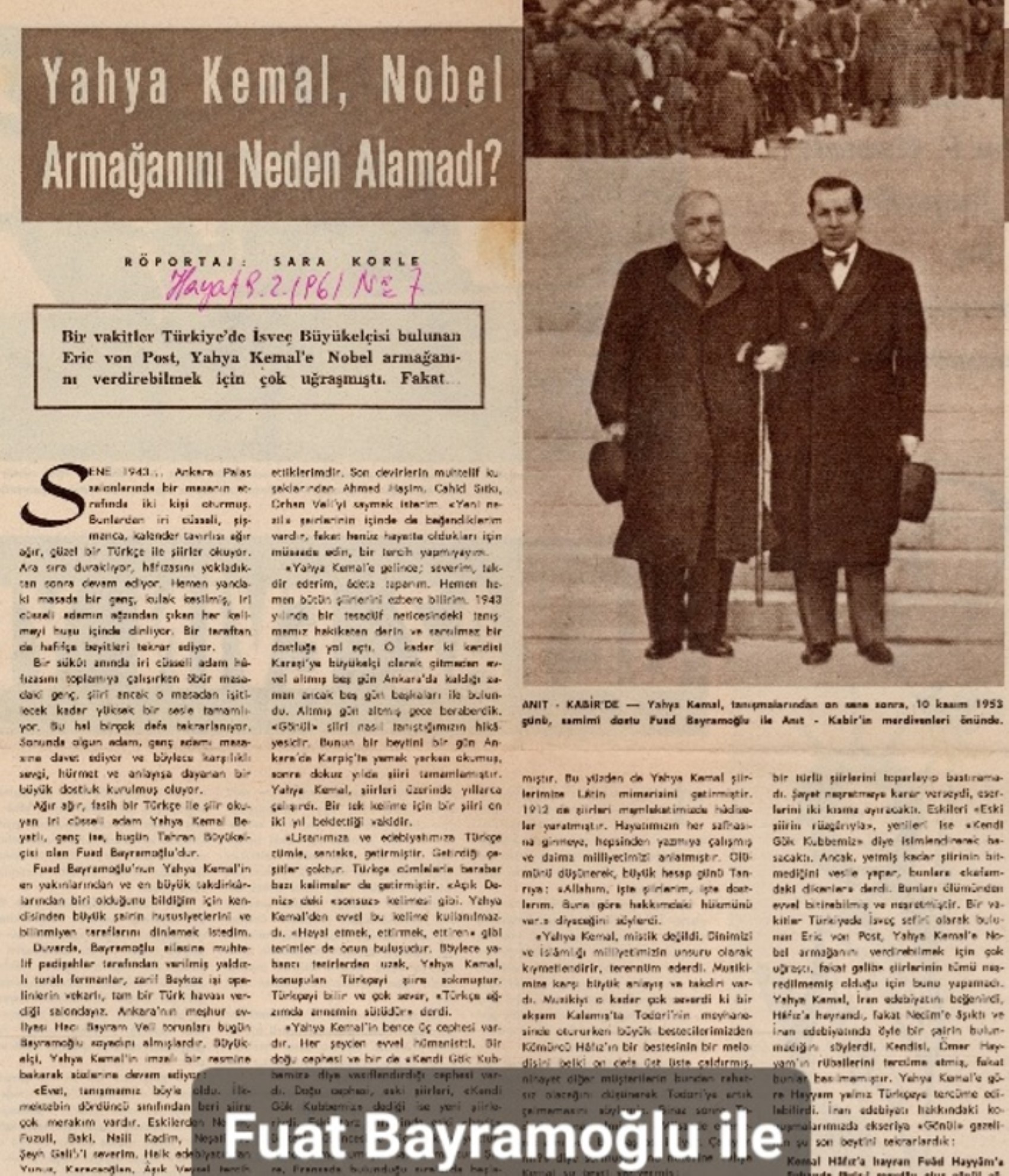
He was pardoned by Atatürk and it was ensured that he was elected as a member of the TBMM. His parliamentary membership continued during the time of the National Chief (İnönü).
After İnönü was elected president, he ensured that many literature and art figures and faculty members were elected as members of parliament. For example, Tanpınar, Reşat Nuri, Falih Rıfkı, and Tahsin Bekir Balta.
Yahya Kemal continued his TBMM membership from 1934 to 1946. However, he did not have an active parliamentary life. He served as a member of parliament for 1934-1935 (Yozgat), 1935-1943 (two terms Tekirdağ), and 1943-1946 (Istanbul).
Rather than general assembly work, he participated in the work of the education and foreign affairs commissions.
In 1946, he could not be elected as a member of parliament from Istanbul, where he was nominated.
IF ONE NEEDS TO MENTION A FEW SOURCES
If one needs to mention a few sources regarding Yahya Kemal's diplomatic side, first and foremost, the late ambassador Bilal Şimşir's book "Bizim Diplomatlar" (Our Diplomats) and the article "Şair Yahya Kemal Beyatlı’nın Elçiliği ve Büyükelçiliği" (The Embassy and Ambassadorship of Poet Yahya Kemal Beyatlı) should be mentioned. Beşir Ayvazoğlu's "Yahya Kemal’in Bir Siyasetçi Olarak Portresi" (Yahya Kemal's Portrait as a Politician) and Nezahat Özcan's article titled "Yahya Kemal Beyatlı’nın elçilik yılları ve diğer resmi vazifeleri" (Yahya Kemal Beyatlı's embassy years and other official duties) should also be read.
ALWAYS BEING AFRAID OF MUSTAFA KEMAL PASHA
Yahya Kemal remained in Istanbul during the Armistice. He continued his duty at Darülfünun. He saw the Anatolian movement as legitimate. He was publishing his thoughts in Dergah Magazine. However, he did not want to leave his comfort zone and take risks.
He did not respond to the call to cross into Anatolia, citing his health problems as an excuse. Note: indeed, he always had health problems. While the intellectuals of Istanbul were finding a way to cross into Anatolia upon invitation, Yahya Kemal went to Sofia for thermal spa treatment.
He continued to support our national war of liberation with his writings. He did not cross into Anatolia. The invitation had taken place during the most critical phase of the war. (Great Greek attack: Eskişehir-Kütahya battles)
For this reason, he was afraid of incurring the wrath of Gazi Pasha.
After the victory, he enthusiastically led the way for an honorary doctorate to be given to Gazi and for a Darülfünun delegation to go to him in Bursa. In my opinion, there was fear behind this excessive willingness.
But what he feared did not happen. He was received well. His fault was not thrown in his face. The Commander-in-Chief did not even bring up this deficiency. This is Atatürk's greatness.
Just as Yahya Kemal had taken part in the Committee of Union and Progress elite during the Constitutional Monarchy, he also took part in the ranks of Mustafa Kemal Pasha and the People's Party during the Republic.
Atatürk made him a member of parliament and an ambassador. Politically, he was not a revolutionary but an "imtidadçı" (evolutionist, meaning in favor of slow, gradual development). He was not against reforms. He was against the violence of the revolution - the speed of change. But he avoided pronouncing this openly.
The great artistic performance he displayed is the reason why the CHP leadership ignored the emotional bond he established with the Ottoman Empire. In my opinion, Hamdullah Suphi and Fuat Köprülü can also be included in this group.
These three names took part in the revolution without making their opposition to the revolution very obvious. But on the conservative-right wing.
After the passing of the Great Atatürk, they all spoke against him - more or less.
Yahya Kemal had written in newspapers and magazines close to the Unionists during the Constitutional Monarchy. After the Republican revolution, he published articles in the official publication organs of the People's Party. He wrote column articles. But he did not adopt an attitude that directly poked at the power structure.
This political attitude is the main factor that allowed him to take part among the single-party elites.
He always maintained his place among the elites of the Atatürk and İnönü eras by being involved in politics but not being an active politician.
Would you like to get notifications about new developments and save news?
- NotificationsNew developments and breaking news
- SaveNews is stored in the app
Most Read
Statement from Nihat Zeybekci on the fund investigation
New 75,000-seat stadium plan for Fenerbahçe
Fistfight at the Istanbul Bar Association elections!
Interpol and MIT tracking yields results in Izmir
ID convenience for KPSS candidates

2027 Budget: Taxes for the people, tax exemptions for capital
To whom and how was the Petition of Intellectuals submitted? Who accepted the petition?
The reality of Akkuyu and the longing for national nuclear power
The Çanakkale robbery -1- How was the Troy treasure smuggled out?

Artificial intelligence and the new imperialism