


Really, how can one not?



We are leaving the month of August behind. August, which holds a special place in Turkish history, is also known as the month of victories. Indeed, great victories such as Manzikert, Belgrade, Mohács, and most importantly, the Battle of the Commander-in-Chief, have all fallen in this month. Of course, these can be seen as a calendar coincidence, but if there is a reality that cannot be dismissed as mere chance, it is that military victories have played a pioneering role in the Turks having a significant place in history. It is impossible to conquer new homelands through organized mobility over thousands of kilometers in any other way.
The aforementioned mobility and geographical change have played a significant role in the development of human resources throughout the historical process. While the Central Asian, Caucasian, Anatolian, and Balkan geographies on the East-West axis possess very different terrestrial characteristics, maritime civilizations focused on the Black Sea and the Mediterranean were added to this diversity on the North-South axis, resulting in immense richness. As a result of all this accumulation, the fusion that occurred among peoples over time has ensured dynamism and cultural deepening. This is exactly the understanding described by Nazım Hikmet in his lines: 'Galloping from far Asia, stretching like a mare's head to the Mediterranean.'
However, for people meeting in a common history and space to live in a way that is compatible and in tune with the spirit of the times can only be realized through the construction of a competent identity that gives its people a strong sense of belonging. Achieving this is at least as difficult as, if not more difficult than, a military victory. For what truly crowns military victories is the ability to hold onto the lands acquired and to be permanent.
The 20th century is critical in this respect. The Halaskar, or Savior, Gazi Mustafa Kemal Pasha, not only demonstrated a great example of military command during the War of Independence but also elevated Turkey with the Republic he founded and the revolutions he carried out afterward. In the light of the research he conducted himself by excavating the ancient periods of history, he riveted the thousands-year-old civilizational accumulation described above with a new national state identity. With the 1924 Constitution, he named the political victory; the Republic became the beloved, and the Turk became the companion!
Thus, the Turkish identity became an inclusive umbrella, and the new state was organized around a strong supra-identity that made itself accepted by the contemporary world. The Republican regime and the Turkish nation-state identity are Atatürk's greatest legacy as progressive moves. Not understanding this, or not wanting to understand it, can only be explained by a lack of knowledge or ill intent.
Atatürk's rescue and expansion of the last fortress of a state that had retreated and shrunk from Vienna to Sakarya, his elevation of the humiliated and despised Turk, and ultimately his raising of his country to its feet, naturally did not please some. So, whom might their actions have disturbed the most? The answer is clear: They primarily disturbed those against whom they had won victories! The West, and specifically the Anglo-Saxons, could not digest the Republic founded by Atatürk and the new Turkish nation-state identity; they targeted it through various means. In fact, the situation can be likened to the state of mind of the Crusaders, who were astonished and angered by Kılıçarslan's immense resistance and subsequently became a recurring plague for the Seljuks in Anatolia as their fires of revenge were stoked. Only the time, tools, and methods have changed.
In their ambitions against Atatürk, Westerners have had no difficulty finding local partners of every stripe, including sects, communities, and other groups, and they have gradually increased their influence since the end of World War II. The counter-revolution process in question has gained momentum in recent years. So much so that at the point reached, even the founding structure and identity of the country have been opened to debate. It is useful to handle the discussions on the new Constitution with the Framework Law within this 'framework.' The Turkish national identity, eroded by demographic transformation, is the ultimate target. The current question is whether the people will accept this.
Today, taking the side of Atatürk's legacy is the only way out for the Turkish nation. For the struggle, it is essential to first have the consciousness to understand what the situation is and what the West wants to do. It is clear that the pain of the slap the Westerners received a century ago has not subsided, their desire for revenge has flared up, and they have taken off their masks because they think they have made significant progress on this path. The symbols are explanatory: The fact that US President Trump did not visit Anıtkabir while in Ankara for the NATO Summit is a sign. In fact, one could even thank him for being honest compared to his successors and revealing his true intentions, and thank the Ambassador he appointed, who walked around with the air of a Colonial Governor, saying, 'We have been hindered by nation-states since 1919'! If these words do not open eyes, what will? Tell me, how can a true Atatürkist patriot be pro-Western while all this is happening?
Because it coincides with the date of August 30, I started my first article with the importance of Atatürk's military and, more importantly, political victory. From now on, we will evaluate different topics in this column from a political economy perspective. It seems we will be discussing the course of the world and our country, quite intimately.
As the ranks become clear at this critical turning point, what falls to us today is to understand, defend, and carry our victories forward. While celebrating the August 30 Victory Day with enthusiasm, let us commemorate our eternal Commander-in-Chief Mustafa Kemal Pasha and his comrades-in-arms with gratitude. Let us conclude the first article in a way befitting their cherished spirits with a sentence from Yakup Kadri Karaosmanoğlu's novel *Yaban*: How can one be a Turk and not be on the side of Kemal Pasha?
Really, how can one not?
Would you like to get notifications about new developments and save news?
- NotificationsNew developments and breaking news
- SaveNews is stored in the app
Most Read
7 detained defendants released in IMM case
Streets of Paris in turmoil, Yellow Vests return to the scene
Divisions continue in Menzil

New footage of Ahmet Derin, who went missing in the Sarıyer flood

Oil prices rise, expectations for fuel price hikes increase
Demolition and aid schedule announced for Ayazağa
Fenerbahçe's locker room renovated

The Zaydis of yesterday, the Houthis of today
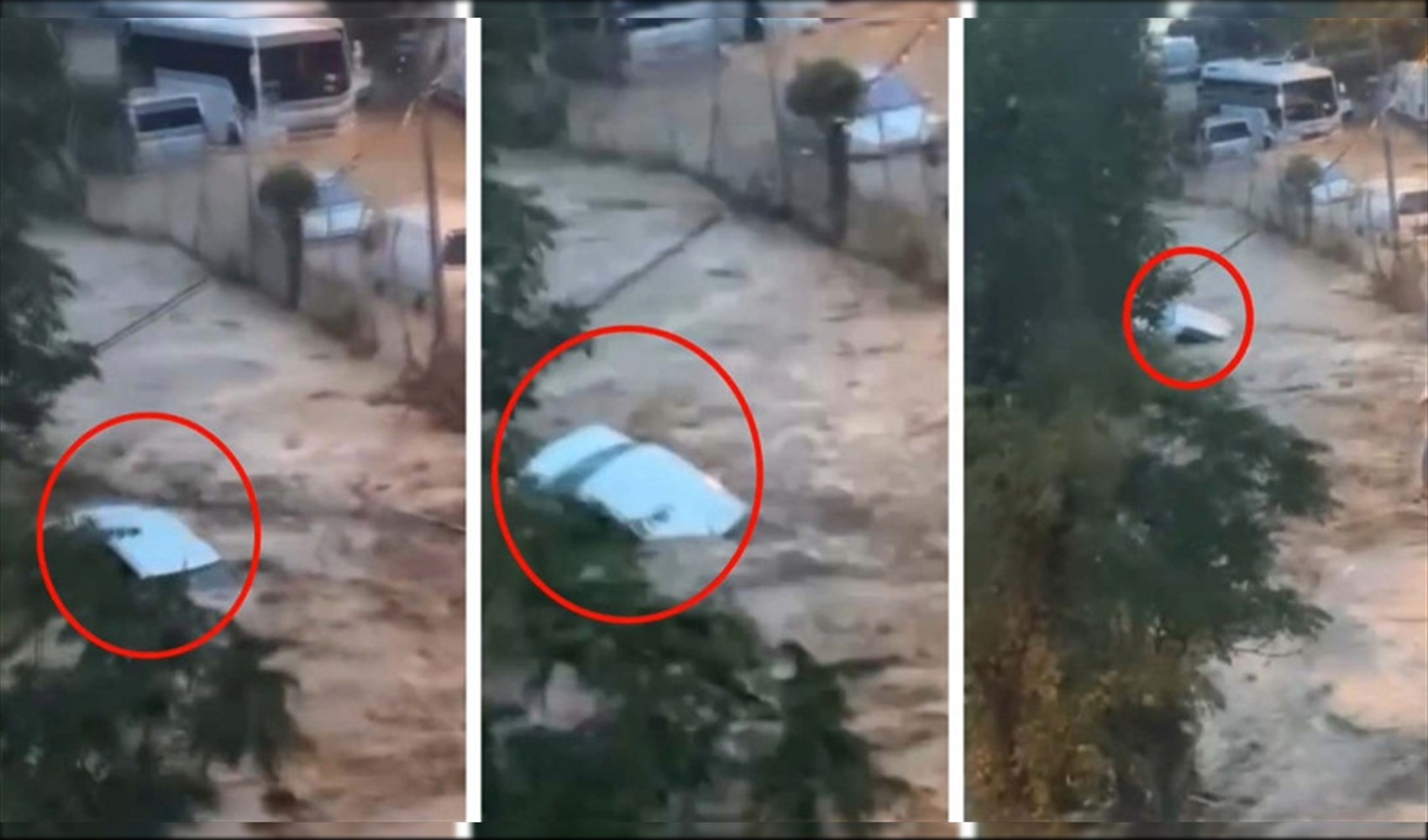
Final footage of two people missing in flood emerges
What did Kamer Genç propose for the terrorist leader?!