


Tom Barrack and the US's regional calculations



The US views the world, and particularly the Middle East, as a region that must be shaped in accordance with its own values and interests. This approach reflects the general framework of US regional policies.
In this context, Tom Barrack, a Lebanese-American who plays an active role in US foreign policy due to his closeness to Donald Trump and his influential position in the business world, shows a special interest in the Middle East. Barrack's appointment first as ambassador to Turkey and then as Special Envoy for Syria and Lebanon can be seen as part of this interest.
The statements Barrack has made in his capacity as Special Envoy for Syria often go beyond his personal views and reflect the US's general understanding of the region. The self-confidence in his speeches is largely attributed to the close relationship he has built with Donald Trump and his loyalty to him.
THE US VIEW OF THE ARAB WORLD
The US view of the East is generally based on the perception that the region needs guidance and stability and that it struggles to overcome its crises on its own. In this framework, the US sees itself as a guide and a crisis solver.
In line with this understanding, Tom Barrack's mission has been to reshape alliance relations in the Middle East in a manner consistent with Donald Trump's approach. In this process, the most important partners for the US are seen as countries that share similar concerns regarding threats originating from Iran and political Islam. Implicit messages that actors who do not align with the US could be pushed into a more fragile position are notable in Barrack's statements.
The normalization process that began with the Abraham Accords is a concrete example of this approach. In this process, the US has prioritized making diplomatic and economic-based agreements with states that have been convinced that their interests lie in cooperating with the US, rather than the use of military force.
MULTIPLE CONTACTS IN SYRIA
Depending on developments in Syria, the US has at times supported the current administration and at other times preferred to balance the actors on the ground. In this framework, while supporting Ahmed al-Shara after Assad, it has also established contact with the Syrian Democratic Forces (SDF). In fact, the allocation of funds for the SDF and the Free Syrian Army in the 2026 budget demonstrates the US tendency to establish simultaneous relations with different actors on the ground.
During this process, when the demands of the Druze and the SDF in Syria came to the agenda, Barrack intervened and adopted a stance supporting the country's territorial integrity against possibilities that could threaten Syria's unity. Thus, while continuing to cooperate with various groups, the US has tried to follow a balanced approach based on preserving Syria's integrity.
LEBANON: A HARSH TONE
Although Barrack adopts a conciliatory approach in his Syria policy, a harsher tone stands out in his rhetoric toward Lebanon. His critical remarks toward Lebanese journalists and his statements that the disarmament of Hezbollah would eliminate the problems experienced with Israel show that he is acting in line with the US's regional priorities.
In this framework, Barrack has brought up the idea of bringing the two countries closer by referring to the common civilizational heritage that Syria and Lebanon shared in the past. It can be said that in this approach, Barrack aims to gain a say in the trade and energy route extending to the Mediterranean and Europe via Syria, Lebanon, and Turkey by combining Syria's ports with Lebanon's financial infrastructure, thereby ensuring control in the region.
However, considering that Lebanon has a highly fragile social structure due to sectarian divisions and past conflicts, the US policy of balancing the Shia population and neutralizing Hezbollah creates a contradictory situation that leads to the intensification of conflicts in the country rather than calming them.
CYPRUS
In his assessments regarding the improvement of relations between Turkey and Greece, Barrack emphasized that Cyprus, which he likened to an "abscess," is the main element complicating this process. Emphasizing that a more stable order should be established in the Eastern Mediterranean, Barrack stated that the US wants to act as a bridge in this process.
The improvement of Turkey-Greece relations is important for the US's regional interests. This is because stability, not crisis, is required for energy and economic projects in the Eastern Mediterranean to be realized. In this context, the resolution of the Cyprus issue, which Barrack points to, is seen as a critical element.
HALKI THEOLOGICAL SCHOOL
In his statements, Tom Barrack indicated that the process for the reopening of the Halki Theological School in 2026 has been initiated and expressed his expectations that this step would provide positive contributions to both Turkey and the international community. In the US and European countries, it is assessed that the school's resumption of operations could bring Turkey's relations with Europe closer, facilitate dialogue with Greece, and strengthen Turkey's image in the areas of religious freedoms and human rights.
For the US, which has attached importance to the Ecumenical Patriarchate of Constantinople since 1949, the reopening of the Halki Theological School is of great importance. The Patriarchate, which is expected to be strengthened by the opening of the school, is considered a soft power element, especially within the scope of policies pursued against Russia.
From Turkey's perspective, the school was used as a political and military base against Turkey during the War of Independence. While the reopening of the school is a subject evaluated carefully in the context of the Treaty of Lausanne and the principle of secularism, it also brings with it different sensitivities due to historical experiences.
CONCLUSION
Tom Barrack's rhetoric and initiatives can be seen as a reflection of the US's search for repositioning the Middle East, shaped alongside personal relationships. However, Barrack's occasionally hardening tone and outbursts based on excessive self-confidence carry the risk of deepening existing vulnerabilities rather than strengthening the regional stability the US aims for. As long as the US continues to view the region as a designable space, these initiatives by Barrack are drifting toward a line that affects the relations of regional countries, including Turkey, with the US, pushing partners away instead of bringing them closer, and creating new tensions instead of producing solutions.
Would you like to get notifications about new developments and save news?
- NotificationsNew developments and breaking news
- SaveNews is stored in the app
Most Read
National Anthem surprise from Japanese Ambassador
Diesel protest in Italy brings roads to a standstill
Diyanet Foundation, which claimed 'we have no resources,' owns 73 percent of the fund!
Ezel Akay and his brother's test results came back positive
Is it time for the Turkish Parliament to revoke its 31-year-old 'Casus Belli' decision?

Social media influencer sets himself on fire during live stream
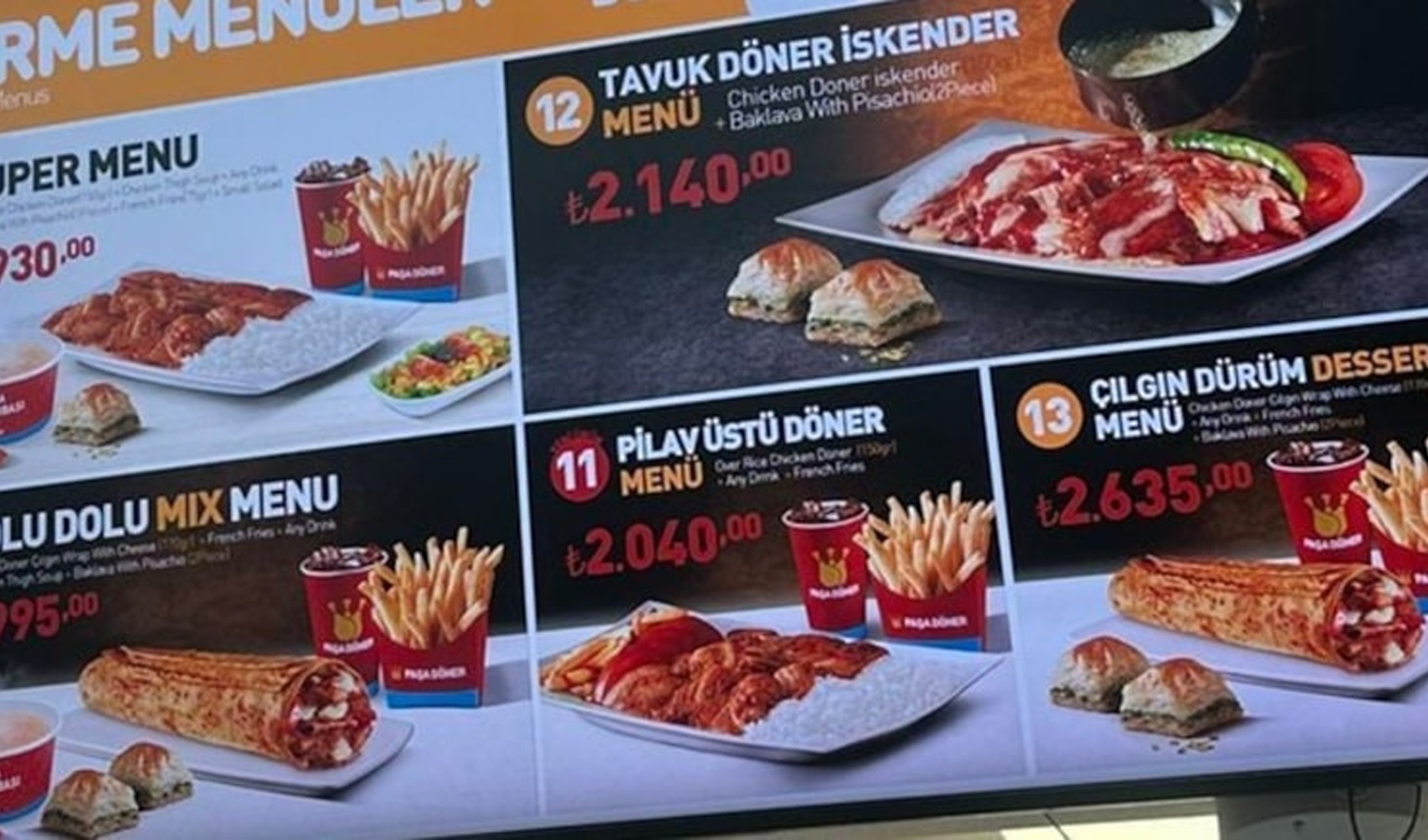
Paşa Döner prices at Istanbul Airport become a hot topic

'From a Journalist’s Pen: The Tüfekli File'
Fenerbahçe's sponsor in crisis
Why is Paris burning? The crisis of the welfare state and the revolt of social justice