


The Gaziantep Robbery-3: 'A View of a Turkish Street!'



The “Gaziantep Robbery” is one of the most unique indicators of how Anatolia was plundered by German Imperialism in the late 19th century with the help of local collaborators.
The events that took place during this period, alongside the smuggling of the Pergamon Altar and its sculptures abroad, are cautionary tales.
In this process, the stance of Osman Hamdi Bey, who held the position of Director of Museums for the Ottoman Empire and was the most authoritative figure regarding historical artifacts, is more than just interesting; it is chilling in terms of state administration.
For years, Osman Hamdi Bey has been introduced as the “founding pioneer of contemporary Turkish painting,” the “father of museology,” and the “architect of the Regulation on Antiquities (Asar-ı Atika Nizamnamesi)” that protects historical artifacts.
However, when the bright polish of this official story is scraped away with information obtained from highly valuable researchers, the naked face of the Gaziantep—and likely the Pergamon—robbery is revealed.
In this line of exploitation stretching from Pergamon to Zincirli and from Nemrut to Berlin, one sees not only the endless ambition of a German engineer, Carl Humann, but also the painful maneuvers of German Imperialism and an “insider collaboration” that rose from within the Ottoman bureaucracy, intertwined in one sense with politics and in another with an admiration for the West.
In this third part of the “Gaziantep Robbery” series, the tension between Osman Hamdi’s identity as a painter and his statesmanship can be closely observed in the shadow of his painting “A View of a Turkish Street” and his orientalist perspective.
On one side, there is the image of a cult artist fueled by paintings like “The Tortoise Trainer,” “Girl Reading the Quran,” and “In Front of the Mosque,” which change hands for millions of dollars; on the other, there are the decisions that paved the way for the emptying of Pergamon and Gaziantep, stone by stone and relief by relief…
This article continues to ask which political and economic relations, which bargains, and which “Turkish Street” are hidden behind the bright colors flowing from Osman Hamdi’s brush.
***
The painting titled “A View of a Turkish Street,” which the Director of the Imperial Museum (Ottoman Museums) Osman Hamdi Bey made and sold to the Germans, is currently in the Berlin State Museums.
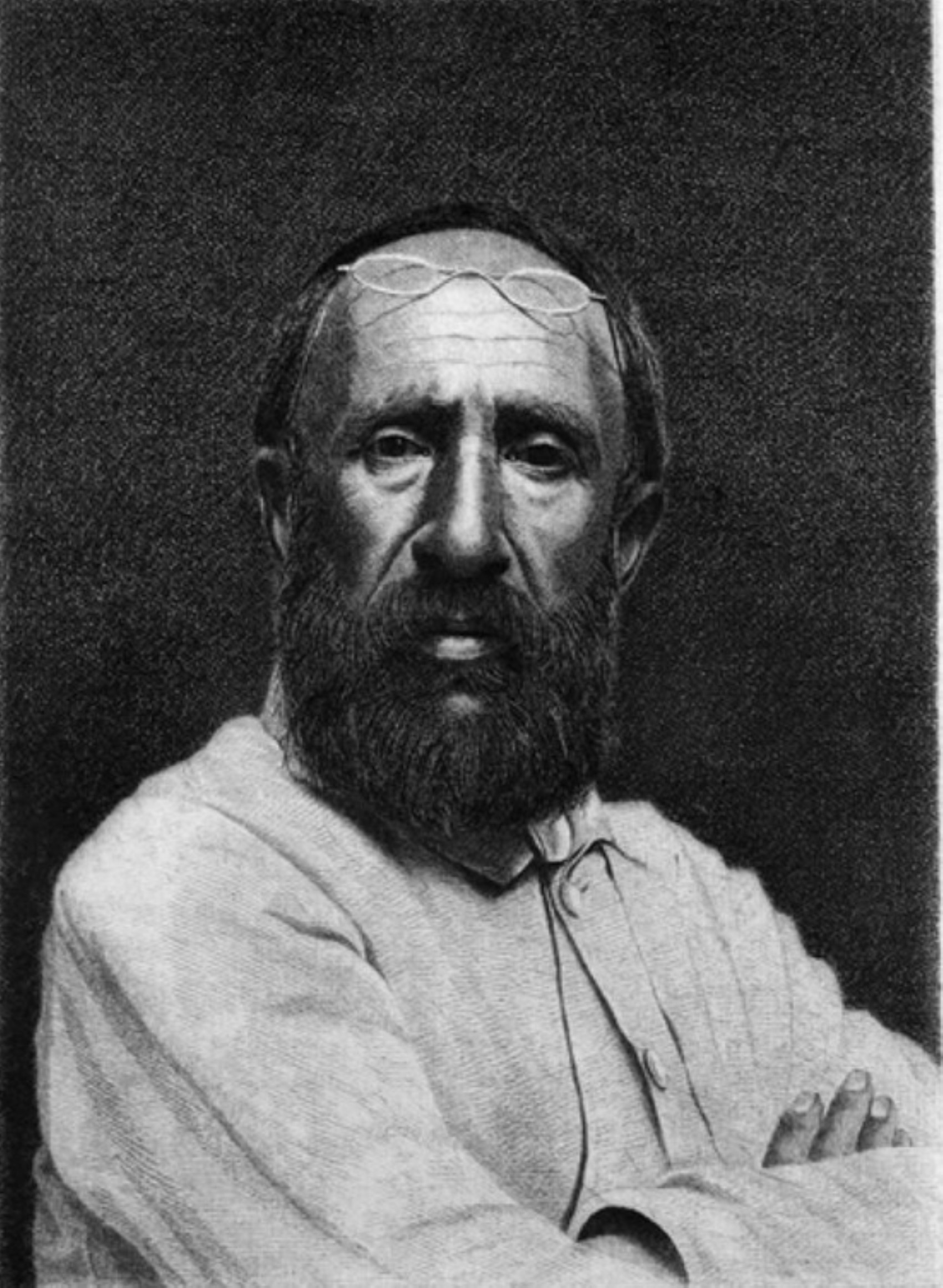
It is also known that Hamdi Bey, amidst all his occupations, painted a portrait of the German historical artifact smuggler Carl Humann in 1894, with whom he carried out many very successful (!) operations; the current location and owner of this painting are unknown.
In this context, Osman Hamdi Bey’s identity as a painter, his attitude toward historical artifacts, and his state responsibilities—alongside important social issues such as the protection of historical artifacts and museology—have been debated for many years, as he produced many successful paintings in his own style and manner regarding the life of his era.
The images he reflected, his purpose in painting, and the technique he used, along with his statesmanship, draw attention, and many interpretations and evaluations are made in this regard.
Was Osman Hamdi Bey’s passion to be recognized as a painter in the world and in Europe worth the smuggling/abduction of the magnificent historical artifacts of Gaziantep and Pergamon by the German engineer named Carl Humann in exchange for a painting he sold to the Germans, and his turning a blind eye and remaining silent as the almost sole decision-maker on this matter?
Of course, in the context of this grave negative attitude, much worse things may come to mind.
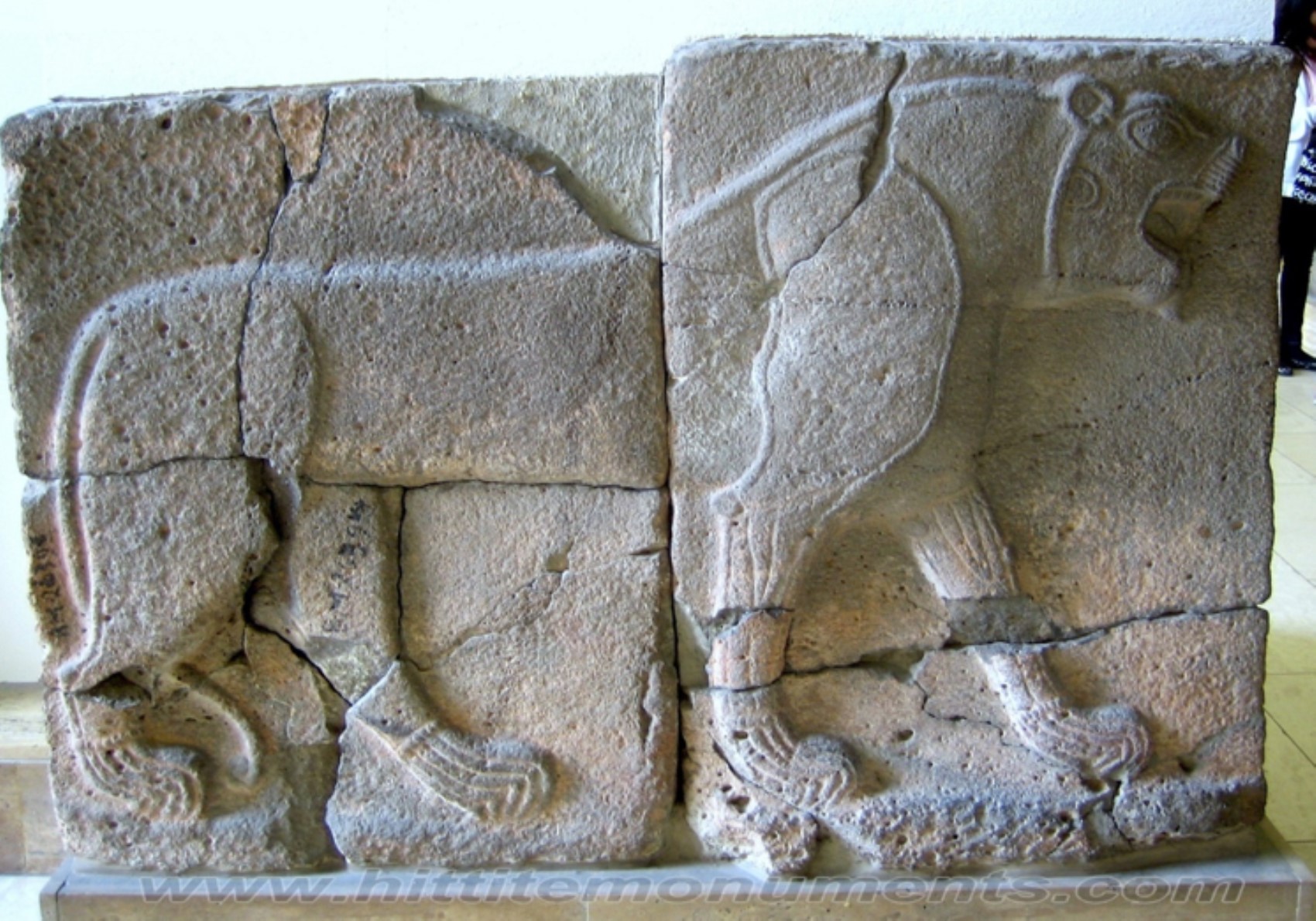
(One of the artifacts smuggled piece by piece from Gaziantep-Zincirli by the German C. Humann, unfortunately with the connivance (!) of Hamdi Bey, “The Antep Lion” - Berlin Vorderasiatisches Museum)
***
Osman Hamdi Bey, who strove throughout his life to be remembered as a good painter, left behind paintings that are still considered very valuable today and are included in elite collections.
Beyond his decisions and actions that “set out to protect historical artifacts” with the 1884 Regulation on Antiquities he contributed to, but which led to the plundering of Pergamon, Gaziantep, and Aydın Menderes Magnesia, it is very tragic that he used his beautiful and attractive talent for painting to some extent for his own interests.
Sent to Paris in 1860 at the age of 17 for legal studies, Osman Hamdi apprenticed in the workshops of the famous painters of that period, Jean-Léon Gérôme and Boulanger, alongside his legal studies during the 12 years he stayed in Paris.
He received a good art education.
He loved painting and continued to paint throughout his life.
He developed a unique painting style. (Edhem Eldem, “Making Sense of Osman Hamdi Bey and His Paintings,” Muqarnas: An Annual on the Visual Cultures of the Islamic World 29, 2012, pp. 339-383)
In his paintings, the design is meticulously crafted; surfaces are drawn with clarity and photographic detail through a mastery of anatomy and perspective; brushstrokes are hidden.
Light filters in from the side and above in a controlled manner, giving depth to the painting. (Mary Roberts, “Osman Hamdi and Ottoman Aestheticism,” in André Dombrowski and Hollis Clayson eds., Is Paris Still the Capital of the Nineteenth Century? Essays on Art and Modernity, 1850–1900, Routledge, London and New York, 2016, pp. 131-152)
In terms of color and texture, he uses warm, rich colors; material differences in surfaces such as fabric, tiles, calligraphy, and carpets are distinct.
The mosque/madrasa interiors, mihrab-minbar, tile, and inscription details in his paintings are conveyed with almost documentary accuracy.
(Osman Hamdi Bey and the Americans, John Henry Haynes & Hermann Vollrath Hilprecht /// Osman Hamdi Bey: An Ottoman Intellectual: Pera Museum publications, 2011)
This phenomenon is accepted as the reflection of Osman Hamdi’s identity as a museum curator onto the canvas. (Wendy K. Shaw, Possessors and Possessed: Museums, Archaeology, and the Visualization of History in the Late Ottoman Empire, University of California Press, 2003)
Knowledge and action: Figures who read and write, such as scholars, calligraphers, and professors, are frequently used in his paintings. (Mary Roberts, same work, pp. 131-152)
Although this situation is seen as an effort to stage knowledge and construct a cultural subject, it is also interpreted as the exoticization (alienation) of the Eastern World from within.
In many of his paintings, Osman Hamdi uses his own likeness.
(Osman Hamdi Bey: An Ottoman Intellectual: Pera Museum Publications 2011)
He does not stay far from current politics or the country’s problems.
In works like the very famous “The Tortoise Trainer,” he indicates with symbolic language that the Ottoman Empire’s reform and modernization attempts are progressing slowly—with the slow movement of the tortoises. The tortoise is being directed with a stick (by a person who is likely himself).
(Buse Uzun & Gültekin Akengin, Tortoise Allegory in The Tortoise Trainer Painting, Academic Art Journal, Dergi Park, 2023).
What a tremendous “ego!”
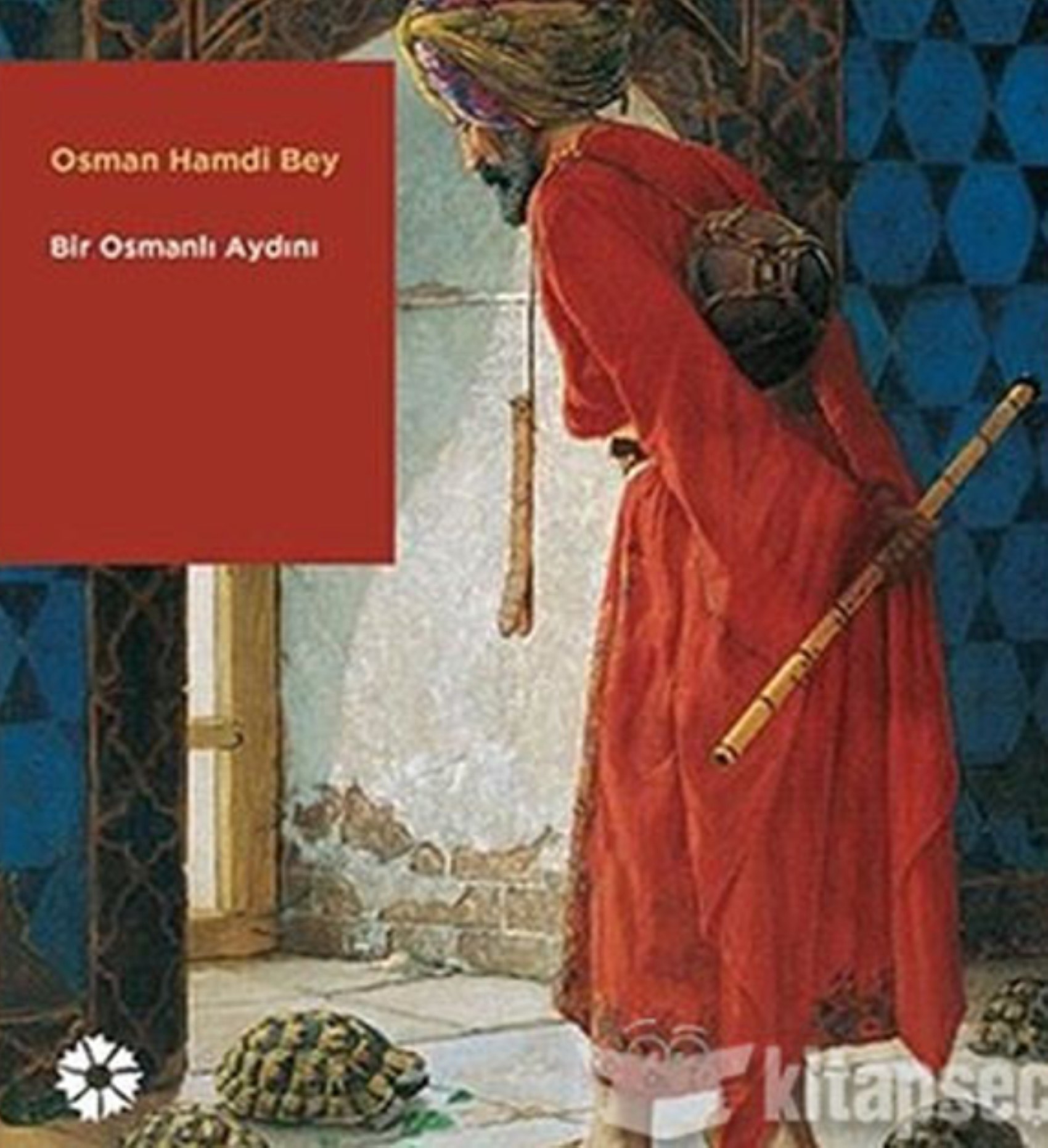
(Comprehensive book prepared by the Pera Museum regarding Osman Hamdi Bey’s paintings. On its cover is the painter’s “The Tortoise Trainer” painting)
***
According to some commentators, it is accepted that Osman Hamdi, as an Ottoman intellectual, honored the “East” by making writing and architecture objects of knowledge.
The staging of the local space and the decorative richness in his paintings are remarkable. (Wendy K. Shaw, Possessors and Possessed: Museums, Archaeology, and the Visualization of History in the Late Ottoman Empire, University of California Press, 2003)
Figures are generally in a dignified and thoughtful state.
Instead of action, an intellectual, spiritual, “ethereal” structure comes to the fore in the characters. (Dr. Sedat Yerli, International Journal of Interdisciplinary Intercultural Art, Vol. 5, Issue 11, 2020)
A ceremonial atmosphere, an “inner world” rather than a narrative, is sensed in the paintings. Time is silent and static.
Frames drawn inside the paintings, “frame within a frame,” direct the viewer’s gaze to the writing (“calligraphy”) and the figure.
Writings such as plaques and pages are positioned like an “icon”; the text functions as a second figure in the painting. (Pera Museum, 2011)
In this context, according to the interpretation of experts; high competence in technique, unique knowledge of architecture and calligraphy, and making the late Ottoman spirit visible, accurately documenting it, and his subjective view with an approach that hints at being pro-modernization through allegory (symbolic connection) are the strong aspects of Osman Hamdi’s art.
***
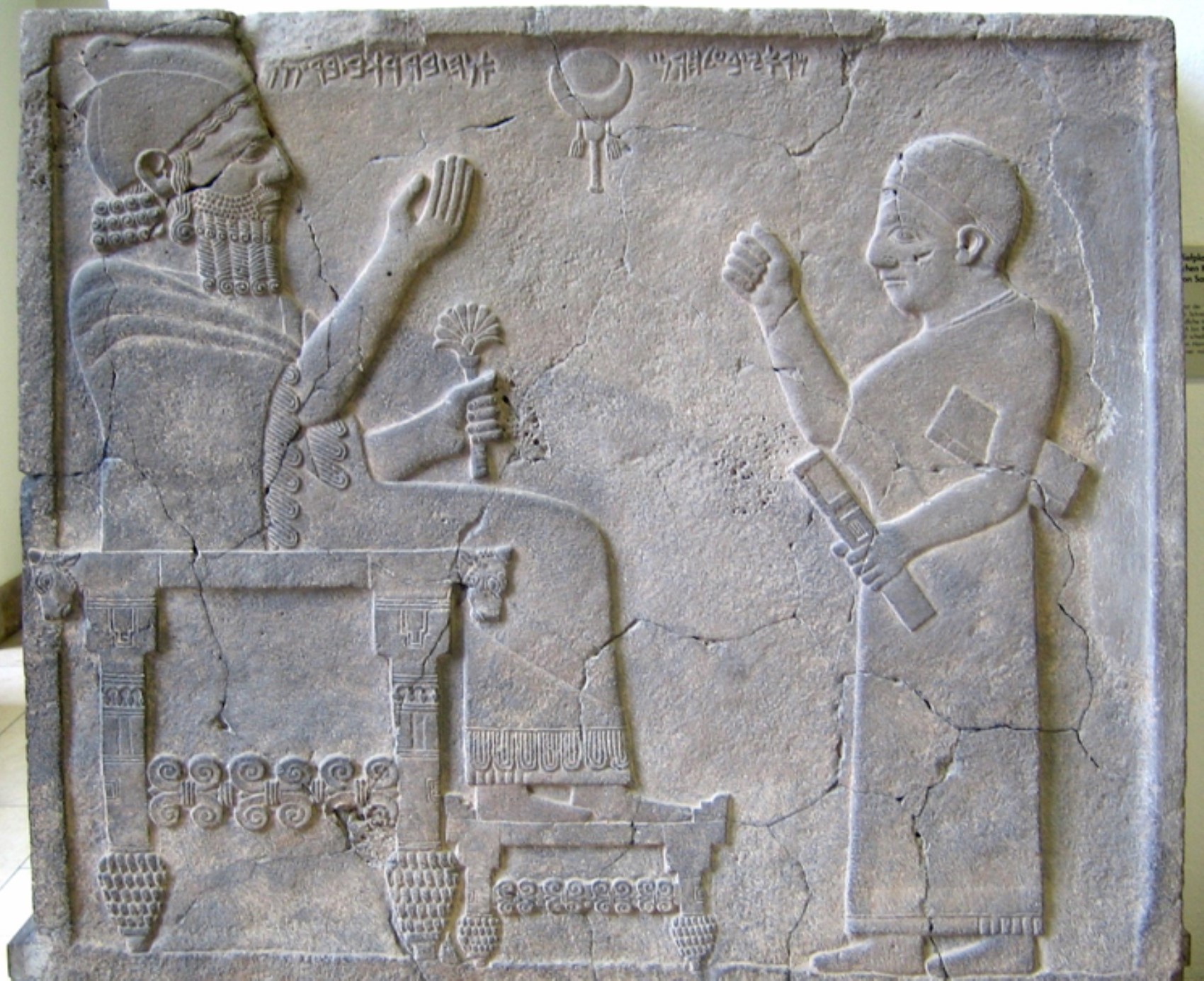
(One of the artifacts smuggled from Gaziantep-Zincirli by the German C. Humann, unfortunately with the connivance (!) of Hamdi Bey - Berlin Vorderasiatisches Museum)
On the other hand, criticisms regarding Hamdi Bey’s attractive art understanding and production are also intense and profound:
It is reported that his scientific language is rigid, and his experimental searches are limited:
The rich decor he draws on the canvas sometimes overshadows the figure:
His allegories (the phenomena he alludes to) are too didactic; that is, instructive but at times dry and boring.
The paintings reflect the colorful life of the East, the Ottoman, and the Islamic world with fine details.
In a general sense, it is associated with “Orientalism,” a movement of perspective born in the West.
The word Orientalism comes from the Latin word “oriens,” meaning “east.” In the 18th and 19th centuries, it was used in Europe to mean a scientific, artistic, and intellectual orientation that studied the “East”—especially Islamic, Arab, Ottoman, Iranian, and Indian cultures.
Orientalist painting art, born in Europe, depicted the East with a foreign and exotic (alien) eye.
Colors are warm, scenes are fairy-tale-like, and figures are theatrical. This “East” is an East constructed by the West’s imagination; it is a representational image rather than being real.
This attitude bears a visual kinship with “Western Orientalism,” which is the name given to the method used by Westerners in painting and other arts to use their own observations or what they want to see, somewhat disparagingly.
Some commentators call Osman Hamdi’s style “Orientalism from Within” and argue that the figure is secondary to the decor.
In other words, this is an Easterner painting with a Western eye.
(Aleksandra Solovyev, The Subversion and Orientalism of Osman Hamdi’s “Mihrab”, Columbia University, Bowdoin Journal of Art, 2018)
In this context, the political and socio-economic messages carried by the paintings are almost like an internal critique of the Easterner by a painter who held important administrative positions in the Ottoman Empire.
According to art critic Oğuzhan Yalçın: “Orientalism, in a broader sense, is the West’s images of the East or the collective imagination regarding the East.”
“In its oldest sense, it is to be curious about the East, to study the East, and to process themes specific to the East in art.
However, this ideology sees the East as fundamentally different from the West, inferior, and unchanging; as a world frozen in time.”
It is a field whose traces can be followed at every point of the Western world of thought, from literary and painting works to newspaper articles, from theological (religious) debates to scientific studies, from Western politicians to popular scribbles.
The effects of Orientalist thought on art intensified after Napoleon’s Egyptian Campaign in 1798.
From this period on, Europeans began to see themselves as “endowed with the mission of bringing ‘light’ and ‘freedom’ to the East, which, while once a respectable rival, was now weak, exhausted, and unable to manage even itself.”
(Oğuzhan Yalçın, A Look at Orientalism Through Osman Hamdi Bey, Düşünen Şehir [Şehir Akademi], 2019, pp. 158–163)
Osman Hamdi’s conceptual relationship with Orientalism has been widely discussed by historians, art theorists, and critics such as Osama Makdisi, Z. Coşkun, Wendy M. K. Shaw, Edhem Eldem, and Per Bauhn.
***
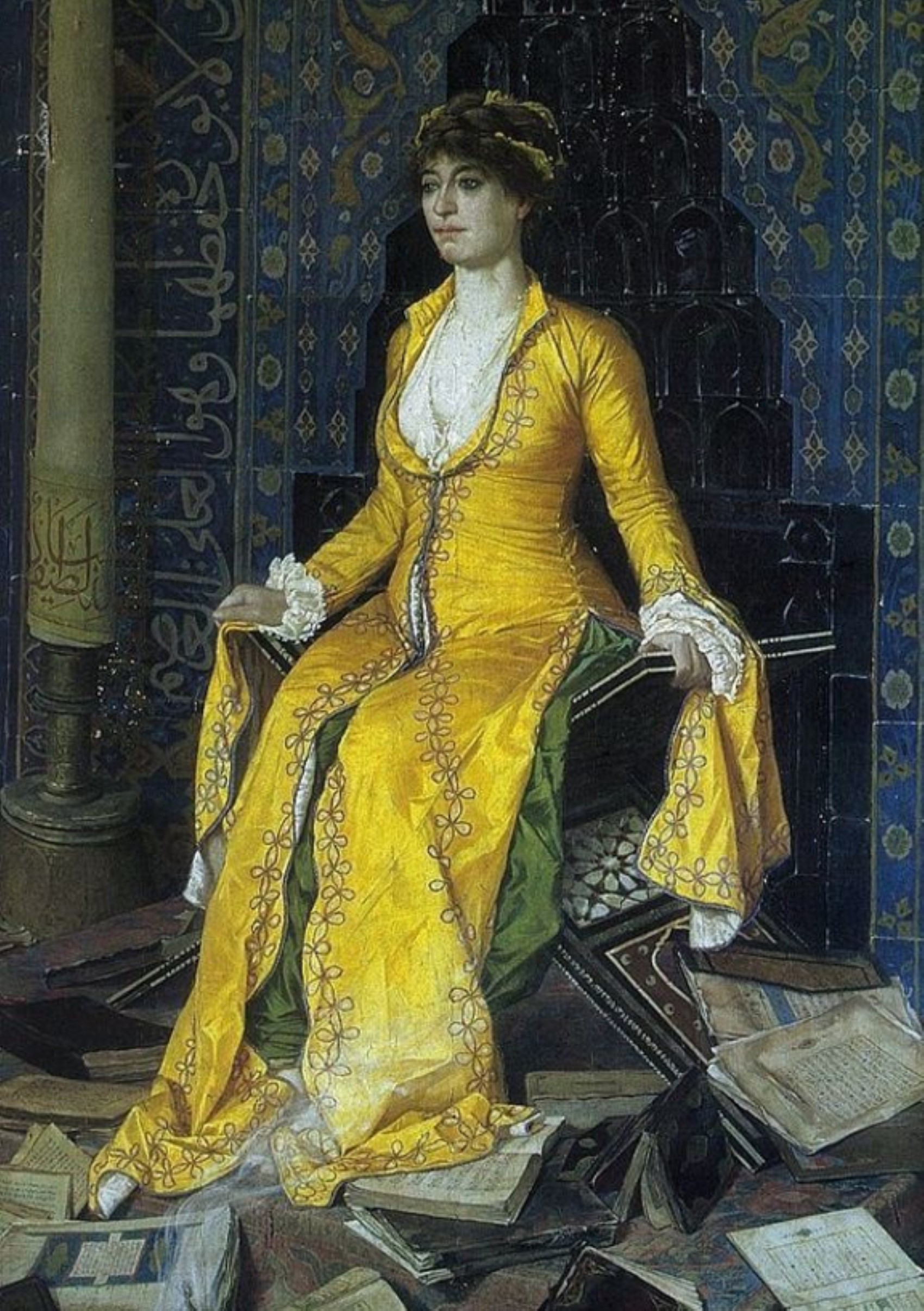
(Osman Hamdi’s controversial “Genesis” painting)
Oğuzhan Yalçın’s evaluations of Osman Hamdi’s paintings are quite meaningful and critical:
“His painting titled ‘Genesis (Tekvin)’ (1901), also known as ‘Mihrab,’ where we can perhaps see a summary of the orientalist elements we encounter in all his known works, is an interesting example in this respect.
It provides an opportunity to evaluate his inner world and thought structure to some extent.
“Osman Hamdi painted this painting, whose current location is unknown, in accordance with his own stylistic features, with a female figure in a yellow dress sitting on a large reading desk (rahle) in front of an ornate mihrab; with an incense burner smoking in front of her and books scattered on the floor.”
“The figure, in the appearance of a Western woman who could be considered ‘modern’ for the period she lived in, is sitting on the reading desk with her back turned to the mihrab.
This attitude and stance taken against the mihrab—this sacred space that shows the qibla of the Islamic world and is accepted as a door, a passage, a threshold opening to the realm of meaning in the Islamic belief and thought world—can be interpreted in a way as a symbolic rejection of Eastern thought and belief heritage.”
Edhem Eldem, a history professor at Boğaziçi University and the great-great-grandson of Osman Hamdi Bey, writes that “it is no coincidence that the painting is titled Genesis; when the figure is looked at carefully, the woman is pregnant, in which case the work can be evaluated as an allegory of motherhood and giving life, a praise of life.” The woman is almost like a goddess. (Edhem Eldem, “Making Sense of Osman Hamdi Bey and His Paintings,” Muqarnas: An Annual on the Visual Cultures of the Islamic World 29, 2012, pp. 339-383)
According to Orhan Yalçın, one of the most striking elements in the painting is the books scattered under the figure’s feet.
“When these books are examined carefully, it is seen that a few of the open ones are the Holy Quran.
Apart from this, it is understood that other holy books such as the Zend-i Avesta (Avesta Commentary) are also depicted.”
The words of art critic Sezer Tansuğ on this subject are striking:
“No orientalist (who depicts Eastern life) painter in Europe has been able to go so far as to seat an Armenian girl as a model on a reading desk in front of a mosque mihrab and spread pages of the Holy Quran under her feet.” (Sezer Tansuğ. Contemporary Turkish Art. Remzi Kitapevi. 2005)
O. Yalçın continues: “Here, the point reached by orientalism appears as the profile of an Eastern intellectual who knows the East very well, lives in the East, and is trying to prove himself to the West; an intellectual who has internalized orientalism.”
“During the exhibition of the painting in England in 1903, the work was not taken very seriously and was found to be ordinary and mediocre.”
“This situation shows that Osman Hamdi Bey’s understanding of art remained quite behind the rapidly changing art world of his time.”
“Although he turned his face to the West, it is clear that Osman Hamdi Bey could not completely detach himself from his Eastern identity.”
(Oğuzhan Yalçın, “A Look at Orientalism Through Osman Hamdi Bey,” Düşünen Şehir – Şehir Akademi, 2019, pp. 158–1
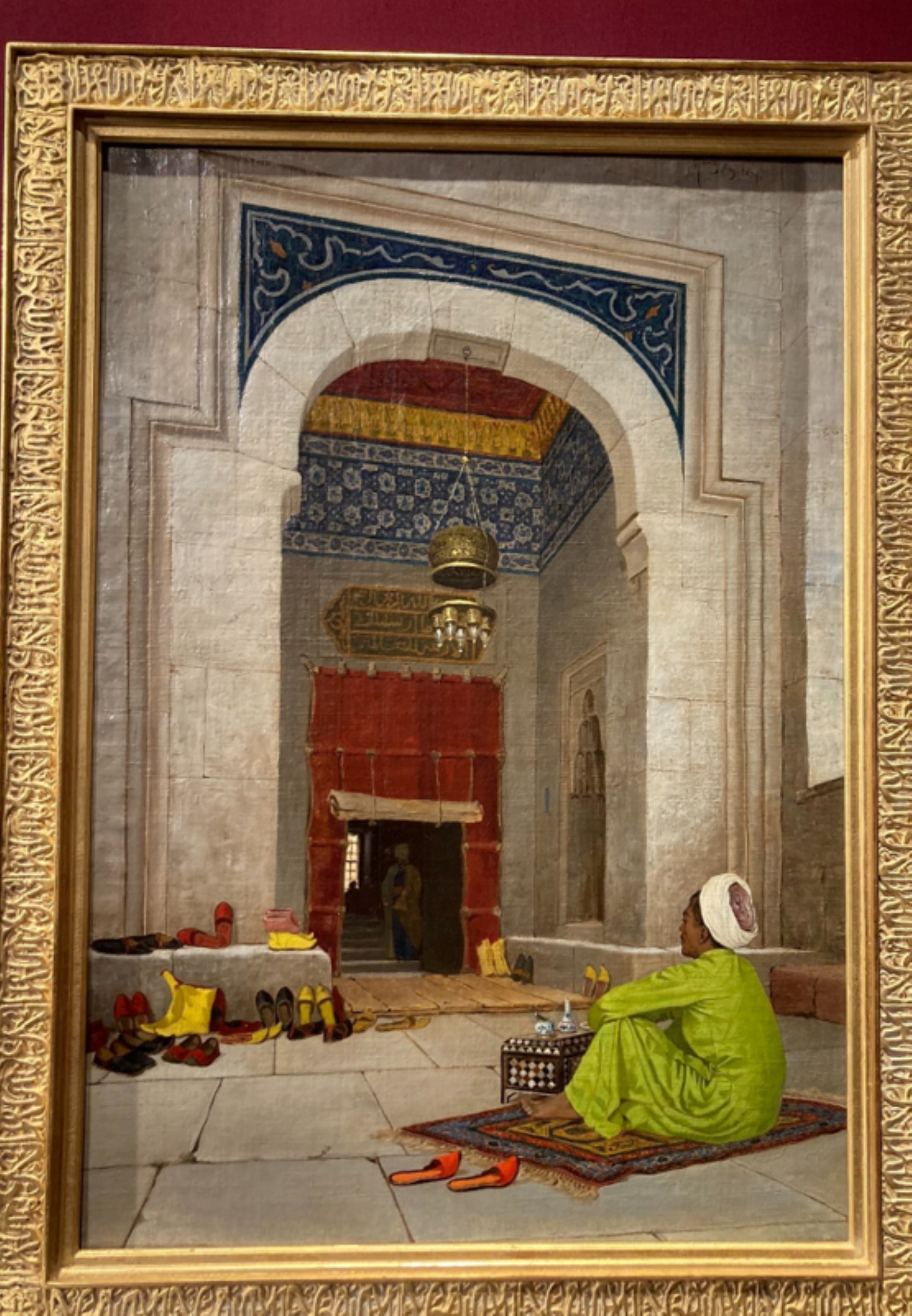
(Osman Hamdi “In Front of the Mosque” painting)
***
Osman Hamdi Bey’s art, about whom very different views are put forward with his social and administrative position, personality, art, decisions, and actions, is also open to debate in various aspects, as seen.
Art historian Habibe Bektaşoğlu states that Hamdi Bey’s perspective and life experiences (and therefore his paintings) as a person of Eastern origin were naturally different.
Contrary to the tendency of Western orientalists to depict fantastic scenes (harems, baths, naked women), Hamdi Bey focused on presenting the East in a dignified, respectful, and authentic way. (https://www.trtworld.com/article/13743763)
Again, art historians Semra Germaner and Zeynep İnankur argue that Hamdi Bey preferred to paint scenes that “Ottoman intellectuals read or discussed” instead of the “fatalistic, lazy, and lustful Easterners” (drawn by Westerners). (https://www.trtworld.com/article/13743763)
The view of Prof. Edhem Eldem regarding the relationship of his great-grandfather Osman Hamdi Bey’s paintings with orientalism is different:
“The Western Orientalist definition of painting; it was more accurate for his artistic production, which adopted most of its forms, subjects, and tendencies. For a man who spent eight years in Paris, married French women twice, and spoke and wrote more French than Turkish with his family and colleagues, Orientalism had most likely become both a side effect and an expression of his lifestyle. [...]
Although it sounds like a disappointment, I believe that his main motivation was [...] to meet the expectations of a Western audience by presenting an aesthetically pleasing, technically convincing, and culturally consistent vision of the Islamic East” Eldem, E. (2012). Making Sense of Osman Hamdi Bey and His Paintings, Muqarnas (29): 339–383. Eldem, E. (2014). Nazlı’s Guestbook: Osman Hamdi Bey’s Circle, Istanbul: Homer Kitabevi).
“Hamdi’s paintings should not be seen as a form of reaction, rebellion, or destruction, but rather as a sales strategy” (Eldem, E. (2018). Osman Hamdi Bey Beyond Vision, Istanbul: Sakıp Sabancı Museum. Ersoy, A. (2010).
Swedish Practical Philosophy scholar Prof. Per Bauhn, who discusses whether Hamdi Bey’s paintings are orientalist or humanist, finds this view of E. Eldem regarding Osman Hamdi’s artistic motivation quite dismissive. He reports that (he) went so far as to suggest that Osman Hamdi was just an opportunist by creating art that would attract the attention of Western art buyers. (Translated from Pehr Bauhn by Fatma Fulya Tepe Öz. “Osman Hamdi Bey – An Ottoman Orientalist or a Humanist Ottoman?” https://aydinsanat.aydin.edu.tr/wp-content/uploads/2023/12/AYDIN-SANAT-ARALIK-2023-9-18-7.MAKALE.pdf?utm)
***
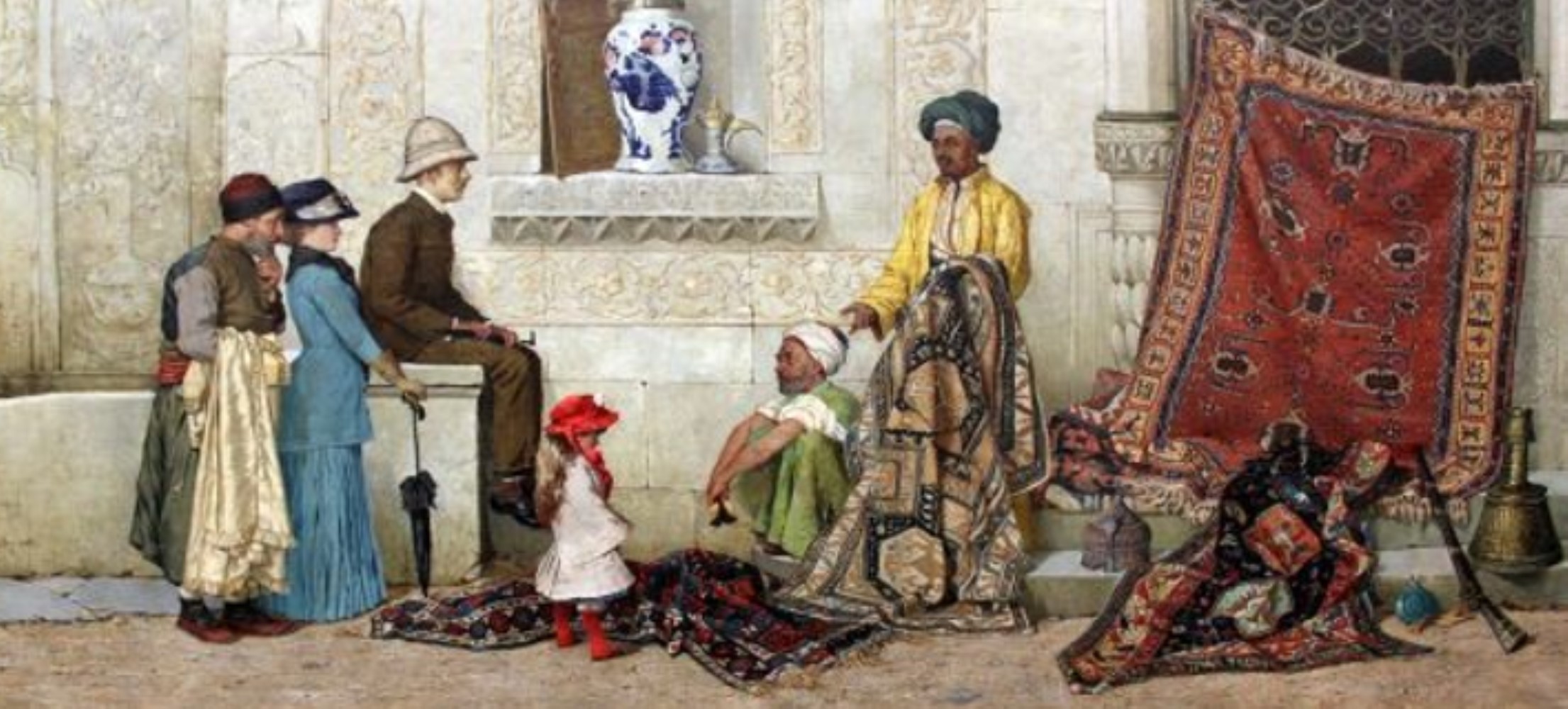
(Osman Hamdi Turkish Street Scene painting)
In the context of all these artistic evaluations and interpretations, the painting “A View of a Turkish Street,” which Osman Hamdi Bey sold to the German State, has a separate place in the smuggling of Pergamon and Gaziantep’s historical artifacts abroad.
This work also gives clear clues about his art, worldview, and actions.
Osman Hamdi is saying something with this painting too! What?
In this painting, Western foreigners or merchants who look like Germans are likely bargaining to buy carpets from local Eastern vendors on a street in Istanbul, accompanied by their servants.
Prof. Funda Berksoy, one of the scientists from the Department of Western Art and Contemporary Art at Istanbul-Mimar Sinan Fine Arts University, Faculty of Science and Letters, Department of Art History, conveys her evaluation on the subject as follows:
“In the painting, Osman Hamdi brings two cultures face to face and wants to emphasize the differences between them.
“Eastern” and “Western” figures are positioned against each other in an oriental setting.”

(Prof. Şirin Funda Berksoy: Author of the article “Osman Hamdi Bey’s Turkish Street Scene and Late-Nineteenth-Century Power Relations between the Ottoman and German Empires”)
“The differences between them are emphasized in the painting through clothing and poses. These serve to establish a hierarchy (superiority) between Westerners and Easterners.”
“The ‘Westerner’ is implicitly present in these paintings through the controlling gaze of the colonial will.” (Funda Berksoy. Zeitschrift für Kunstgeschichte. Volume. 88. 2025)
Palestinian-American art critic Prof. Edward Said emphasizes in his book titled Orientalism that “while the West represents progress and development; the East has come to represent stagnation and stillness.” (Edward W. Said, Orientalism: Western Conceptions of the Orient, trans. Berna Yıldırım, Istanbul, Metis Publications.)
Prof. Funda Berksoy continues to explain her view:
“The painting ‘A View of a Turkish Street,’ which Osman Hamdi Bey sold to the Germans through the (smuggler) Carl Humann, can be accepted as also referring to the political environment of that period.”
“If the assumption that the ‘Western’ family in the painting is German is correct, the composition—along with all the features mentioned above—can be read as an acceptance of Germany’s dominant position over the Ottoman Empire and a representation of the normalization of political, economic, and cultural infiltration into Ottoman lands in line with imperial strategies.”
“It has even been claimed that the ‘Western/buyer’ man is likely Carl Humann.”
“It is understood that Osman Hamdi, both as a museum director and a painter, did not question Germany’s breakthroughs in opening up to the East in the context of its imperial policies, but on the contrary, acted in accordance with them.”
“If the family in the painting is handled more generally as a ‘Western family,’ it can be said that instead of questioning his orientalist (eastern) style, Osman Hamdi internalized it and reproduced, even strengthened it through his paintings.” (Funda Berksoy. Zeitschrift für Kunstgeschichte. Volume. 88. 2025. pp. 69–70).
In other words, an eastern artist, Osman Hamdi, is painting “eastern life” with a western eye.
***
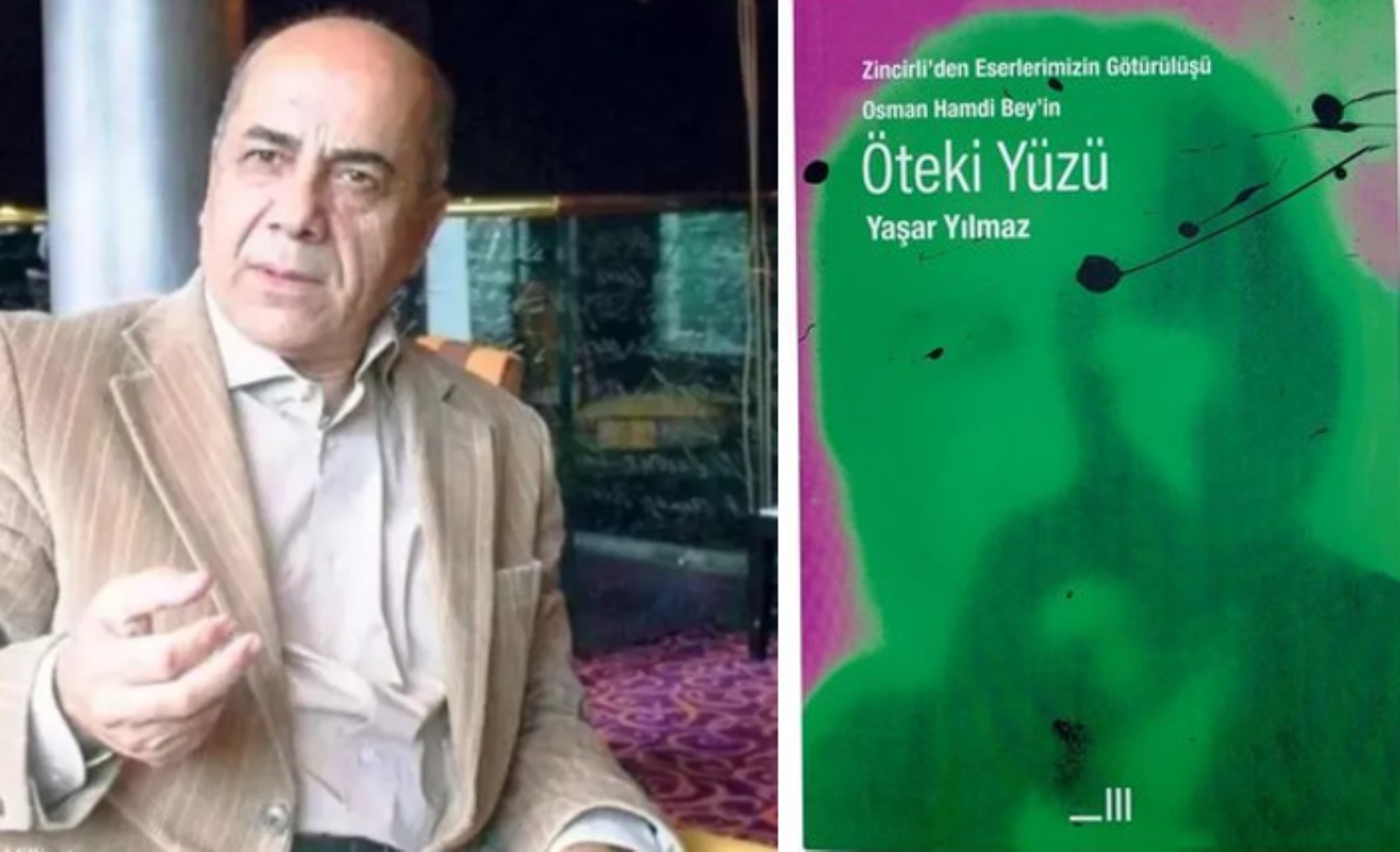
(Yaşar Yılmaz and his book titled The Other Face of Osman Hamdi. 2023)
Researcher Yaşar Yılmaz, who draws attention to Osman Hamdi Bey’s negative actions with his book titled “The Other Face of Osman Hamdi Bey,” explains his personal opinion about Hamdi Bey’s paintings, “although he is not an art expert,” as follows:
“In 1832, 10 years before Hamdi’s birth, the idea of modern painting was put forward in the West. Perspective had been removed in painting, and the understanding of color had changed. The painter was accepted as the person who interprets nature, not the one who copies it as it is. With painters like the French Cezanne, Monet, Manet, and the Dutch Van Gogh, modern painting was progressing with the pressure of developing photography technology.”
“In these years, Hamdi Bey was copying the things he saw, the objects he photographed, exactly as they were. Can it be compared with the works of the painters of the period; for example, Cezanne or Van Gogh?”
“I explained with documents in my book the Westerners’ praises such as ‘You are a great painter,’ their buying his works at very high prices, and the reason for their praises (that he turned a blind eye to, allowed the smuggling of our historical artifacts). I am of the opinion that the effect of their flattery has reached the present day.” (https://haber.sol.org.tr/haber/bir-mit-yikiliyor-bir-isbirlikci-ve-vatan-haini-olarak-osman-hamdi-bey-379657)
***
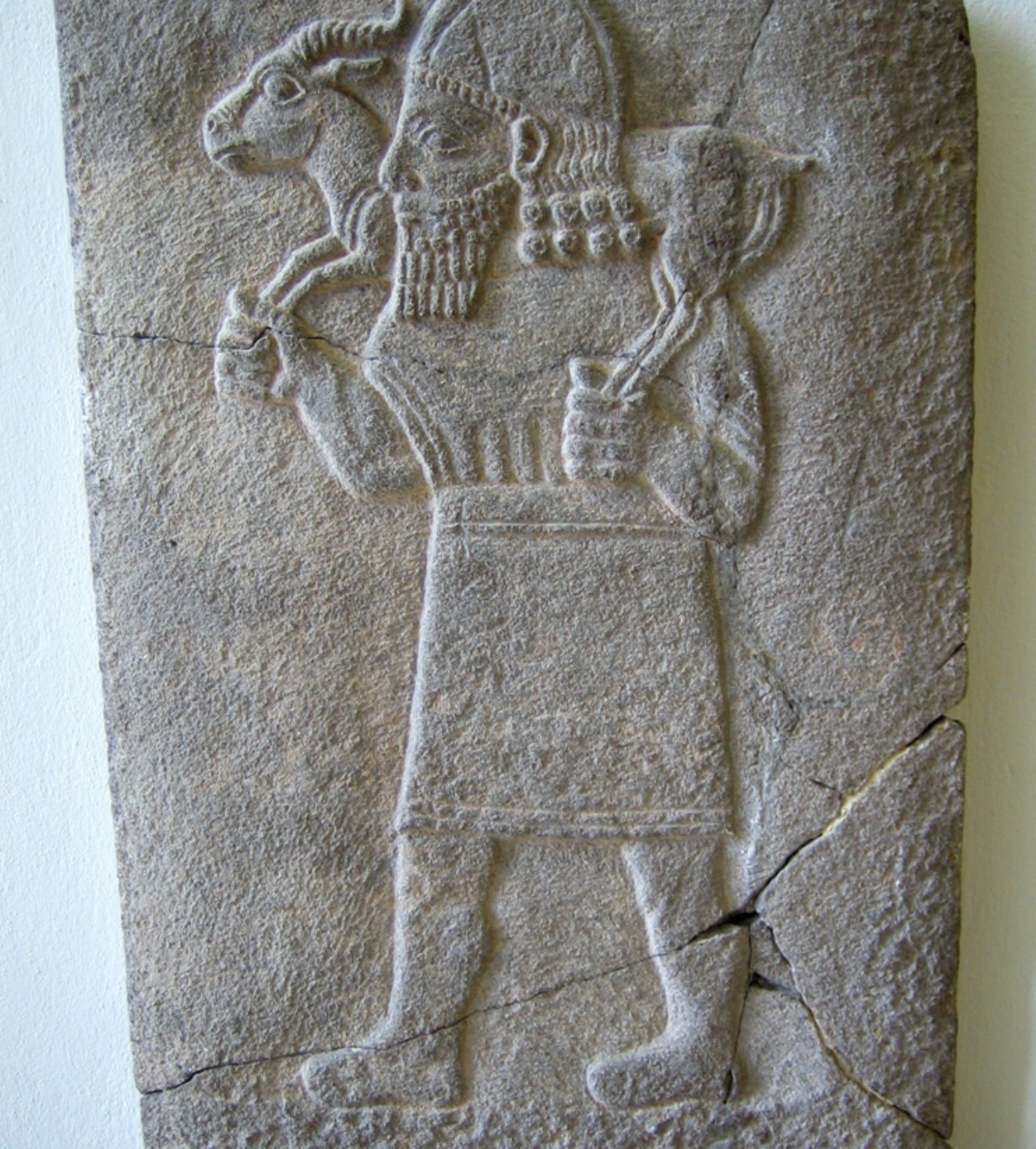
(One of the artifacts smuggled from Gaziantep-Zincirli by the German C. Humann, unfortunately with the connivance (!) of Hamdi Bey - Berlin Vorderasiatisches Museum)
Along with all these different and multi-faceted views, Osman Hamdi’s paintings are still liked and valued today.
They are bought, sold, and make good money!
The paintings, whose orientalist or humanist nature is not clear but which catch the eye with their colorfulness and are seen to be the product of a certain talent, are still very famous and reputable in our country.
Seeing paintings not as a display of talent, as an aesthetic product that reflects and reproduces human, nature, and existence with or without figures, but as a commercial commodity has been established in the art world since the beginning of capitalism.
Especially today, owning beautiful paintings is almost equivalent to a large capital owner or focus wanting to show power, in addition to being prestigious for a bourgeois.
Works valued and bought and sold in this way are very expensive!
Auction houses like Sotheby’s and Christie’s in London and New York exist for this.
Osman Hamdi Bey’s close relationship with the Germans, his position at the state and social level in Turkey, and the allure of his paintings have ensured that his paintings are worth a lot of money.
In 2004, the painting “The Tortoise Trainer” found a buyer for 3.5 million dollars; in 2016, the painting “In Front of the Mosque” for 4.5 million dollars; and his 1881 painting titled “Girl Reading the Quran” found a buyer for 7.7 million dollars at the Bonhams auction house in London in 2019.
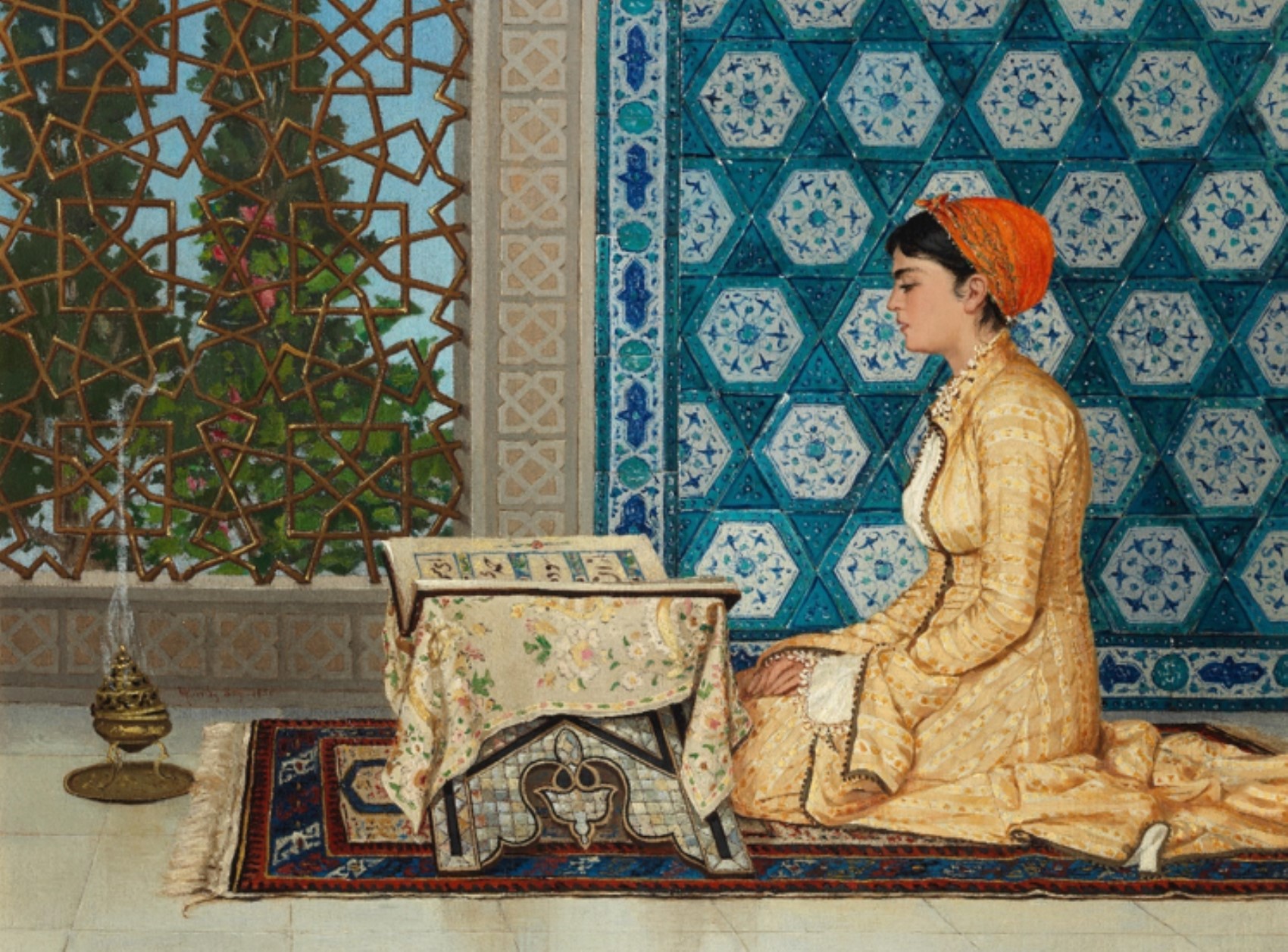
“Young Woman Reading the Quran” was sold for 6.3 million dollars at Bonhams in London.)
***
There is no clear information about how and on which days the painting titled “A View of a Turkish Street,” which was bought to “honor” (!) Osman Hamdi Bey in exchange for the excavation and removal permit he gave to the Germans during the process of smuggling Gaziantep’s historical artifacts, was delivered to the Germans, and how and when it reached the Berlin Museum.
However, it is seen that Osman Hamdi Bey made an intense effort for the Germans to do these works in Gaziantep-Zincirli in line with the relationships that became even closer with this buying and selling between Hamdi Bey and the German engineer Carl Humann, who actually carried out this smuggling.
Osman Hamdi Bey seems to be making a voluntary effort for the Gaziantep artifacts (and meanwhile, probably the Pergamon Altar pieces and sculptures) to be given to Germany.
How painful?
According to what Prof. Funda Berksoy conveys; “In a letter he sent to Humann on February 14, 1888, Ottoman Museums Director Osman Hamdi Bey almost encourages the Germans to conduct excavations in Zincirli. He asks them to accelerate their initiatives for the permit.”
In other words, “he” is ready as a preliminary authority for approval.
He informs the Ottoman authorities by the German State that for conducting excavations in Zincirli, “If a request has not yet been submitted for any reason, I do not think that (my) visiting Germany’s Ambassador to Istanbul for them to make an application would harm him or this issue.” ((Funda Berksoy. Zeitschrift für Kunstgeschichte. Volume. 88. 2025. pp. 62-63)
Is it because the German State will buy/has bought Hamdi Bey’s painting through the smuggler Carl Humann, or what, the Ottoman Museums Director is daring and fearless enough to try to meet with the German Ambassador to make an application to the Ottomans, even though he is aware that the effort he shows for Humann to be granted permission to conduct excavations in Zincirli could be misunderstood by the Ottoman State side.
Clearly: “In any case, trust me; I will do my best to ensure that this issue is resolved within a year,” he says. (F. Berksoy, p. 63).
Look at that!
The Director of Museums of the great Ottoman State, Osman Hamdi Bey, tells the Germans (knowing that they will take a large part of them to Germany) “trust me” regarding obtaining an excavation permit in Zincirli.
Could the reason for this entrepreneurship be “take the painting, give the approval; the excavation permit”?
I hope this situation was limited only to selling paintings to the Germans!
Carl Humann, who mediated the German State’s purchase of Hamdi Bey’s painting, is also given an honorable (!) award by the Ottoman State in return for these efforts.
In addition to turning a blind eye to his smuggling of the historical artifacts of Pergamon and Zincirli with suspicion, probably upon the suggestion of Osman Hamdi Bey, Carl Humann is presented with one of the most respected decorations of the Ottoman State, the “Second-degree Order of the Medjidie,” along with a letter containing flowery descriptions such as “philanthropist and lover of our state” by Grand Vizier Ahmed Cevat Pasha on May 16, 1892, according to Cezmi Yurtsever. (BOA, İ.HR,325-2104”6-1, BOA, İ.HR,325-21046-1. (Cezmi Yurtsever. “Osman Hamdi and Archaeological Robberies. https://www.academia.edu/113906725/OSMAN_HAMD%C4%B0_VE_ARKEOLOJ%C4%B0K_SOYGUNLAR)
Look at that!
The stranger is both smuggling our historical artifacts and receiving a “State Decoration” as an award.
Everything smelled of suspicion.
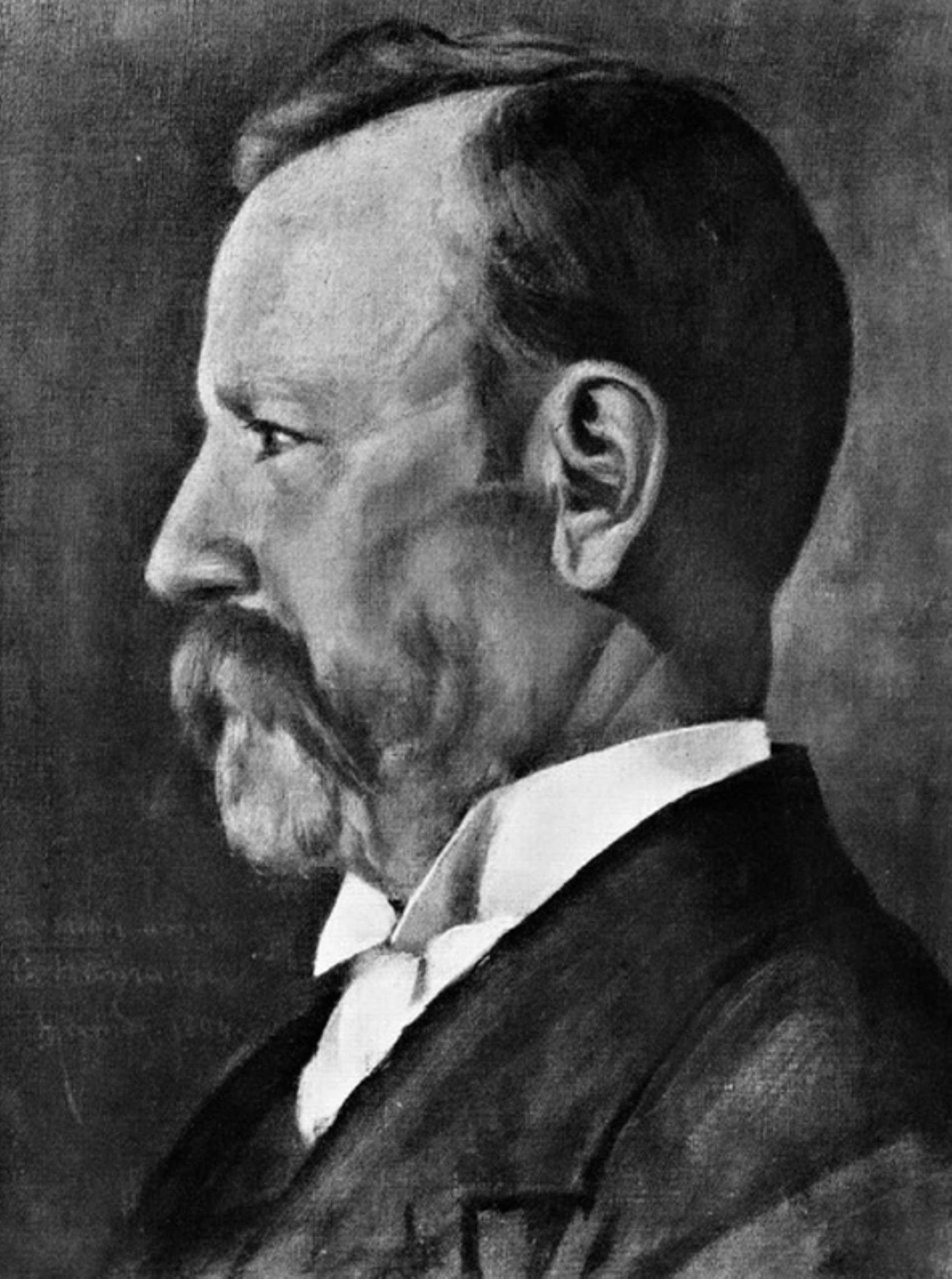
(Oil painting portrait of his “friend” Carl Humann, which Osman Hamdi Bey made with his own hand in 1894. The location of the painting, which was previously in the family collection, is now unknown)
***
Thus, with the help of Osman Hamdi Bey, C. Humann makes the necessary application to the Ottoman State’s Ministry of Education to conduct comprehensive excavations in the region. He knows with the assurance given by Hamdi Bey that he will support this initiative.
While C. Humann is trying to buy Hamdi Bey’s “A View of a Turkish Street” painting on behalf of the German State, he is also preparing for the Zincirli excavations at the same time.
The thief will do his thievery.
A leopard cannot change its spots.
It is sad and chilling that Osman Hamdi Bey, who produced so many eye-catching paintings, was also involved in the plundering of Gaziantep’s and Anatolia’s historical artifacts in these events.
Starting from the Ottoman Empire, the Turkish State and Turkish intellectuals accepted and respected him as the creator of the Regulation on Antiquities, the founder of Museology, and the initiator of Archaeology.
Being reputable, respected, and reliable before society and history is something else entirely.
Time is wavy and always moves forward, but history can re-evaluate every phenomenon...
Reputation is measured neither by position nor by talent.
The first condition of being reputable is not to defend the interests of the people and the homeland, and to win the trust of exploitative and oppressive powers.
Society knows how to take back that reputation just as it gives it!
As the immigrant writer from İzmir, Necati Cumalı, said, “What do I have to lose in this world other than a dry reputation?”
It’s not over!
We will continue to tell the Gaziantep robbery.
The continuation is in the next article!
Sefa Taşkın
14.12.2025
Bergama/İzmir
Would you like to get notifications about new developments and save news?
- NotificationsNew developments and breaking news
- SaveNews is stored in the app
Most Read

Video response to Kim Jong-un claims

Murat Ağırel’s police statement has been revealed
Azerbaijan issues arrest warrants in absentia for 7 people living in Turkey

The Orionid meteor shower will be visible from Turkey!

The penalty for Ronaldo, who left the national team camp, has been announced

Fatoş Seğmen reveals the cause of her daughter's death

Injury shock at Liverpool: He may miss the Fenerbahçe match

Latest status in the race between AKP and YENİ Party revealed

Who authorized the concert held in a parking garage?

From brotherhood to a distant partnership...