


Plunder...



STONE IS HEAVY IN ITS PLACE-159 LET US NOT FORGET, LET US NOT LET BE FORGOTTEN
Plunder, plunder, plunder…
In our country, plunder has not just been about looting our natural resources, the labor of our workers, the produce of our farmers, or the savings of our tradespeople for years.
Imperialism and savage capitalism are never satisfied.
One of the most important values of this plunder is our “historical heritage”!
Historical artifact smugglers have not only taken, and continue to take, statues, busts, coins, and works with visual and artistic richness from our country.
They are also stealing inscriptions that contain the history of Anatolia and the regions where they are located.
Among the items plundered from Bergama at the end of the 19th century are inscriptions found and snatched from the Castle/Acropolis.
Pergamon, the capital of the Hellenic-speaking Attalid Dynasty that ruled Western Anatolia approximately 2300 years ago, was a world metropolis at that time.
It was a unique cultural center with its urban design, theaters, temples, monuments, statues, library, and parchment paper.
It added very important values to human culture.
This Hellenistic city and kingdom fell into the hands of the Romans in 133 B.C.
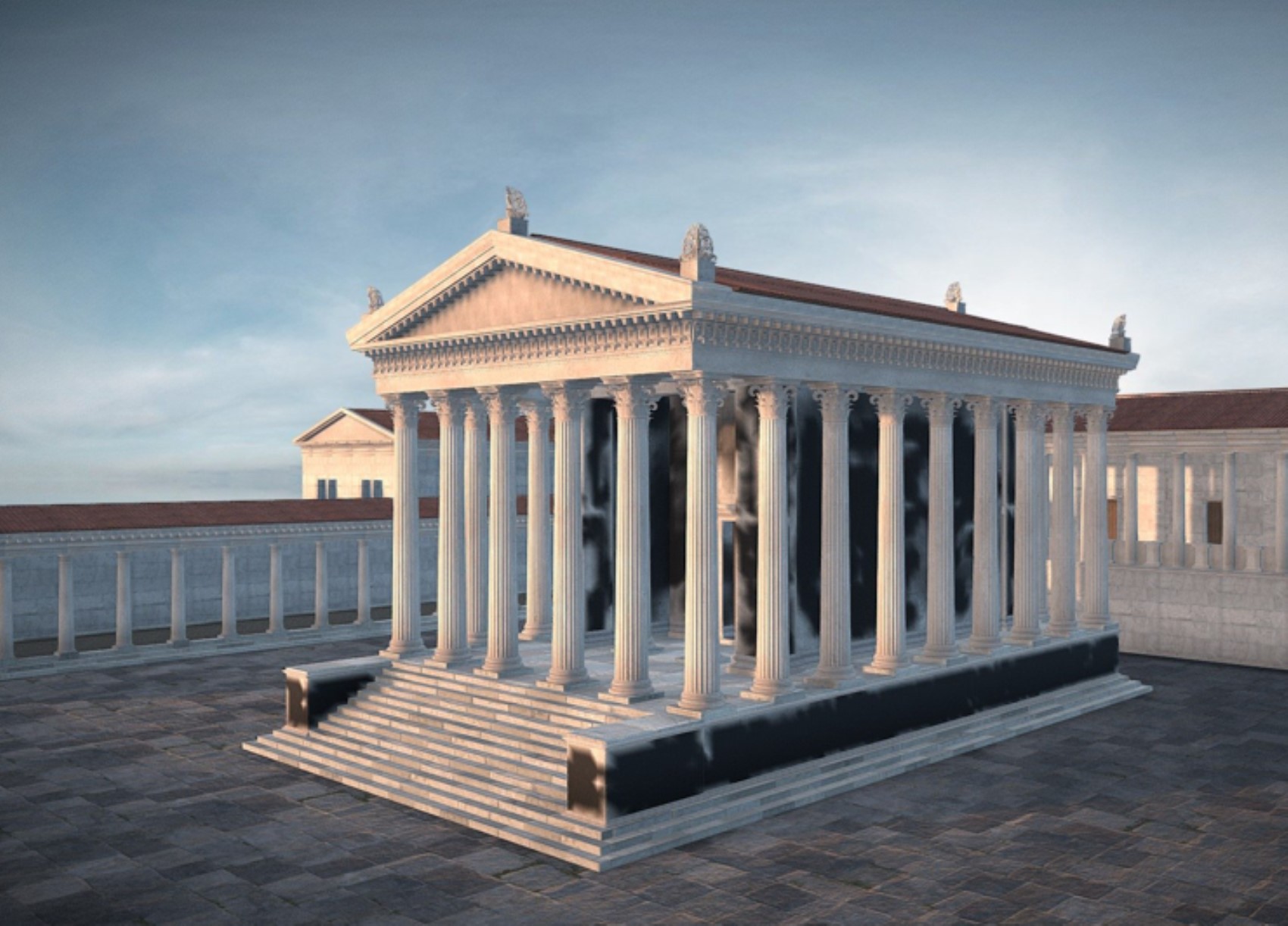
(Model of the Temple of Trajan, one of the most important Roman-era structures in Bergama)
The Roman Empire, master of vast lands from Scotland to Egypt, also valued Pergamon highly. For many years, it made the city the center of the Asia Province of Anatolia.
It granted the city numerous and very important privileges.
Being the capital of the Attalid Kingdom during the Hellenistic period and voluntarily joining Rome were the main reasons for this.
Rome, the new owner of Pergamon, had declared the city a “Civitas Libera et Immunis,” a “free city.”
Thanks to this exclusive privilege, Pergamon was able to implement its own laws. It was less exposed to the direct intervention of the Roman Governor. It was exempted from certain taxes. For a long time, it continued to mint its own coins/money.
Roman citizenship was granted to some noble families in Pergamon. This was very precious. These families took on important roles in both the city and Roman administration.
The most respected of such privileges was that Pergamon was the first city in the Asia Province permitted to establish a sacred area dedicated to the Roman Imperial cult.
Octavian (Augustus), the first Emperor of Rome, which was governed first by a Republic and then by an Empire, had given permission in 29 B.C. for a sacred area to be established in Pergamon in the name of Rome and himself.
This area was dedicated to Octavian and the Goddess Roma.
This was the highest political and religious superiority that cities that had established close relations with the Roman Empire could attain.
Since ancient times, it was believed in Anatolia that great rulers and kings became gods upon their death. Octavian, too, would be recognized as a god when he died!
For this reason, Pergamon was given the title of “neokoros,” the city that is the official guardian of the Imperial cult (the form of worship, the system of veneration).
However, this right granted to Pergamon was later transferred to Smyrna/Izmir and Ephesos/Ephesus by the subsequent Roman Emperors Tiberius and Domitian.
The people of Pergamon were very angry about being deprived of these privileges.
The situation was intervened in by Hadrian (Hadrianus), who was the Roman Emperor between 117 and 138 A.D.
Rome’s intelligent Emperor Hadrian was a very different kind of ruler. He left many works in both Rome and Pergamon.
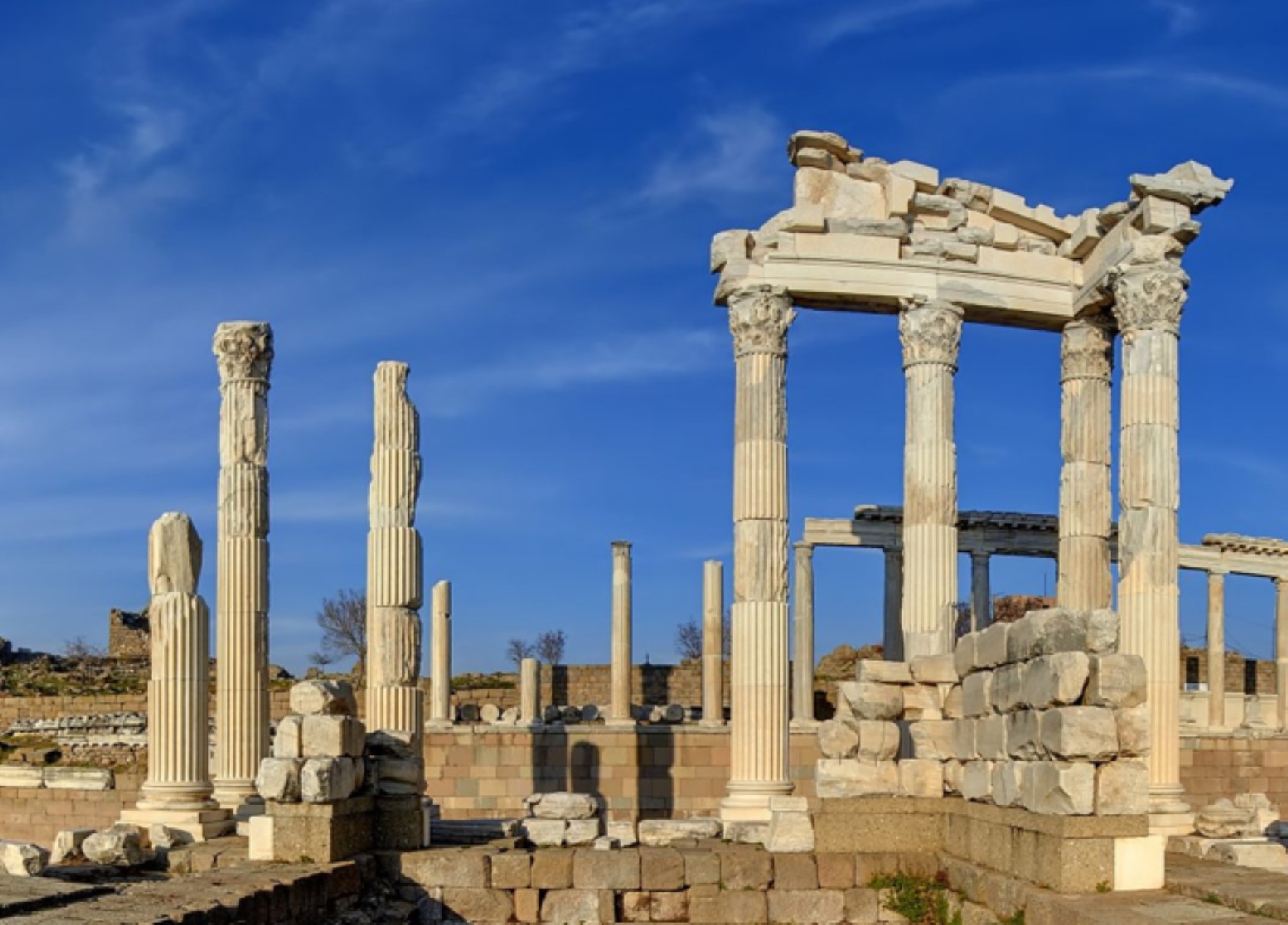
(The restored current state of the Temple of Trajan on the Bergama Acropolis.)
Magnificent structures such as the Serapion, or Temple of the Egyptian Gods, known today as the Kızılavlu in Bergama, the Tellidere Amphitheater, and the Viran Kapılı Atmaca Theater date back to that period.
To please the charming Anatolian city of Pergamon, Hadrian decided to return the privileges it previously possessed and to re-recognize the right to build a large temple.
With its strategic location, fertile plain, the surrounding area it previously governed, and its political weight, Pergamon was an indispensable city in Western Anatolia.
To maintain its loyalty to Rome, it was necessary to ensure it benefited from the power of the Roman State.
As an indicator of the value he placed on the city, in addition to many monumental structures he commissioned, Hadrian set out to build a large temple on the Pergamon Acropolis.
This temple was built on the highest point of the sloping hill where the Acropolis is located, on a plane provided by being supported by vaults.
This constructed building area was an engineering marvel.
The temple was an eye-catching marble structure on this area, with its effective symmetry, elegant slender columns, and “Corinthian” style capitals decorated with acanthus leaves. The stones were of a bluish-white color.
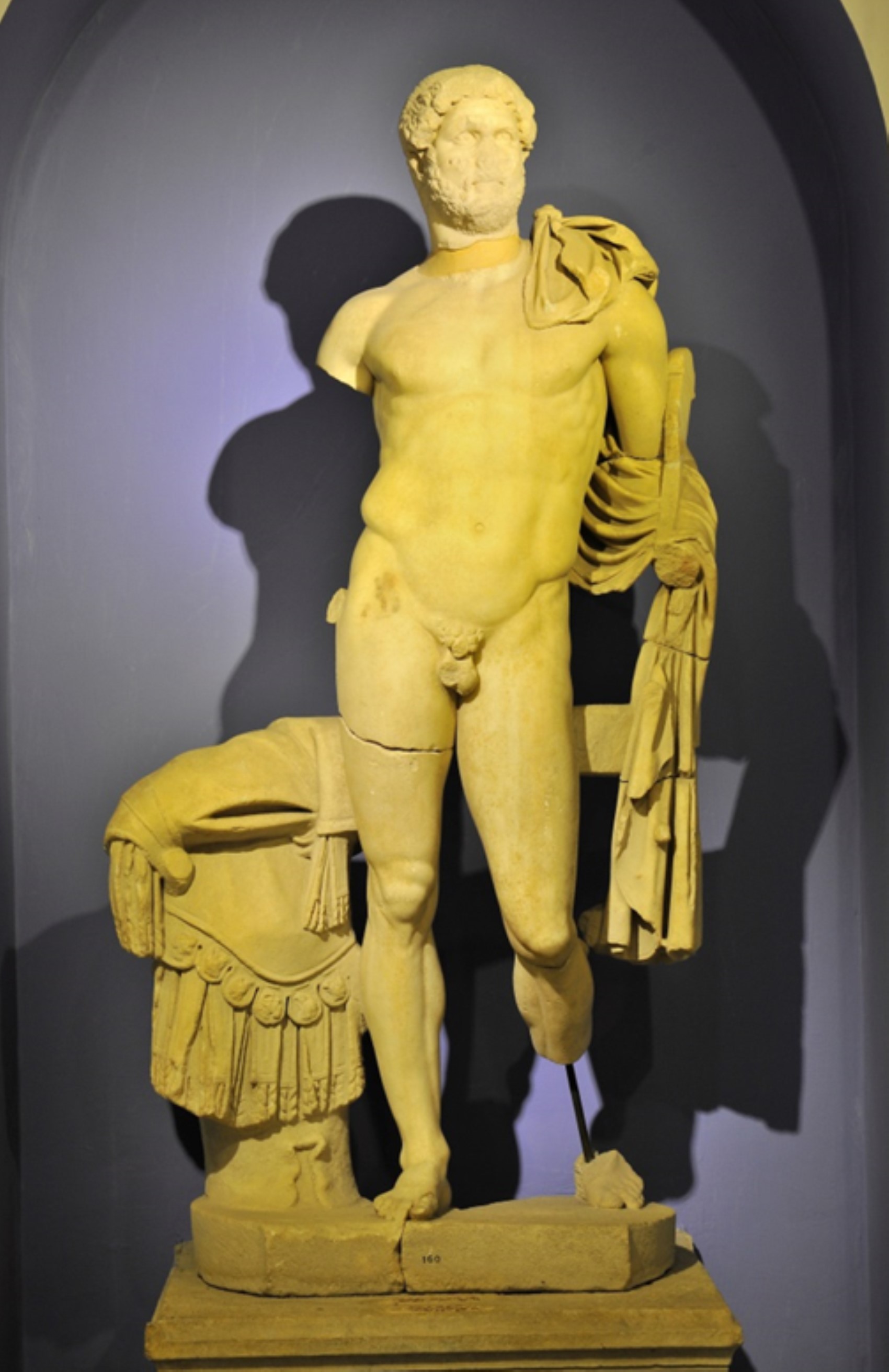
(Statue of Emperor Hadrian, found in the Pergamon Asclepieion, which could not be smuggled and is now in the modest Bergama Museum)
With its magnificent stance on the Acropolis hill, it watched over the entire Bakırçay Plain beneath its feet and could even be seen from the sea, from the Çandarlı Bay.
The people of Pergamon wanted to elevate Hadrian, who gifted them this elegant structure, to the rank of a god, dedicate the temple to him, and give his name to this sacred area.
In a letter he sent from Rome to Pergamon on December 22, 137, Hadrian sternly rejected this request.
Hadrian did not behave like some rulers today who, instead of being remembered for their personalities, the prosperity they provide to the public, or their contributions to the country or city, have their names put here and there.
He did not want his name given to such a magnificent monumental structure.
Only such rulers, such Hadrians, are not forgotten!
Hadrian showed great gratitude and ordered that this temple be given the name of his predecessor, Trajan, who adopted him and enabled him to become emperor.
Faced with insistence, he allowed his own statue to be placed next to the statue of his stepfather, which would be placed in the temple.
The 73 cm long heads of these statues, whose bodies, likely 5 meters high, have disappeared, are currently imprisoned in the Pergamon Museum/Prison in Berlin.
These statue heads were taken from Bergama to Berlin, just like the artifacts plundered through smuggling from 1864 to 1878, through dubious permits until 1886, and through the extension of these dubious permits until 1906.
Along with them, broken marble pieces of a letter found during excavations, in which Hadrian ordered that his own name not be given to the new temple, were also extorted.
Of these, one of the four broken pieces of the letter carved into marble was found in 1879 at the site of the Temple of Trajan on the Bergama Acropolis, the second in 1885 on the lower slope of the Temple, and the other two were found in excavations conducted in 1881 on the eastern slope of the Castle hill and in 1897 at the site of the Temple of Trajan.
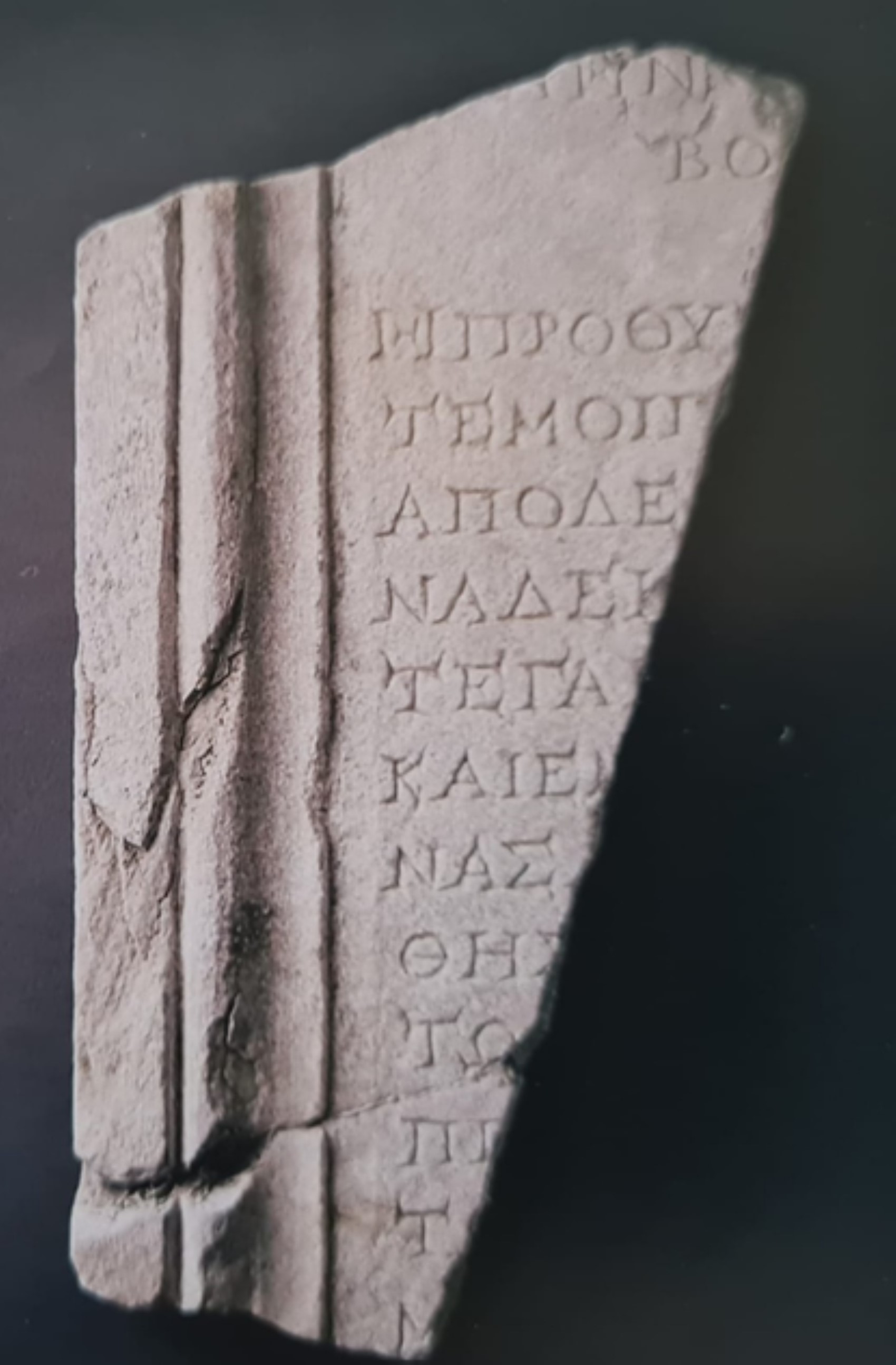
(A piece of the Hadrian letter. Berlin Museum-Prison Code: IvP 276)
And of course, with this sleight of hand, these historical documents were taken to Germany just like the other artifacts.
The inscriptions are dated to 137 A.D.
The heights of the white marble pieces with writing on them are 42.5, 24, 13, and 14 cm.
Museum/Prison code numbers: IvP 276, IvP 277 A, IvP 277 B, IvP 277 C.
As such, after the Ottoman Empire’s determination after 1906, especially with Enver Pasha’s resolve, and after the Republic of Turkey placed extraordinary importance on Anatolian Archaeology after 1923, the “visible robbery” of the German Empire could no longer continue and was prevented.
Following Mustafa Kemal Atatürk’s visit to Bergama in 1936, the new Turkey’s first excavation museum was opened.
It was decided to hold the country’s first festival, the Kermes, to reflect historical and local characteristics. A hotel was built for guests.
Even a “Master Plan” was prepared to intensify foreign tourism in Bergama.
Our second President, İsmet İnönü, was announcing that ancient tragedies would be performed in the theaters of Bergama.
During this period as well, German archaeologists continued to conduct excavations in Bergama under the supervision of the Republic of Turkey. This situation continues today.
Between 1975 and 1981, new findings were reached as a result of excavation work carried out at the site of the temple that Roman Emperor Hadrian had built in the name of his predecessor and stepfather Trajan on the Bergama Acropolis.
Other pieces belonging to the marble letter that Hadrian wrote to the people of Bergama regarding his name not being given to the temple were also unearthed.
These were 23 marble pieces with Hellenic letters written on them.
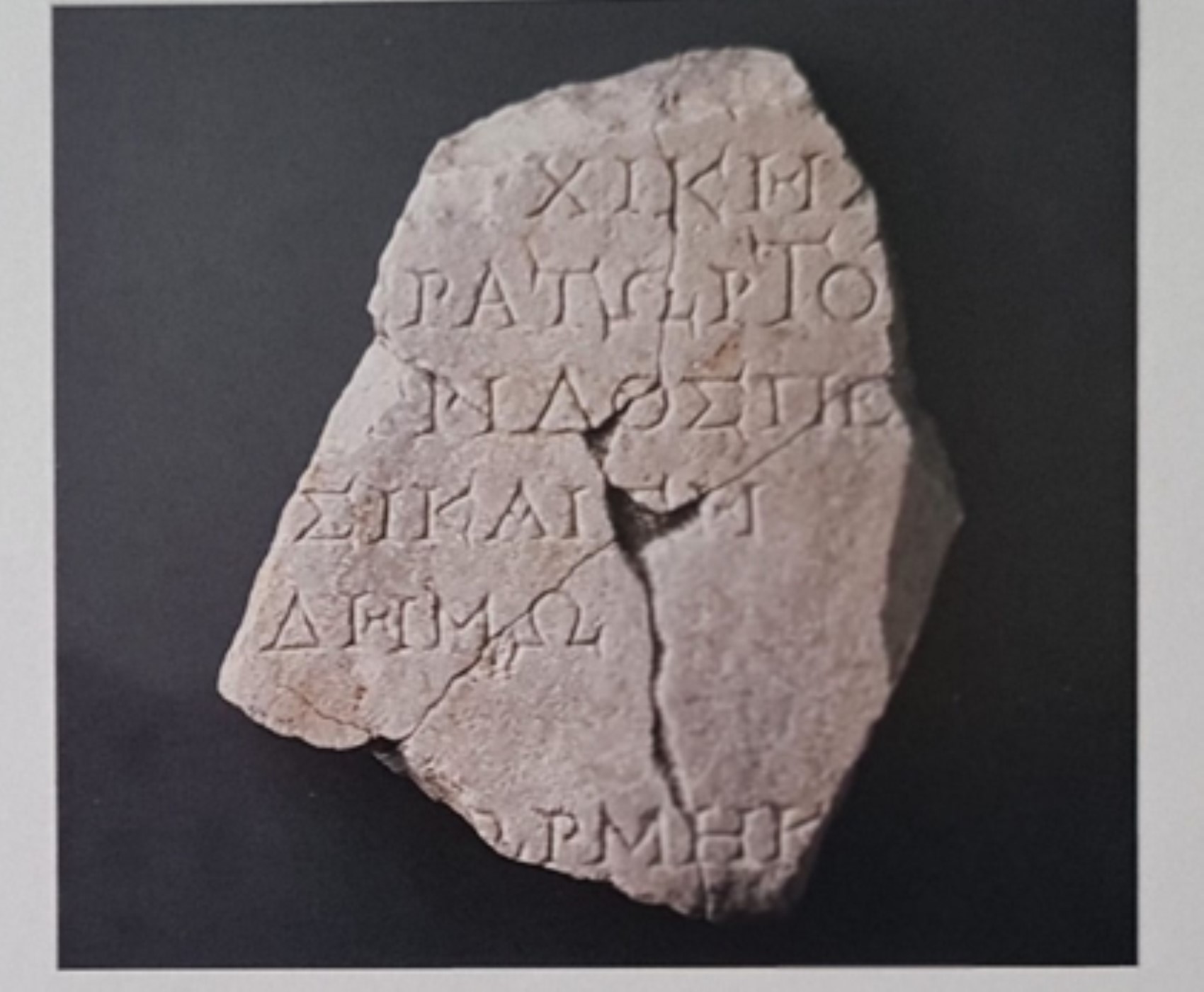
(Another piece of the Hadrian letter. Berlin Museum-Prison Code: IvP 277 A)
These inscriptions were taken to Berlin with the permission of the Republic of Turkey and were read through the joint work of the German Archaeological Institute and the Commission for Ancient History and Epigraphy.
The meaning of Hadrian’s letter was deciphered.
New information regarding the history and culture of Pergamon and Anatolia was obtained.
The Republic of Turkey had not given up on the Hadrian marbles, which it had allowed to be taken abroad for “information gathering.”
The marbles were returned in 2013 and delivered to the Republic of Turkey Bergama Museum.
Because it was strictly forbidden for historical artifacts found in Anatolia to be kept abroad permanently.
These 23 pieces are now on display in the Honor Inscriptions Section of Bergama’s modest museum in Turkey.
In this context, the distorted approach of German Imperialism in the last century and the current German administrators is clearly visible.
Well, is it that the idea of returning the four pieces in Berlin to Bergama has never occurred to the German authorities, despite these scientific studies, the combining of information from the pieces in Berlin and Bergama, and the joint work?
Have they never thought of sending these four pieces, which have great meaning for the history of Bergama/Pergamon, to their homeland, Bergama?
They have insisted/are insisting on keeping Hadrian’s marble inscriptions, which they smuggled from Bergama and took away under dubious circumstances, alongside the 1496 historical artifacts they officially declared.
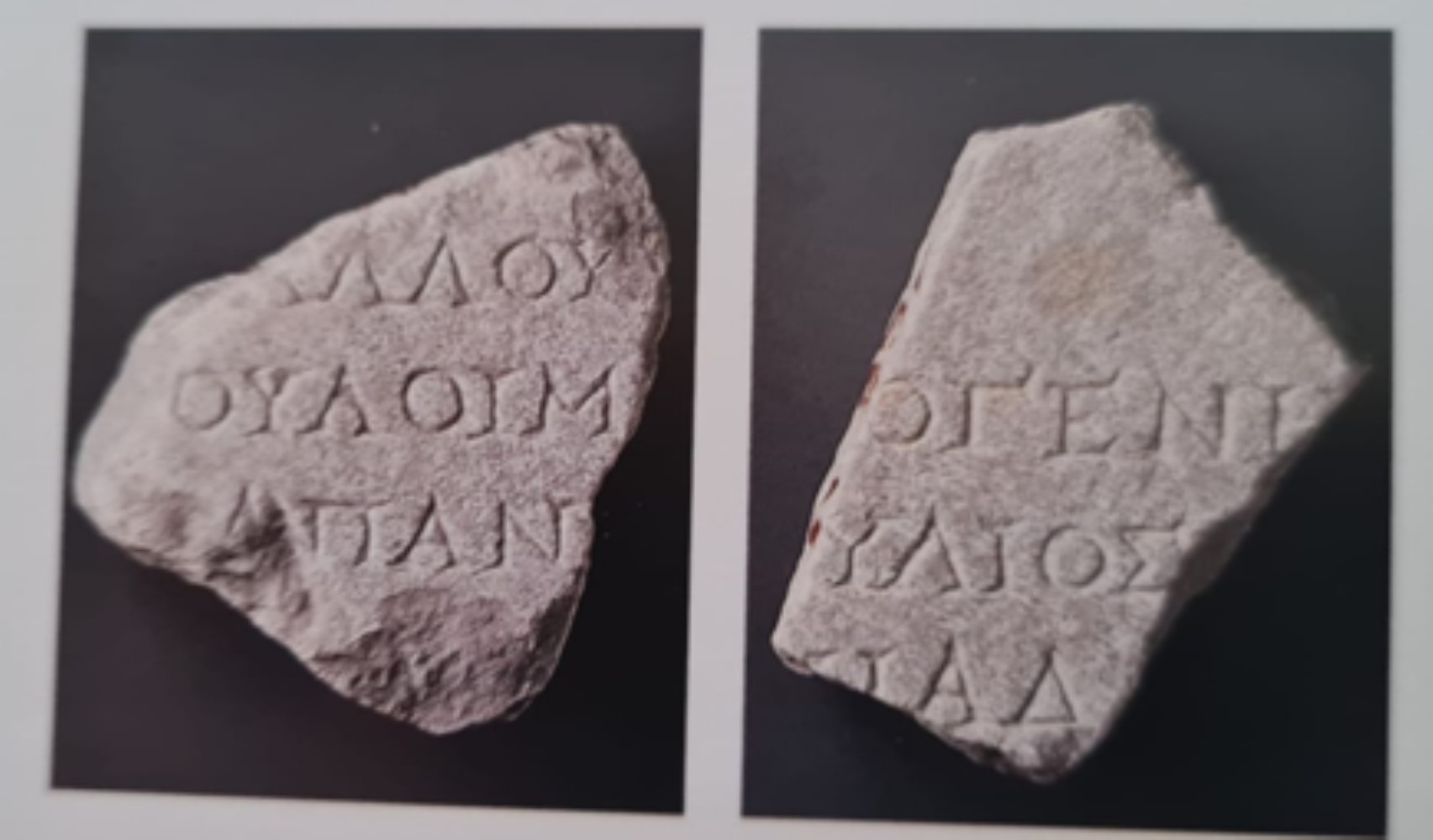
(Other pieces of the Hadrian letter. Berlin Museum-Prison Code IvP 277 B and IvP 277 C.)
In addition to the cruel plunder and robbery that took place in the past, their reckless claim over these artifacts and their insistence on not returning them is neither morally nor legally acceptable!
And this is despite the fact that the Republic of Turkey has given them permission to conduct excavations and restorations and be guests in both Bergama and other parts of Anatolia, and has respected their scientific work!
Moreover, while giving a diplomatic passport to the German co-head of excavations in Bergama.
Meaning, while there is immunity for their bags/suitcases when entering and leaving Turkey!
Most of the marble pieces of the letter of Rome’s glorious Emperor Hadrian, which shed light on the history of Western Anatolia, are in Bergama, and a few are in Berlin.
They are separated from each other!
This nonsense must end now!
If only they could be reunited!
Where is that understanding of humanity!
Friendship, and so on!
THE ZEUS ALTAR AND BERGAMA ARTIFACTS DO NOT BELONG TO COLD AND FOGGY BERLIN, BUT TO BEAUTIFUL BERGAMA. THEY MUST DEFINITELY COME BACK, THEY MUST RETURN HOME!
(Source: Berlin, Antikensammlung der Staatlichen Museen zu Berlin: IvP 276 + IvP 277 A-C. /// www.haberler.com (19.03.2015)
SEFA taşkın
08.06.2025
Bergama/İzmir
Would you like to get notifications about new developments and save news?
- NotificationsNew developments and breaking news
- SaveNews is stored in the app
Most Read

Video response to Kim Jong-un claims

Murat Ağırel’s police statement has been revealed
Azerbaijan issues arrest warrants in absentia for 7 people living in Turkey

The Orionid meteor shower will be visible from Turkey!

The penalty for Ronaldo, who left the national team camp, has been announced

Fatoş Seğmen reveals the cause of her daughter's death

Injury shock at Liverpool: He may miss the Fenerbahçe match

Latest status in the race between AKP and YENİ Party revealed

Who authorized the concert held in a parking garage?

From brotherhood to a distant partnership...