


The first humans of İzmir-2: How we spread across the world



This article is the second in a three-part series telling the story of humanity in the context of the first traces of humans similar to us recently found in İzmir. The continuation of the series will be published in the “12 Punto” online newspaper in the coming weeks. The first article can be accessed via the link below. https://12punto.com.tr/yazarlar/sefa-taskin/izmirin-ilk-insanlari-1-144223
The formation of humanity is a challenging but necessary process.
This change, which we call evolution, driven by climatic conditions, tectonic movements, geography, access to food sources, and in short, survival, is actually inevitable.
Scientists trace human evolution back to the first bipedal humanoid-apelike creature that lived 4 to 2 million years ago, whose existence we learned about from fossil bones named Lucy found in Central-West-South Africa and Ethiopia.
Although different species tried to emerge and went extinct in the meantime, the evolution of Lucy continued as Homo habilis (handy man), Homo erectus (upright man), Homo heidelbergensis (Heidelberg man), and Homo neanderthalensis (Neanderthal man), and finally, Homo sapiens (wise man) appeared on the world stage.
It is thought that the first representatives of the evolutionary line leading to the emergence of Homo sapiens, which we call modern humans, began to appear approximately 700-500 thousand years ago.
Homo sapiens, with the anatomical features we know today, became distinct approximately 300 thousand years ago.
It has been determined that the Homo sapiens fossils recently found in Morocco, in northwestern Africa, date back 315 thousand years.
The remains of the Moroccan “wise man” belong to the oldest known Homo sapiens.
However, the evolution of Homo sapiens may have taken place on a continental scale, not in a single region in Africa.
There are other findings that support this: The Florisbad skull in South Africa (approximately 260,000 years ago) and the Omo Kibish fossils in Ethiopia (approximately 195,000 years ago) show that the oldest traces of Homo sapiens were spread across North, South, and East Africa.
This common origin is confirmed not only by archaeological findings but also by genetic research.
By tracking small changes in the Y chromosome passed from father to son, the lineage of all men living today can be traced back to a common ancestor who lived in Africa approximately 200-300 thousand years ago.
This person, referred to in the scientific world as “Y-chromosomal Adam,” is not the first man of humanity; he is only the most recent common paternal ancestor of men living today.
Similarly, by tracking changes in mitochondrial DNA passed from mother to children, it is seen that the maternal lineage of people living today can be traced back to a common woman who lived in Africa approximately 150-200 thousand years ago.
This woman is also referred to in the scientific world as “Mitochondrial Eve.” Just like Y-chromosomal Adam, she is not the first woman of humanity, but only the most recent common maternal ancestor of people living today.
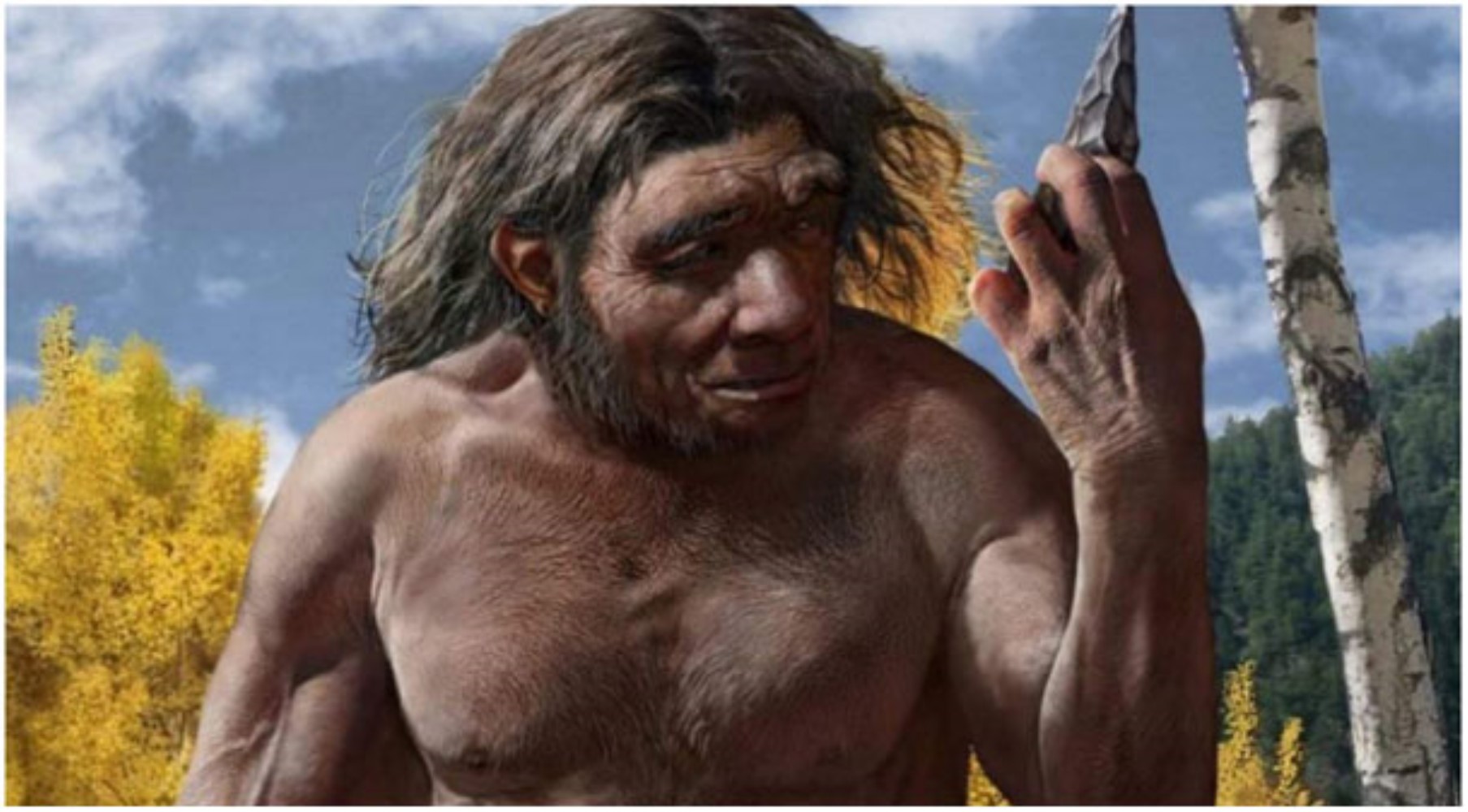
(The first Homo sapiens in Africa. Reconstruction.)
***
Even though there had been some attempts before, Homo sapiens, our ancestors, began to leave Africa intensively 60-70 thousand years ago.
When they left Africa, they had no maps, no plans.
Most of the time, necessity drove them; drought, famine, and overcrowded lands were the reasons.
But they also had a handful of stone tools and an incredible ability to adapt; that was what kept them alive.
In addition to this beginning of departure, Homo sapiens (that is, us) did not leave the entire continent. The vast majority continued to stay in Africa.
The sapiens communities remaining in Africa were geographically isolated from each other. Forests, deserts, and mountains had created natural barriers. This isolation led to different communities evolving independently of each other.
That is why Africa is the continent with the highest genetic diversity today.
All Europeans and Asians are actually descendants of a small African community. They are genetically much more homogeneous than Africans.

(Toba volcanic eruption-like)
There is a hypothesis that suggests a population bottleneck in Africa during this period: The eruption of Mount Toba on the island of Sumatra in Indonesia.
This natural event, which occurred 74 thousand years ago, is the largest volcanic event of the last two million years.
Ash spread into the atmosphere, and sunlight decreased. According to one theory, a volcanic winter began and lasted for years. Temperatures dropped by 3-5 degrees worldwide. Vegetation disappeared, and game animals decreased. As a result, the human population collapsed dramatically.
Some genetic evidence suggests that the global Homo sapiens population fell below 10 thousand individuals during that period.
It suggests that the species was almost on the verge of extinction.
However, this disaster theory called the “Toba bottleneck” is now considered largely controversial by the scientific community.
Genetic and archaeological studies conducted in recent years cannot find evidence of such a sharp collapse worldwide.
Very old environmental data in East Africa show that Toba did not create a long-term volcanic winter in the region.
It is thought that the population decline on the continent during that period and the resulting low genetic diversity were not due to a single disaster, and that the human population had already been low and fluctuating for a long period.
This significant decrease in the number of Homo sapiens in South Africa due to the Toba eruption or other reasons is probably the moment humanity came closest to extinction in history.
What is certain is that small communities living along the South African coast of the continent managed to survive during that period.
They ate seafood, they sheltered in caves.
And a small group that could survive in such a destructive environment is the common ancestor of 8 billion people today.
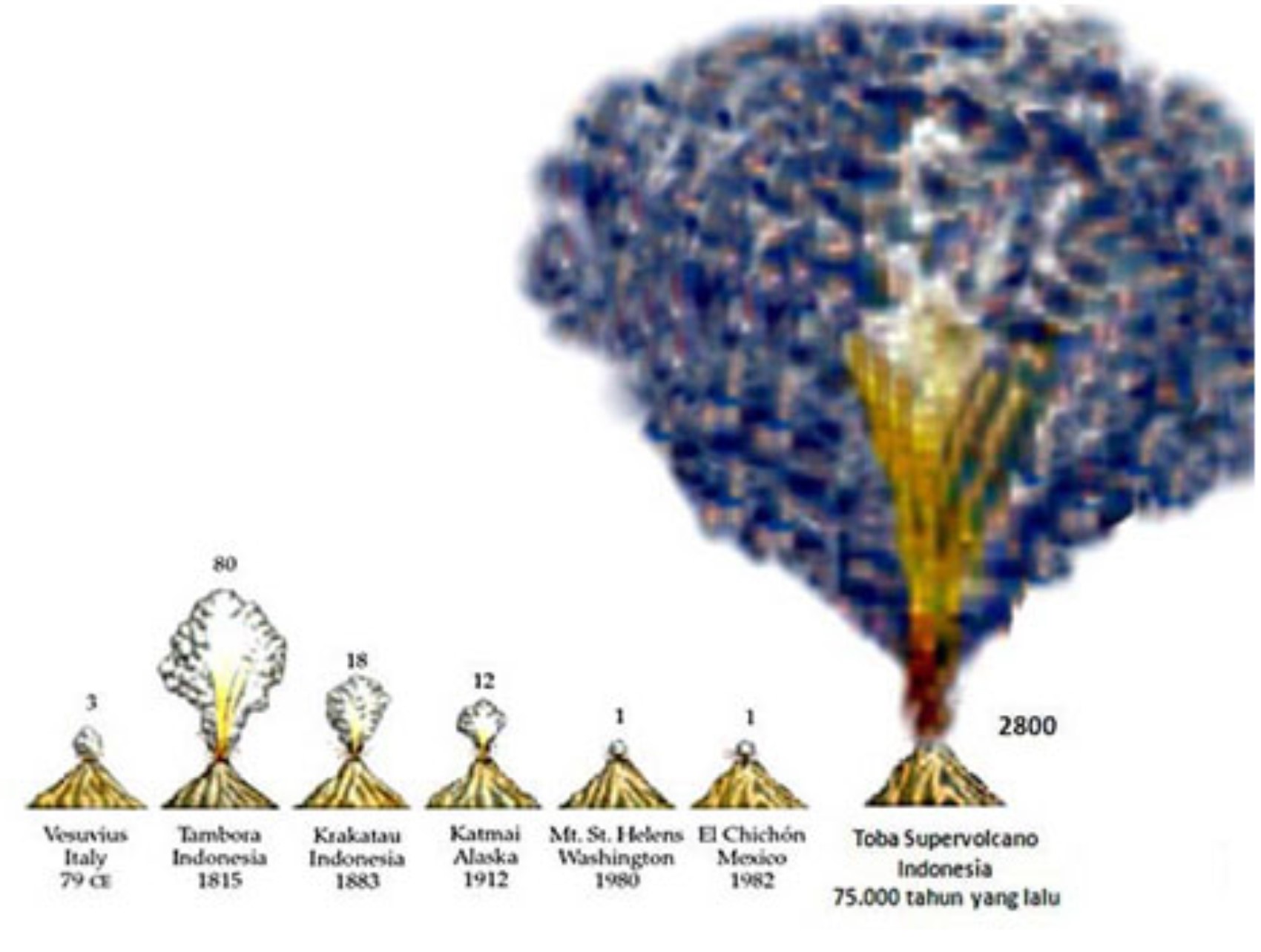
(A picture showing the intensity of the Toba volcanic eruption)
***
The genetic traces of the Homo sapiens who managed to hold on to life live on today in the “San” and “Khoikhoi” peoples in Botswana, Namibia, and Zimbabwe in Southern Africa.
These peoples are the oldest indigenous peoples of Southern Africa and genetically come from the oldest lineage of Homo sapiens.
It is seen that the Homo sapiens species, which emerged 300 thousand years ago, branched out into different arms over time like a river.
The branch that formed the ancestors of the San people began to diverge from other branches (including today's East Africans, West Africans, and the groups that would eventually leave Africa) approximately 100-200 thousand years ago. Some date the divergence more cautiously to 60,000-90,000 years ago.
In other words, the San became the earliest diverging branch within the already existing species. This makes them the “oldest/most ancient line” in terms of genetic diversity.
For this reason, San (and Khoisan in general) communities are seen as the branch closest to the trunk of the main genetic tree of Homo sapiens in human history.
That is, the genetic line of the San has “diverged” less from the common ancestor of all other human communities (including Europeans, Asians, and other African groups) than other groups.
That is why expressions like “the world's oldest human community” are used for them.
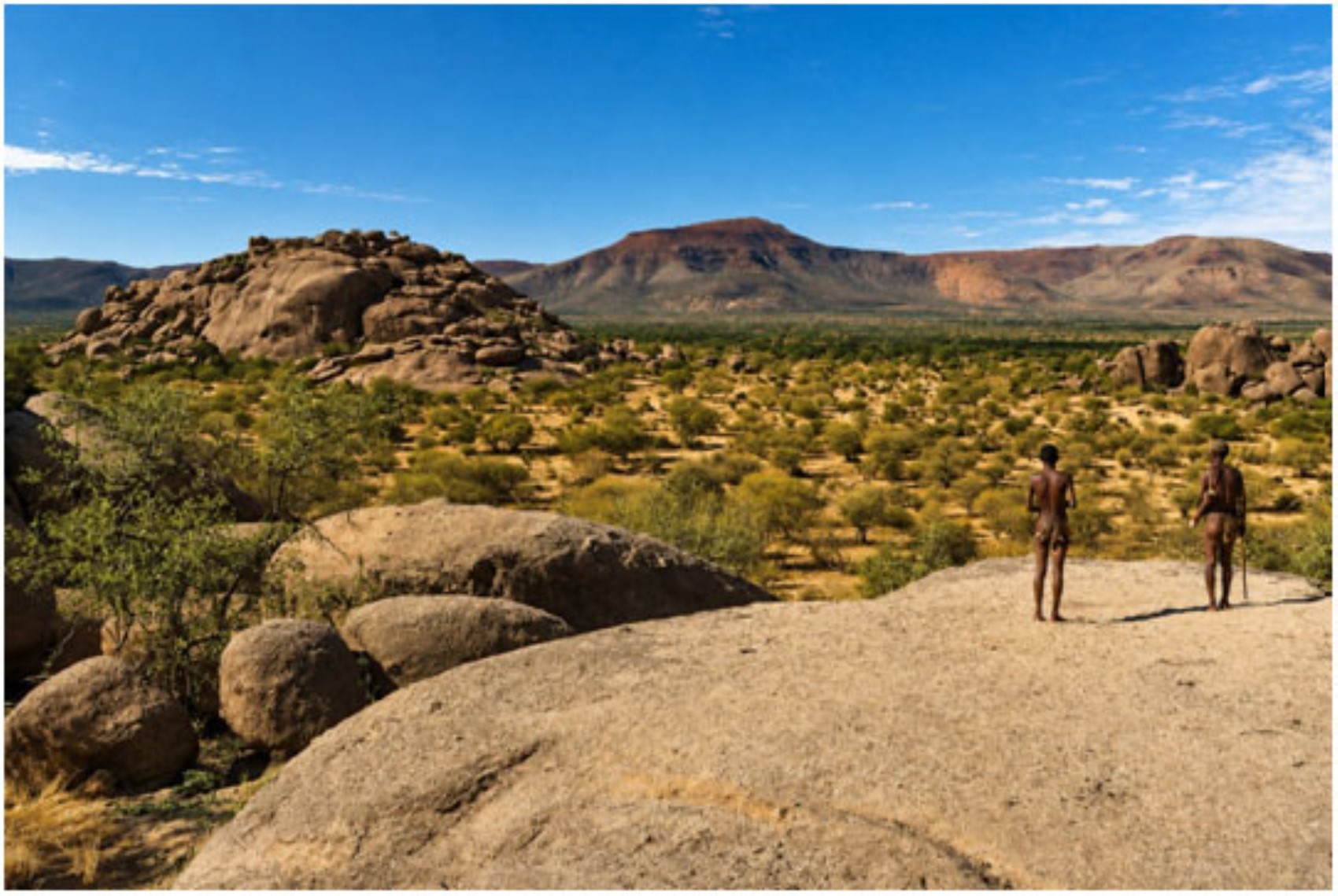
(Bushmen-San people in the Africa-Kalahari savanna, from one of the places where Homo sapiens first emerged. Source: The San People of Africa - Guide to the Kalahari Bushmen Tribes. http//:africafreak.com/san-people)
***
Of course, this does not mean “they were the first Homo sapiens,” it means “theirs is the earliest diverging, least mixed lineage within Homo sapiens.”
In this context, the San are truly an “ancient” human community in a genetic sense.
It is reported that the Khoikhoi emerged much later as a cultural/economic identity.
According to one view, expansionists from the north reached southwestern Africa with a migration wave approximately 2000 years ago.
This group brought with them genetic elements of Eurasian origin and even carrying some Neanderthal DNA.
After this migration, there was mixing between the Khoikhoi and the San. This is the reason for their anatomical similarities.
But this situation did not prevent them from maintaining their unique cultural and linguistic differences.
In other words, the “San” continued its existence uninterrupted for thousands of years as the “root society” of the region, adopting a hunter-gatherer lifestyle.
The Khoikhoi, while coming from a common, ancient genetic root with the San, transformed into a separate cultural/economic identity by adopting animal husbandry (domestication of cattle, sheep, goats) approximately 2000-2300 years ago.
As a people, they are not as old as the San, but as a “genetic line,” they are based on a common ancient origin.
In this context, the San are the deepest, most primary branch of Homo sapiens.
That is, all other human communities evolved from a branch of the San. The San is the group closest to that common ancestor.
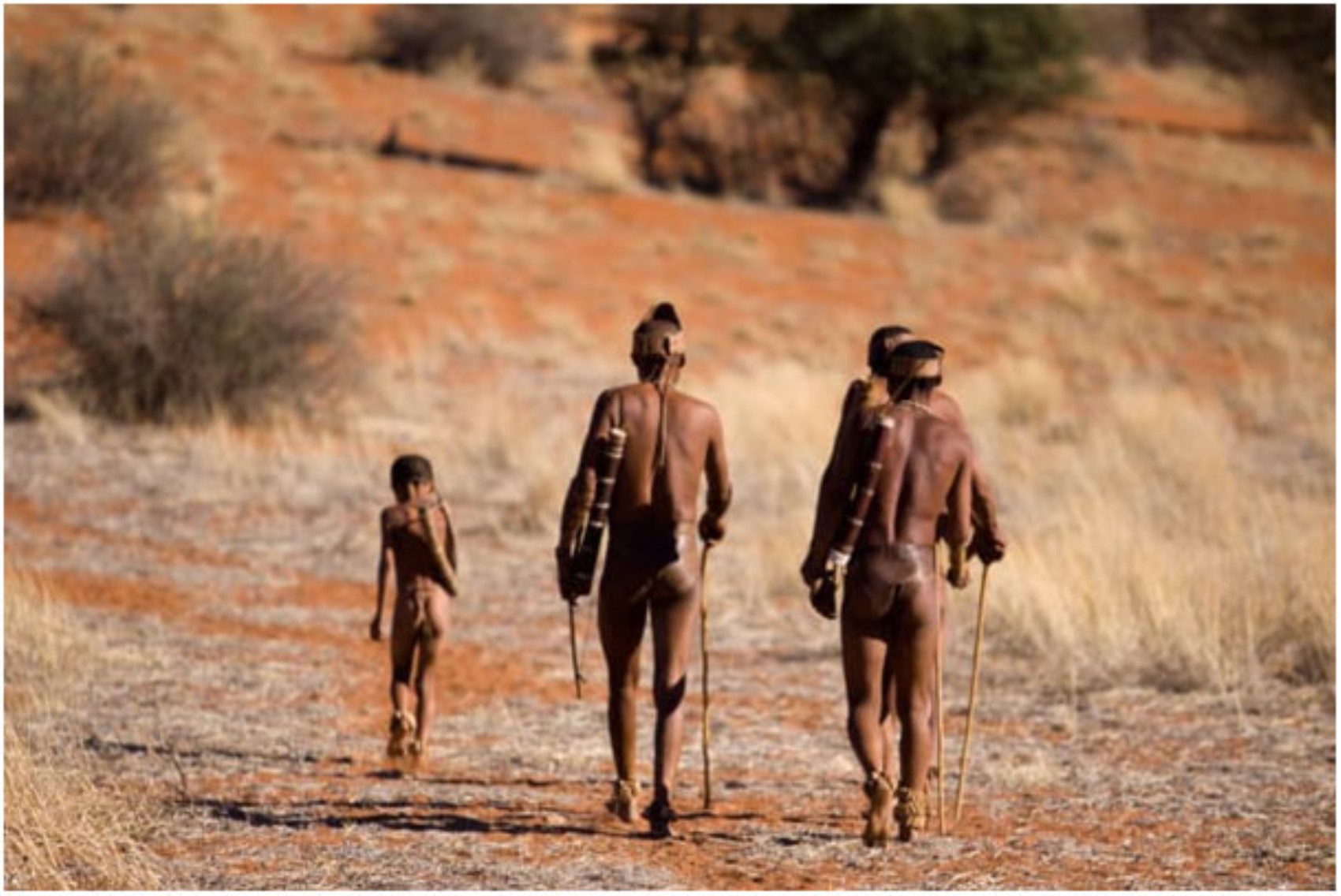
(Bushmen-San people. Source: http//:africafreak.com/san-people)
***
The name San is read as “Saan.”
Their neighbors, the Khoikhoi, gave them this name, somewhat disparagingly, and it is reported that this word means “those who gather food from the ground, gatherer.”
Khoikhoi means “cattle herder” in their own language.
The San, on the other hand, express themselves with names like “Kung, Tuu, Tshu-Khwe, Khwe.”
The San people are a very talented, literally hunter-gatherer community; the Khoikhoi are not hunter-gatherers, but a rural people who make a living through nomadic animal husbandry (cattle, sheep, goats).
When Dutch colonists arrived here in the 17th century, they called both communities the “bushmen” of the Kalahari region where they lived. This is a derogatory word in the language of the colonists.
However, the genetic difference between a “San” individual and a European is much greater than the difference between two Europeans. The San person is more original, less changed.
In this context, the language spoken by the San people is perhaps the language closest to the first language created by humanity.
The most interesting feature of San languages is the presence of click consonants.
Sounds called “click sounds” in linguistics are sharp, clicking sounds produced by the tongue, teeth, and palate hitting each other, such as “tsh, tsh,” “tsk, tsk.”
They are similar to the mouth sounds we make in Turkish for warning or disapproval, such as “şşt,” “cık cık,” “tsk tsk.” However, in Turkish, these sounds are not part of words; they are used only as gestures and interjections. In San languages, there are 4-5 click sounds, and these are the actual consonants of the word, and meaning is distinguished by them.
This feature is not as common in any other language family in the world.
There are also click sounds in the Hadza and Sandawe languages in East Africa, and these sounds even passed from San languages into some Bantu languages such as Zulu and Xhosa. But in none of them are they as intense and central as in San languages.
Some researchers think that this may be one of the oldest remnants of human language.
According to evolutionary linguists, the first human language may have started with such sounds.
Later, most communities abandoned these sounds, while the San people have been preserving and speaking them for a very long time since ancient times.
These sounds were probably heard in Anatolia once upon a time.
They mixed into the imbat (sea breeze) and lodos (south wind) of İzmir!
Into the rustling of willow trees along the streams!
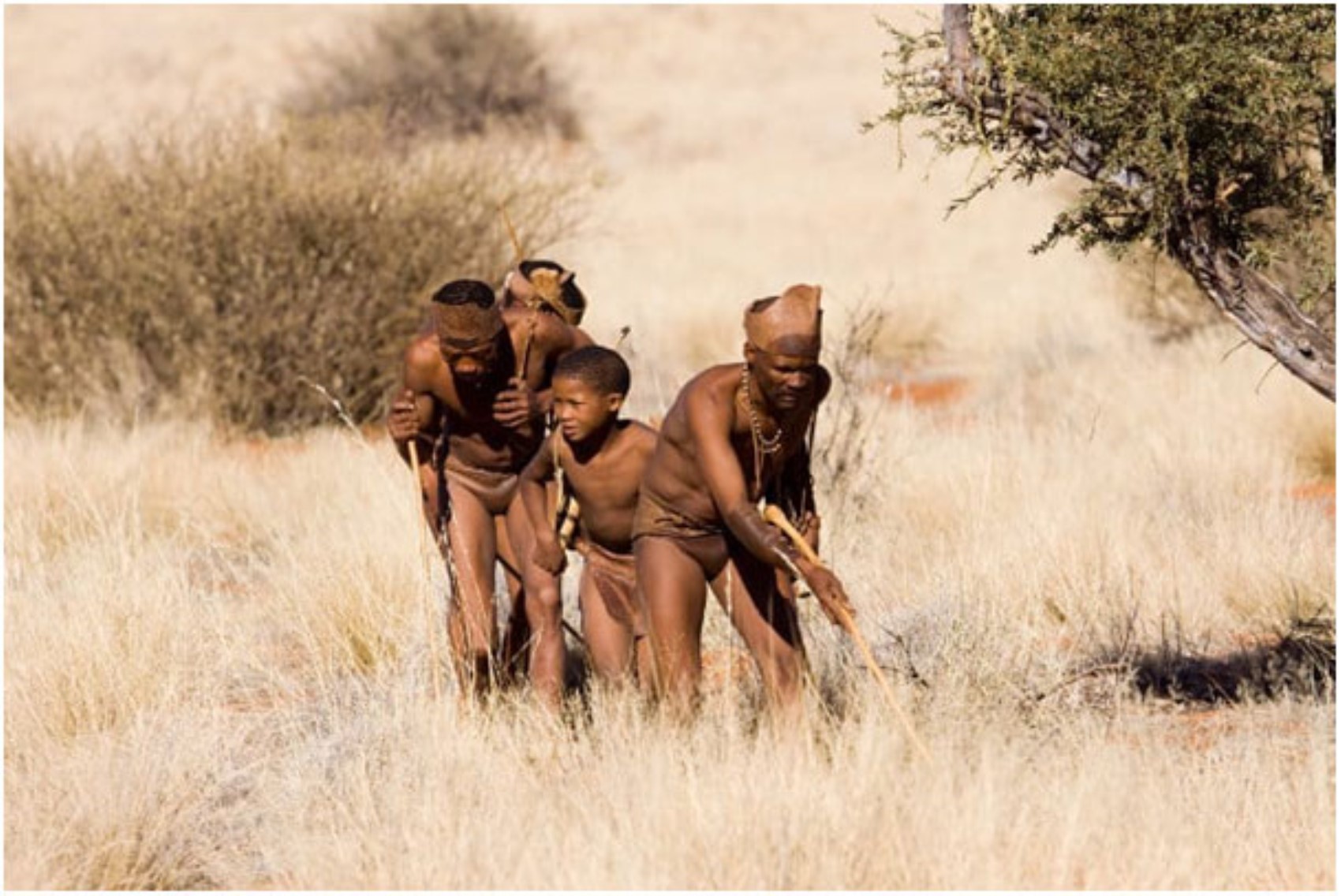
(San people out hunting. Source: http//:africafreak.com/san-people)
***
So, how did these San people, the first examples of the first Homo sapiens, maintain their existence for thousands of years in these difficult climate and environmental conditions of Africa?
What was a feature of their lives? Can they still continue these?
The answer to this can be given as “they did not fight with nature, they made peace with it!”
They wandered in small groups of twenty-five in the Kalahari region of Southern Africa.
They slept in rock shelters. They hunted with poisoned arrows, but their real power was in their eyes.
They could read the age, gender, and health status of an animal by looking at a footprint.
This was not a talent, it was a accumulation of thousands of years.
They worked only 12 to 19 hours a week. A balance that modern humans dream of was an ordinary day for them.
So what did they do in their spare time?
Giving gifts to each other was their social behavior.
They danced, sang songs, and kept rhythm with applause. Music was more than entertainment for them, it was the way the tribe stayed together.
They made jewelry from ostrich eggshells, and drew pictures of large antelopes on rock walls. These pictures were not just art, but a sacred practice.
Equality was not a slogan for them, but a rule.
Even a successful hunter could not be arrogant, because the whole tribe would belittle his hunt. No one could be superior to another.
Then the Europeans came.
They took their lands from them. Wars, exiles, forced labor...
Today, most of the “San” people can no longer hunt or gather.
Only a lifestyle that tries to survive with state support in a small protected area in Namibia remains.
Perhaps the question we should ask is: What did what we call progress really leave behind?
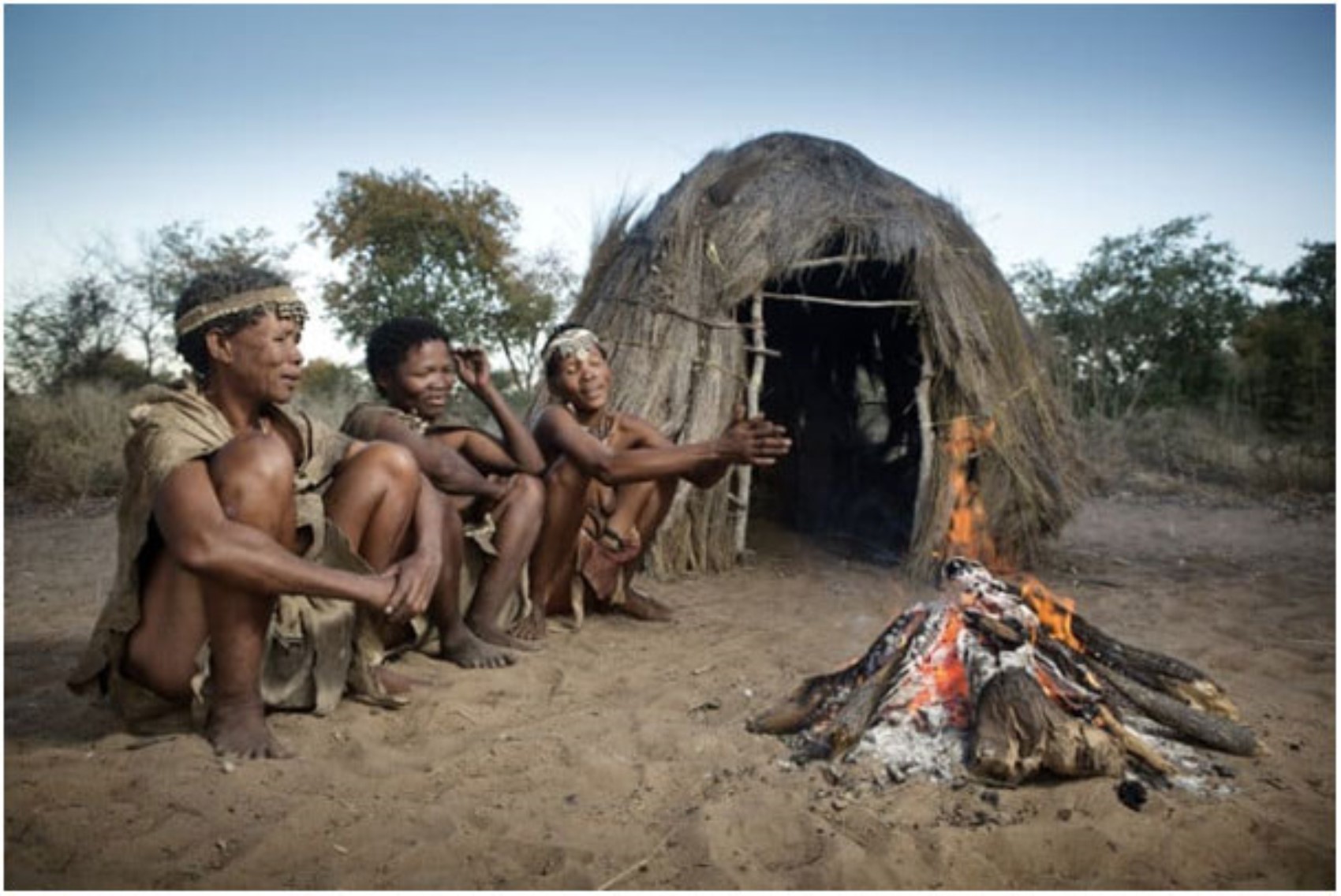
(San women. They are probably waiting for their men to return from the hunt. Source: http//:africafreak.com/san-people)
***
Today's African communities are also descendants of the Homo sapiens who were able to maintain their existence in Africa.
All Europeans, Asians, Americans; they all descend from a small group of Homo sapiens who left Africa 60,000 years ago.
In other words, the most genetically diverse people are Africans. We, those outside of Africa, are actually a genetically narrowed subset of them.
As a result, the Homo sapiens who did not leave Africa did not go extinct.
On the contrary, they continued to live, diversify, and evolve all over the continent.
Today, 1.4 billion Africans are the continuation of that long and uninterrupted lineage.
Those who left Africa set out as a small group of adventurers and filled the rest of the world.
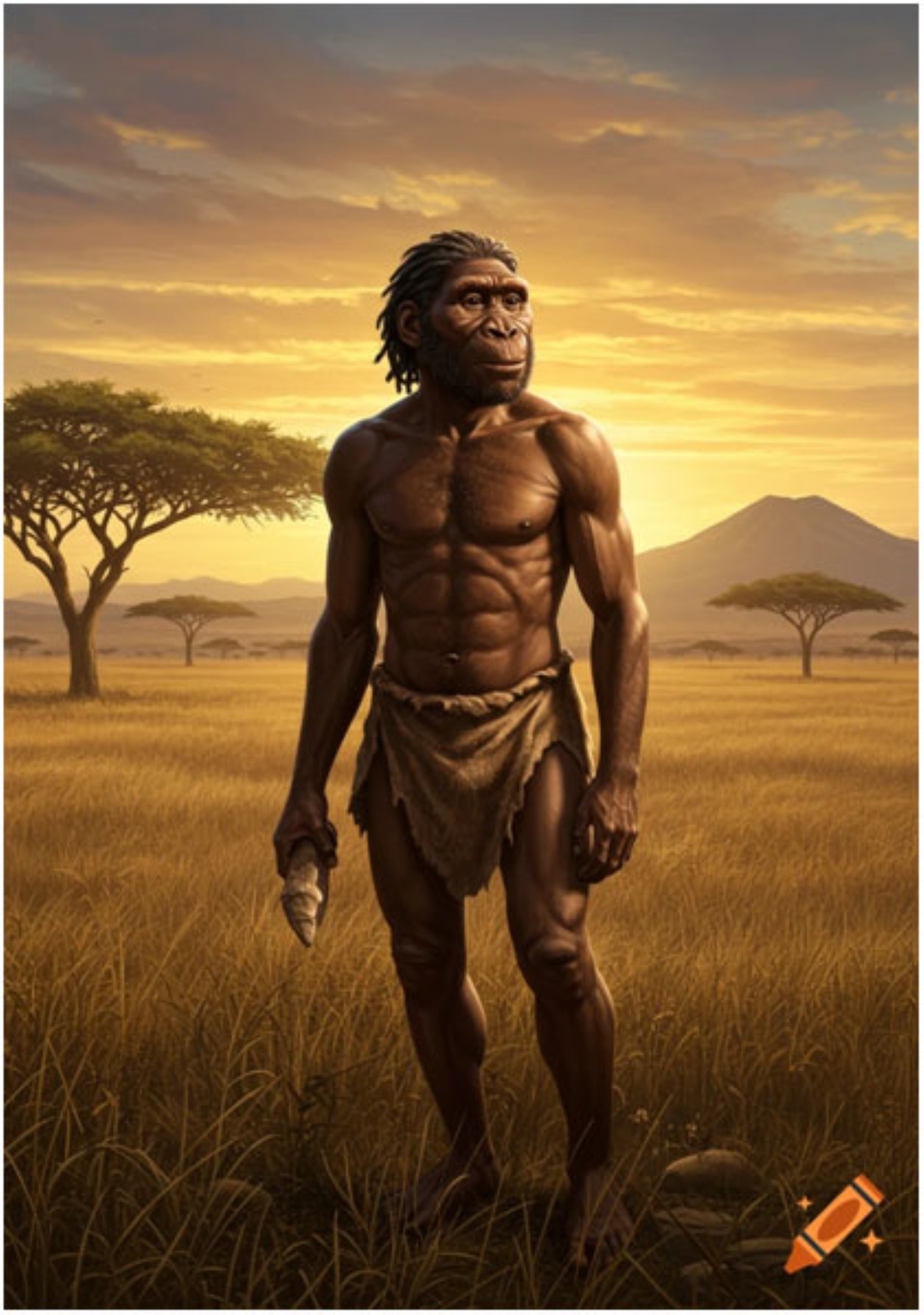
(A photorealistic picture of an early Homo sapiens man in the African savanna at sunset. Source: Smithsonian reconstructions: Mauricio Antón's paleoart)
***
The spread of Homo sapiens from Africa to the World began approximately 60,000-70,000 years ago, but this was not a single migration wave.
Before this, approximately 100-120 thousand years ago, there were earlier exit attempts that might not have left permanent traces. The Skhul and Qafzeh findings in today's Israel point to this.
But the vast majority of today's non-African humanity comes from this second wave 60-70 thousand years ago.
Why does a human leave their homeland?
How old is the human experience of migration?
Communities that survived after major disasters and great hardships sought new living spaces due to climate change and resource pressure.
The climate warmed, glaciers retreated. New routes opened up.
The population gradually increased, and living together became difficult.
With the increase in knowledge and the use of intelligence, the capacity for planning and coordination developed.
In the first migration exit, the main route was the southern strait of the Red Sea, the narrow passage between today's Yemen and Djibouti.
At that time, the sea level was lower, and the passage was much narrower than it is today. It was probably crossed on foot.
This first wave reached Australia 50 thousand years ago along the coastline via the Africa-Yemen-Indian coasts-Southeast Asia route.
This was the earliest and fastest spread. They went along the coast because seafood was a constant and reliable source of food.
This was also a striking and very difficult journey, because even at that time, vast seas had to be crossed.
Then, due to certain living difficulties, the second migration wave came approximately 50 thousand years ago.
The route was overland via Africa-Near East-Central Asia.
The migration branches reached Europe 45 thousand years ago and East Asia 40 thousand years ago.

(A San woman and baby)
***
Homo sapiens encountered another humanoid species called Denisovans in Central Asia.
In 2008, in an excavation carried out by an archaeologist in a cave in the Altai Mountains in the Siberia region of Russia, named after Denis, a monk who lived there in the 18th century, a finger bone probably belonging to a small child was found.
In the very well-preserved DNA analysis performed on this bone, it was understood that it did not belong to any known humanoid species.
With the evaluation of other remains found later, it was estimated that these humanoids were large, sturdy beings, although we still do not fully know what they looked like.
Like the ancestors of Neanderthals, Denisovans were also derived from Homo heidelbergensis (large-headed man) communities that had reached Asia. The divergence from this common origin took place in the east, approximately 700-600 thousand years ago.
After separating from this common ancestor, Denisovans and Neanderthals (heavy-browed man) remained on the same line for a while longer; their division into two separate species among themselves happened later, approximately 500-400 thousand years ago.
Denisovans had diverged from our species, Homo sapiens (wise man), which derived from the same ancestor, Homo heidelbergensis, approximately 600-500 thousand years ago.
Some scientists say that Denisovans could have also evolved from the older humanoid “Homo erectus” (upright man) that had come as far as Asia.
These not-too-distant relatives of humans maintained their lineage for thousands of years in Asia as a different species, the humanoid presence of Asia.
After the entry of Homo sapiens into Asia, they went extinct 40 thousand years ago.
It is not known whether Denisovans visited Anatolia.
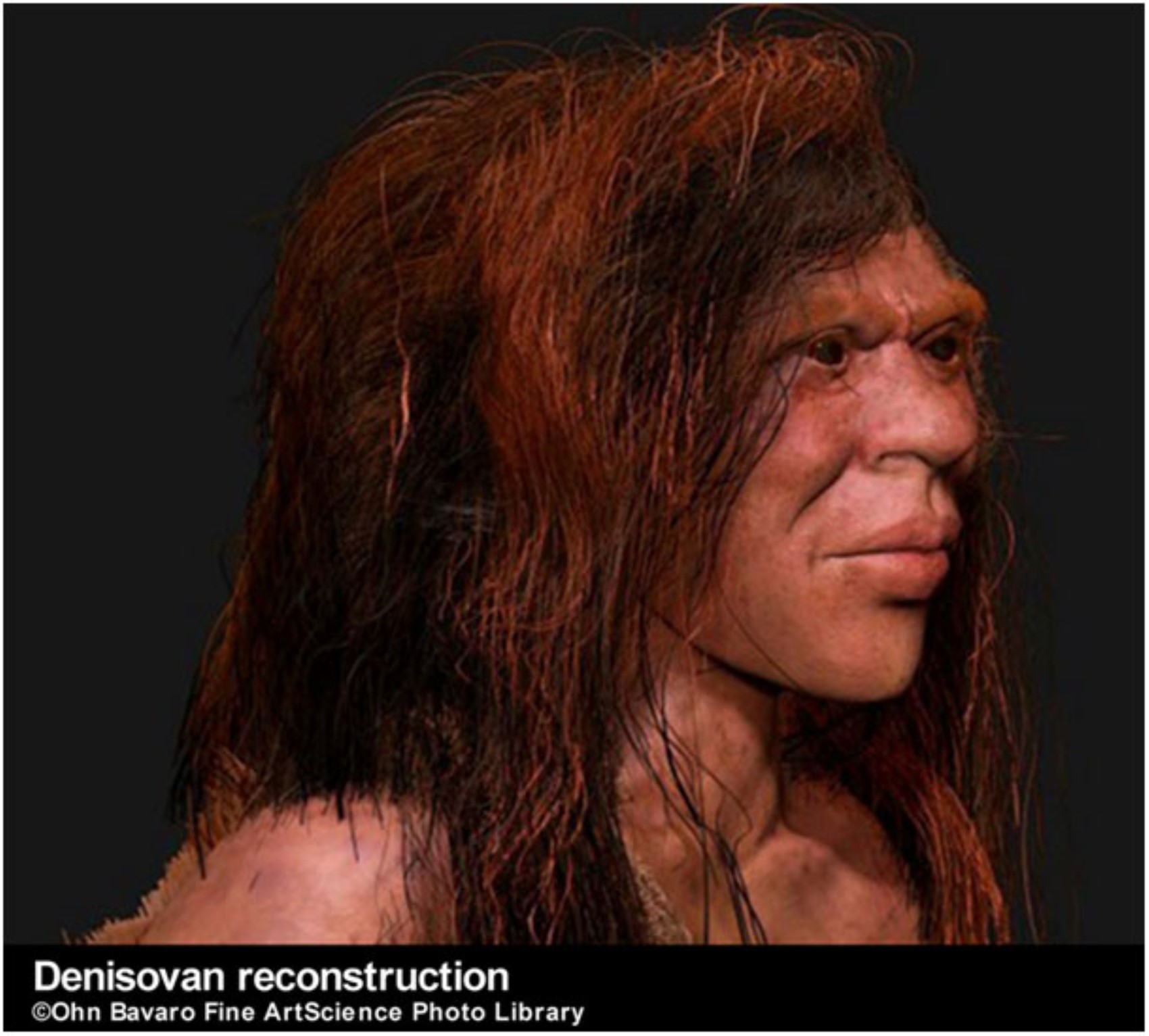
(A Denisovan individual-Reconstruction)
***
Homo sapiens (wise man), who reached Europe 40 thousand years ago, encountered Neanderthals, who had maintained their lineage despite Europe's cold climate, and made direct contact with them. They had entered the living spaces of Neanderthals.
They probably knew each other, communicated, perhaps mated, and entered into conflicts over territory.
They lived in the same environments for a very long time.
The third major migration wave of Homo sapiens occurred approximately 15-20 thousand years ago.
They entered North America-Central America-South America from Northeast Asia, via the land bridge at the Siberia-Bering Strait.
At that time, there was land where the Bering Strait is, and it could be crossed on foot.
During the Ice Age, the sea level was very low. People had moved from one continent to another without realizing it.
The transition from İzmir, from the Western Anatolian coasts to the Aegean islands, was probably also done on foot like this.
Homo sapiens reached the southernmost part of South America, Patagonia, 12 thousand years ago. Approximately 50 thousand years had passed since the exit from Africa.
(Source: A photorealistic reconstruction of an early Homo sapiens man in the African savanna at sunset. Smithsonian reconstructions: Mauricio Antón's paleoart)
***
When looking at world history, the spread of Homo sapiens (wise man-modern human) was very rapid.
In the 50-12 thousand years ago period, called the “Upper Paleolithic” (Old Stone) period, thin blades, bone needles, bows and arrows became widespread with the tool technology developed by Homo sapiens.
These tools made it easier for Homo sapiens to adapt to different climates.
Although it is reported according to one view that art, the making and use of ornaments exploded in this period, recent archaeological data show that this story goes back much further.
The ochre found in Blombos Cave in South Africa dates back 285 thousand years, and the beads made of seashells date back 70-160 thousand years.
In other words, there is no single “moment” where artistic development is seen; there is a quiet accumulation spread over hundreds of thousands of years.
New findings can deepen history.
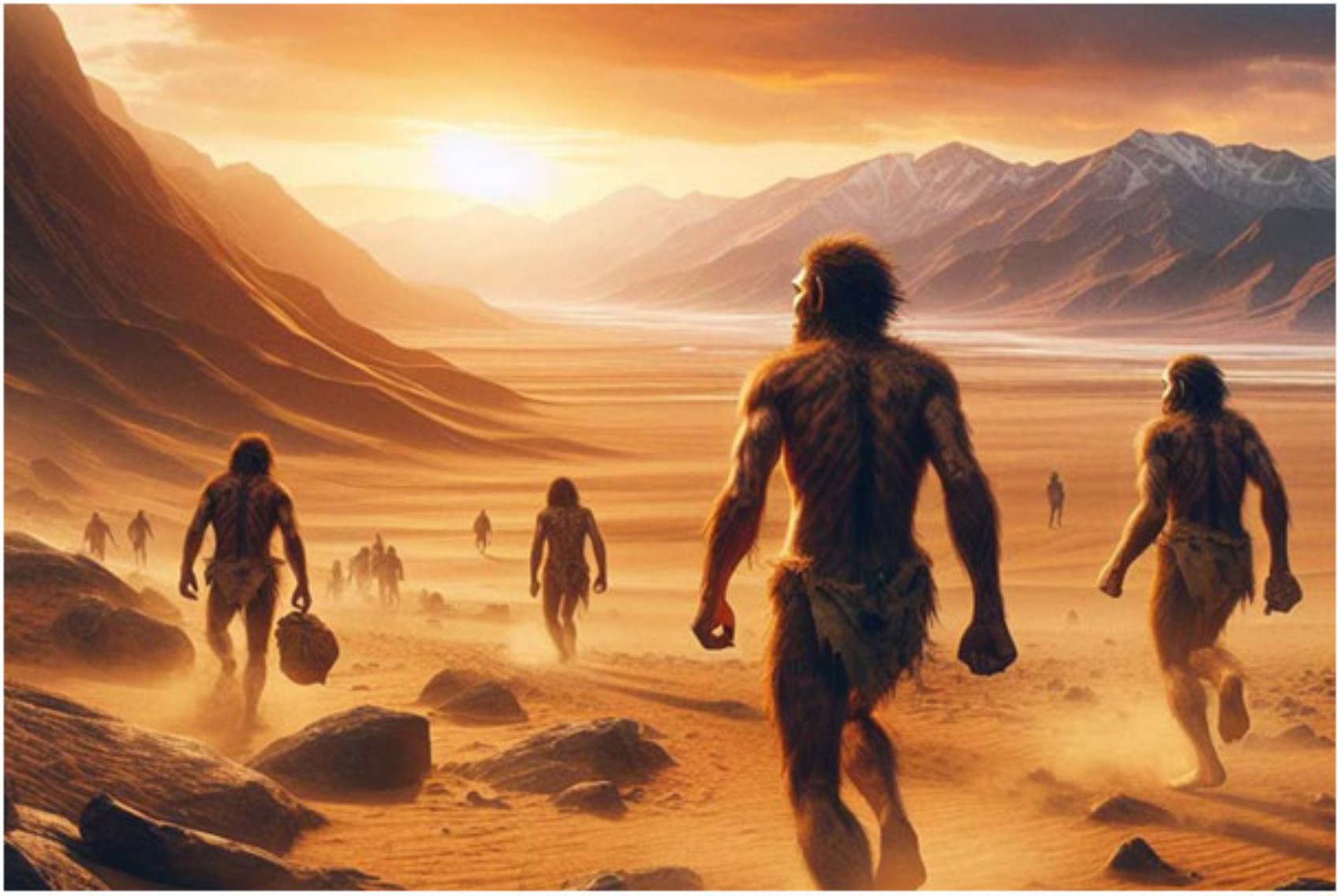
(The first Homo sapiens on the road)
***
In this flow of history, the laws of evolution continued to operate. Those who did not adapt to the environment were erased and went away.
Those who adapted to the environment maintained their existence.
Adapting to the environment (adaptation), along with natural selection, is the most defining element of evolution.
In this process, Homo sapiens learned to sew leather with bone needles. They made clothes. Without this, it was impossible to enter and live in cold climates.
With these advances, Homo sapiens' capacity for abstraction and symbolic thinking developed.
One day, this ability would turn an ordinary stone into a “sacred monument.” But that day had not yet come.
The increase in language and planning capacity increased the coordination of communities. Thus, long journeys could be organized.
Social networks were formed. With the exchange of goods and information sharing between different groups, and communication, the innovation discovered by one group was transferred to the other.
Common protection methods against predators were developed.
With these developments, Homo sapiens changed everywhere they went.
In fact, shortly after reaching a continent or island, the majority of the large animals there disappeared.
Either Homo sapiens added these animals to their food diversity or they saw them as a threat and destroyed them.
The giant kangaroo in Australia, slow-walking giant tortoises; the mammoth, giant sloths, and camels in America; and giant birds in New Zealand went extinct.
Large animals did not fear Homo sapiens because they had not evolved to realize that they could harm them, so they became easy prey. The first humans had become very skilled at hunting.
However, climate change can be seen as a more powerful cause of this extinction.
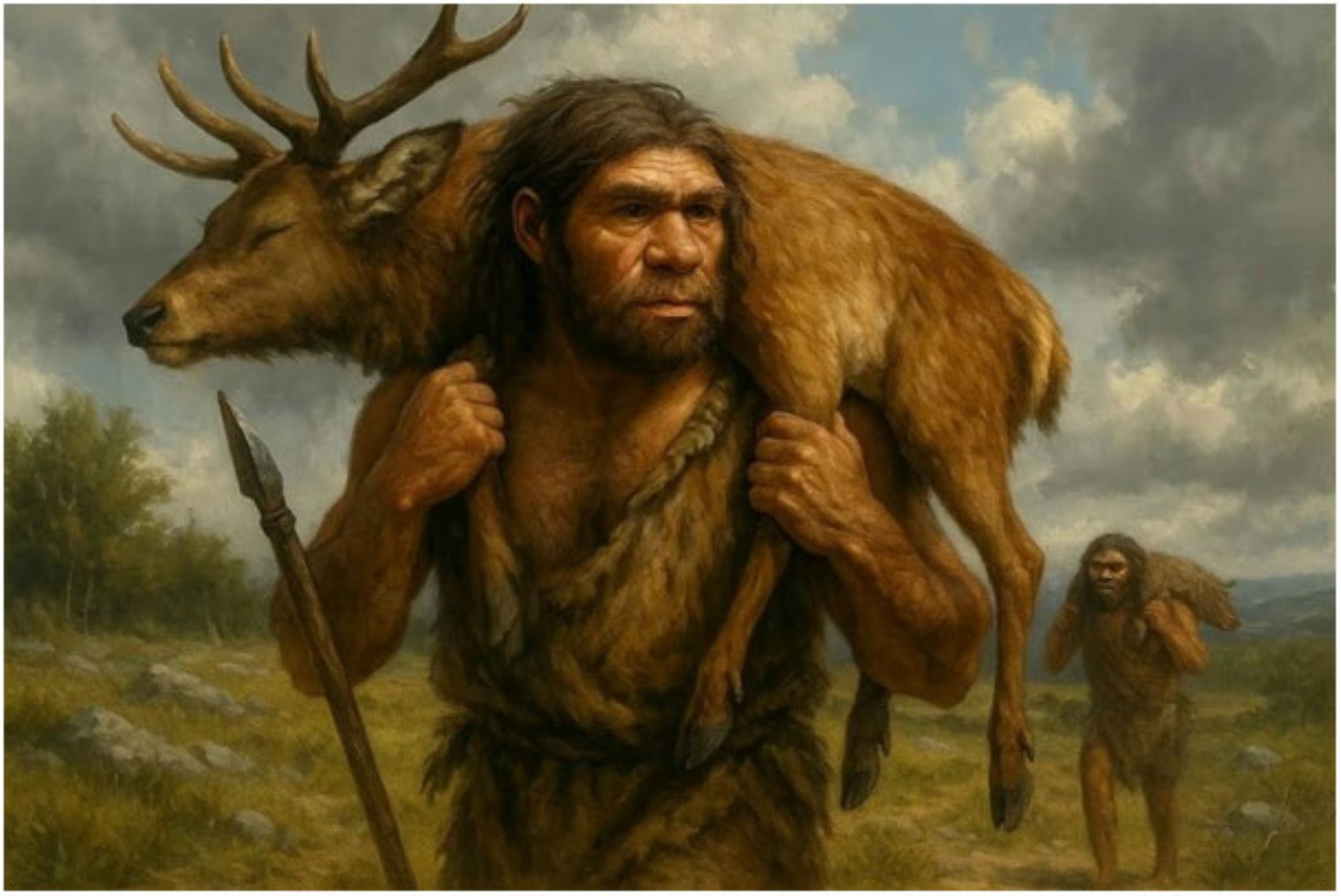
(Homo sapiens hunting)
***
The dispersal of Homo sapiens from Africa is the greatest adventure story in history.
Within 60 thousand years, oceans were crossed, poles were passed, and every climate was adapted to.
This happened only with intelligence, social bonds, communication, and curiosity.
The fact that we live all over the world today lies in this incredible journey.
One branch of this journey reached Anatolia.
They established life in the valleys, caves, and coasts of Anatolia.
They got to know its lush forests, cool springs, rich vegetation, leopards, bulls, and deer.
The traces of this long journey eventually extended to the Aegean coasts, Dikili-Karadağ, Urla, Karaburun, and the geography of today's İzmir.
So what are the oldest traces of these people in Anatolia?
When did they reach İzmir?
Which stone tools did they make and use, which caves did they live in?
In the third and final article of our series, we will go in pursuit of these first human traces extending from Anatolia to İzmir.
Note: The information above has been obtained from various written, visual, and electronic data.
Sefa Taşkın
19.07.2026
Dikili-İzmir
Would you like to get notifications about new developments and save news?
- NotificationsNew developments and breaking news
- SaveNews is stored in the app
Most Read

Murat Ağırel’s police statement has been revealed

Video response to Kim Jong-un claims

Azerbaijan issues arrest warrants in absentia for 7 people living in Turkey

The Orionid meteor shower will be visible from Turkey!

The penalty for Ronaldo, who left the national team camp, has been announced

Fatoş Seğmen reveals the cause of her daughter's death

Injury shock at Liverpool: He may miss the Fenerbahçe match

Latest status in the race between AKP and YENİ Party revealed

Who authorized the concert held in a parking garage?

From brotherhood to a distant partnership...