


The first humans of İzmir-3- Children of the first step



__________________________________________________
This article is the final piece in a three-part series telling the story of humanity in the context of the first traces of human-like beings recently discovered in İzmir. You can find the first and second articles of the series on the 12 Punto İnternet newspaper website at
https://12punto.com.tr/yazarlar/sefa-taskin/izmirin-ilk-insanlari-1-144223 and https://12punto.com.tr/yazarlar/sefa-taskin/izmirin-ilk-insanlari-2-dunyaya-nasil-yayildik-144938 addresses.
________________________________________________________
The human lineage and its ancestors have reached the present day by evolving through a thousand and one difficulties to survive under varying conditions.
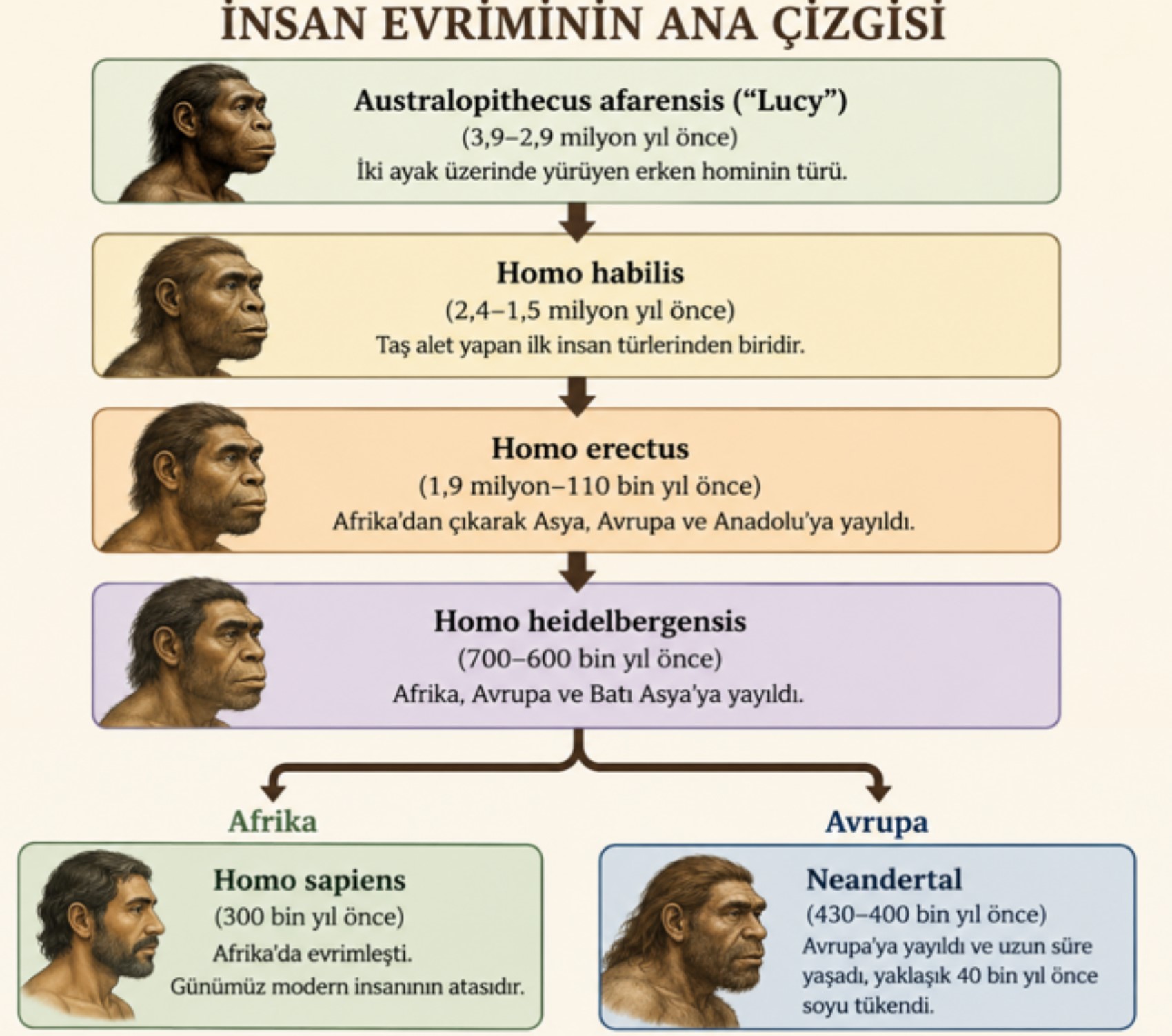
While a portion of Homo sapiens (wise humans, that is, us), who emerged under the harsh conditions of Africa, remained in Africa, another portion left the continent.
One of these groups reached Anatolia approximately 60 thousand years ago and began to make this unique geography, which stretches like a bridge between Asia and Europe, their home.
However, there were other human species that left Africa long before them.
One of these, Homo erectus (upright walking human),
embarked on its great journey toward the north approximately 1.85 million years ago.
Homo erectus fossils found in Dmanisi, near Tbilisi, the capital of Georgia in the Caucasus, are dated to approximately 1.85 million years ago.
It is highly probable that these first humans who left Africa passed through Anatolia to reach the Caucasus.
For this reason, it is accepted that Homo erectus reached Anatolia approximately 1.8 million years ago.
In other words, long before Homo sapiens, Homo erectus lived on Anatolian soil.
To put it another way, the first human species to reach Anatolia was not Homo sapiens, but Homo erectus.
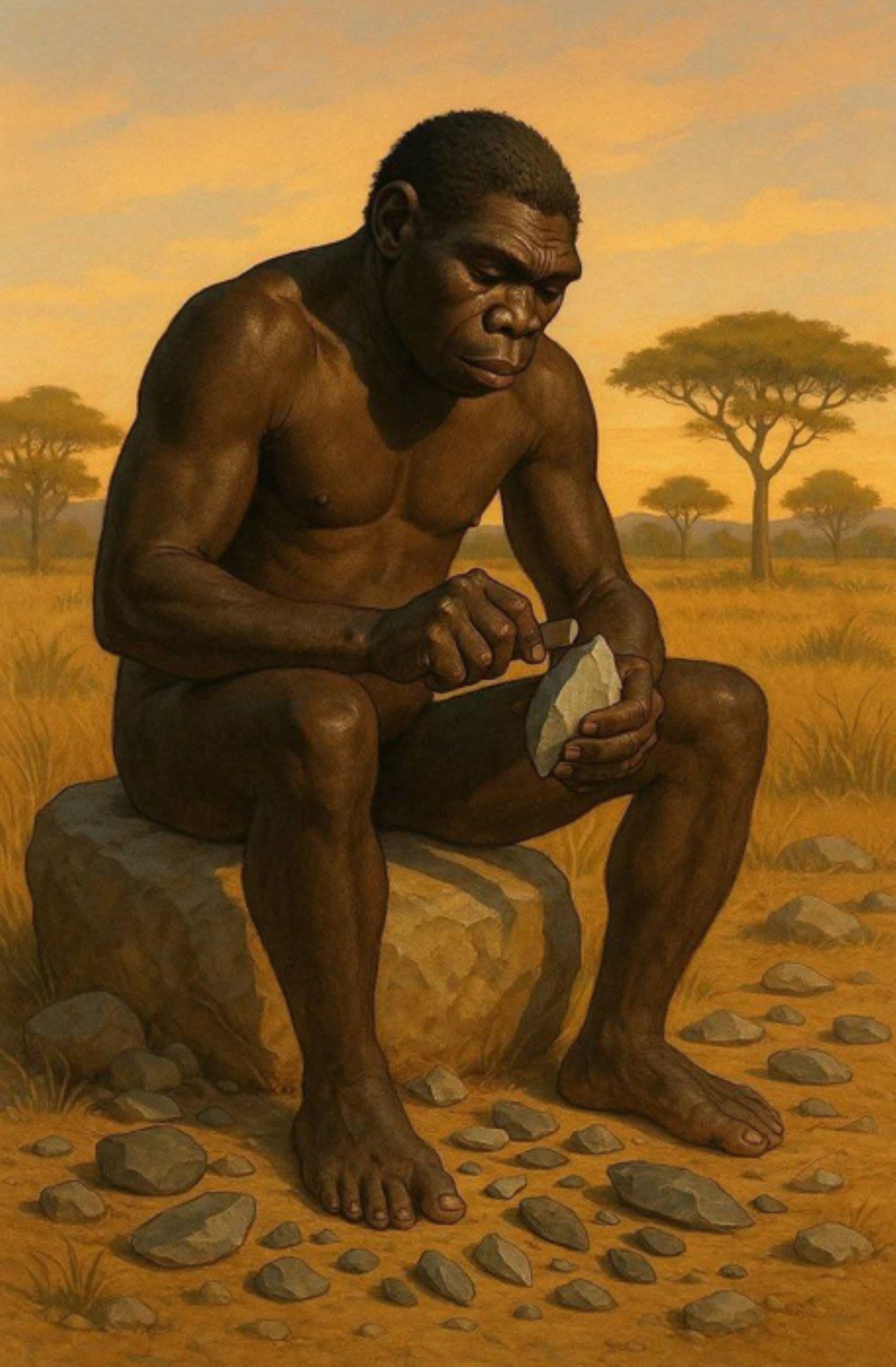
(Homo erectus working stone. Representative image. https://x.com/histories_arch/status/1938583869139128366?utm)
***
Following the Great Rift Valley in East Africa to reach the Middle East, these first humans entered Anatolia via the Levant Corridor (Palestine-Western Syria-Lebanon), most likely through Hatay.
One of the most important pieces of evidence showing the presence of Homo erectus in Anatolia is the Niğde Kaletepe findings, and the other is the Denizli-Kocabaş findings.
The bifacial hand axes, flake tools, and choppers found in the lower layers of the Kaletepe Dere 3 settlement in Niğde, dated to approximately 1 million years ago, strongly demonstrate the presence of Homo erectus in Anatolia.
(Stone chipped using the Acheulean method)
Homo erectus was the first to make hand axes from stone chipped on both sides, a major step in the development of humanity that made life easier through its use.
These findings in Niğde show that this stone tool technology, which was developed in Africa and named Acheulean because its first examples were found in Saint Acheul in northern France, was also carried from Africa to Anatolia.
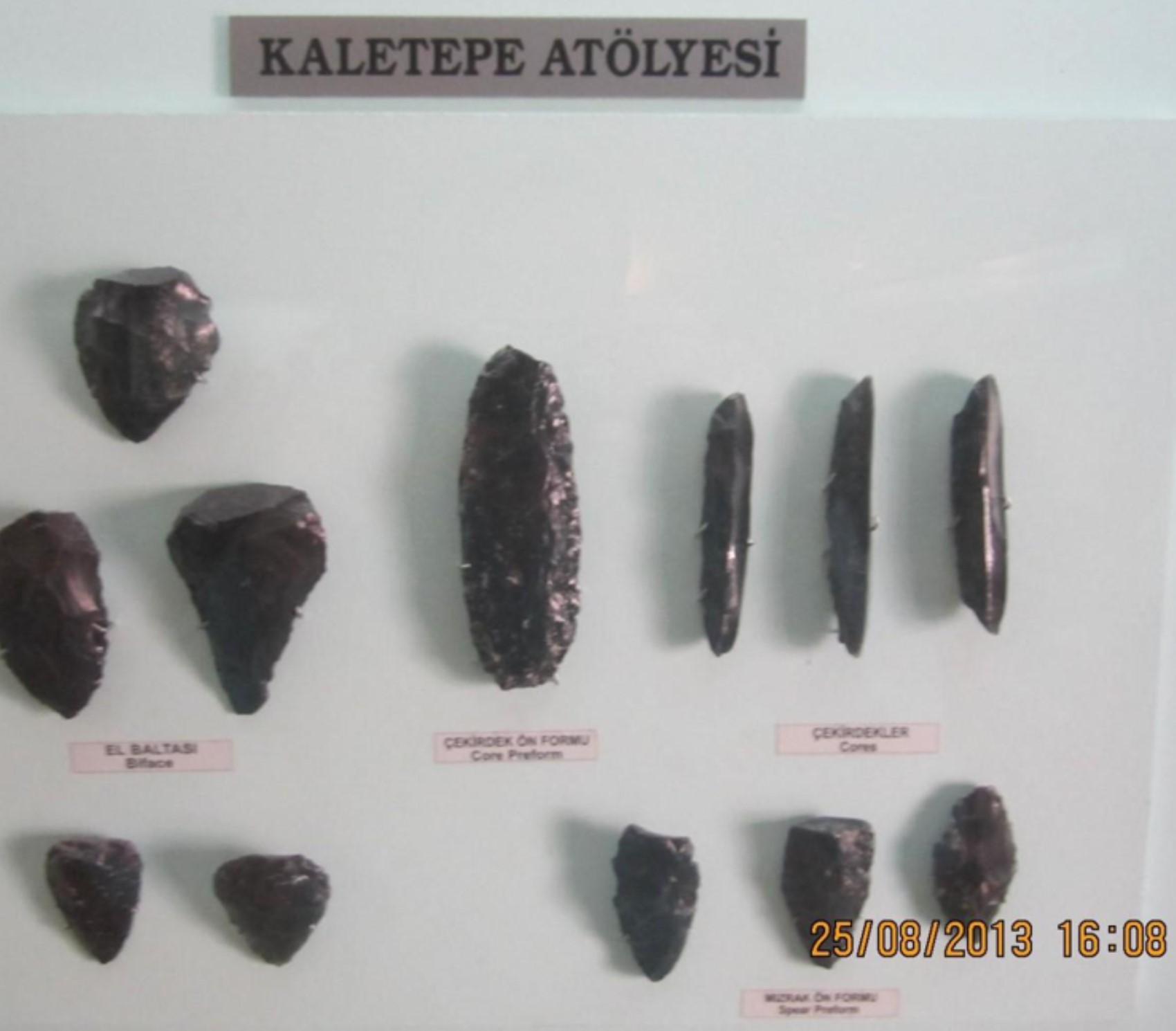
This technology, developed in Africa approximately 1.76 million years ago, was based on chipping both sides of the stone in a planned and symmetrical manner. For this reason, these tools are called bifacial or double-sided hand axes.
This innovation was one of the first major technological revolutions in human history. By facilitating many tasks such as cutting, butchering, skinning, and woodworking, it significantly increased the ability of early human groups to adapt to nature.
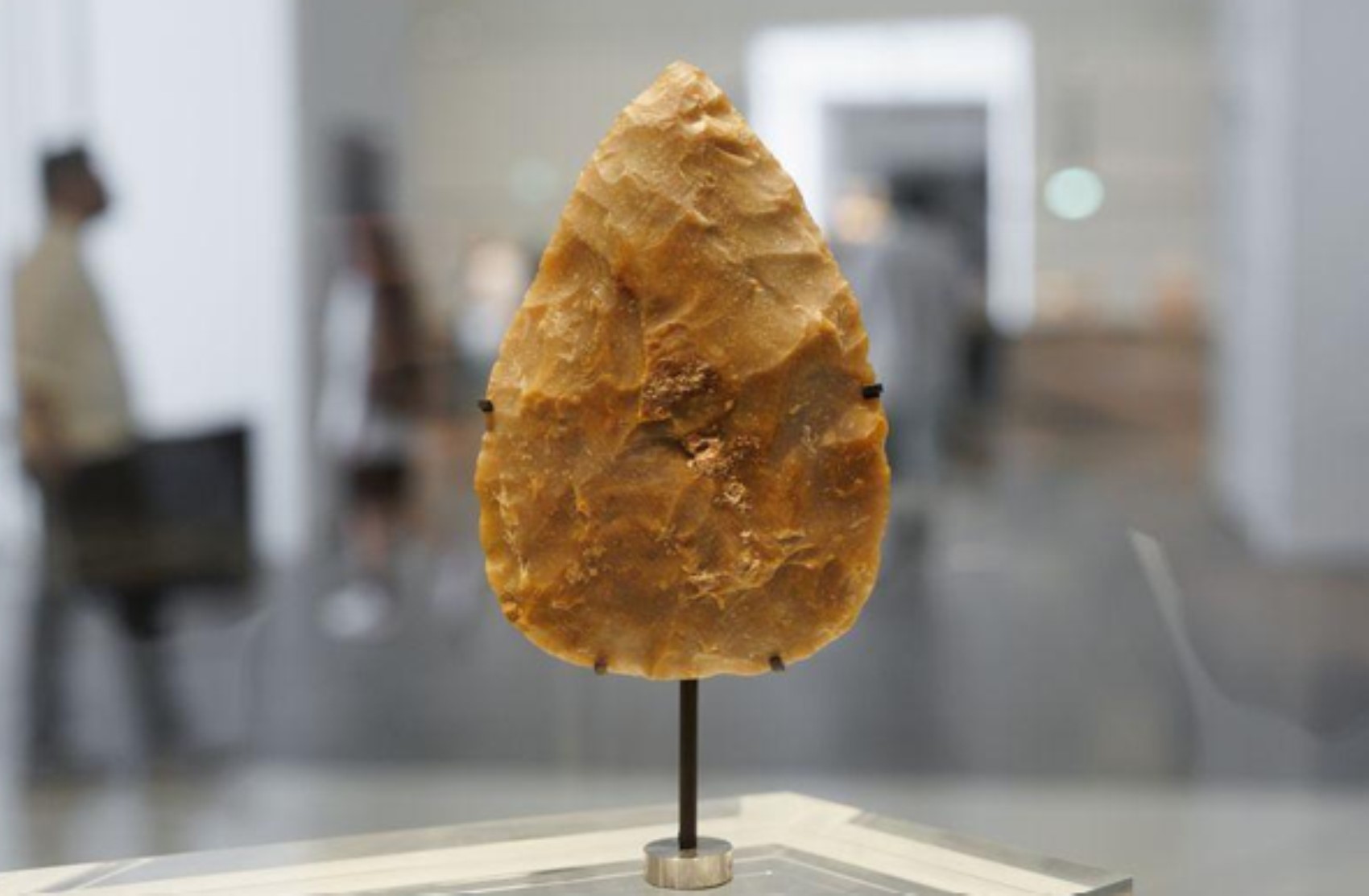
(Experimental Acheulean axe)
Lower Paleolithic (Stone Age) findings recovered from Yarımburgaz Cave on the shore of Lake Küçükçekmece in Istanbul and Karain Cave in Antalya also show that different human species lived in Anatolia for hundreds of thousands of years. However, it is thought that some of these findings may belong to the Homo erectus period, while others may belong to the Homo heidelbergensis period.
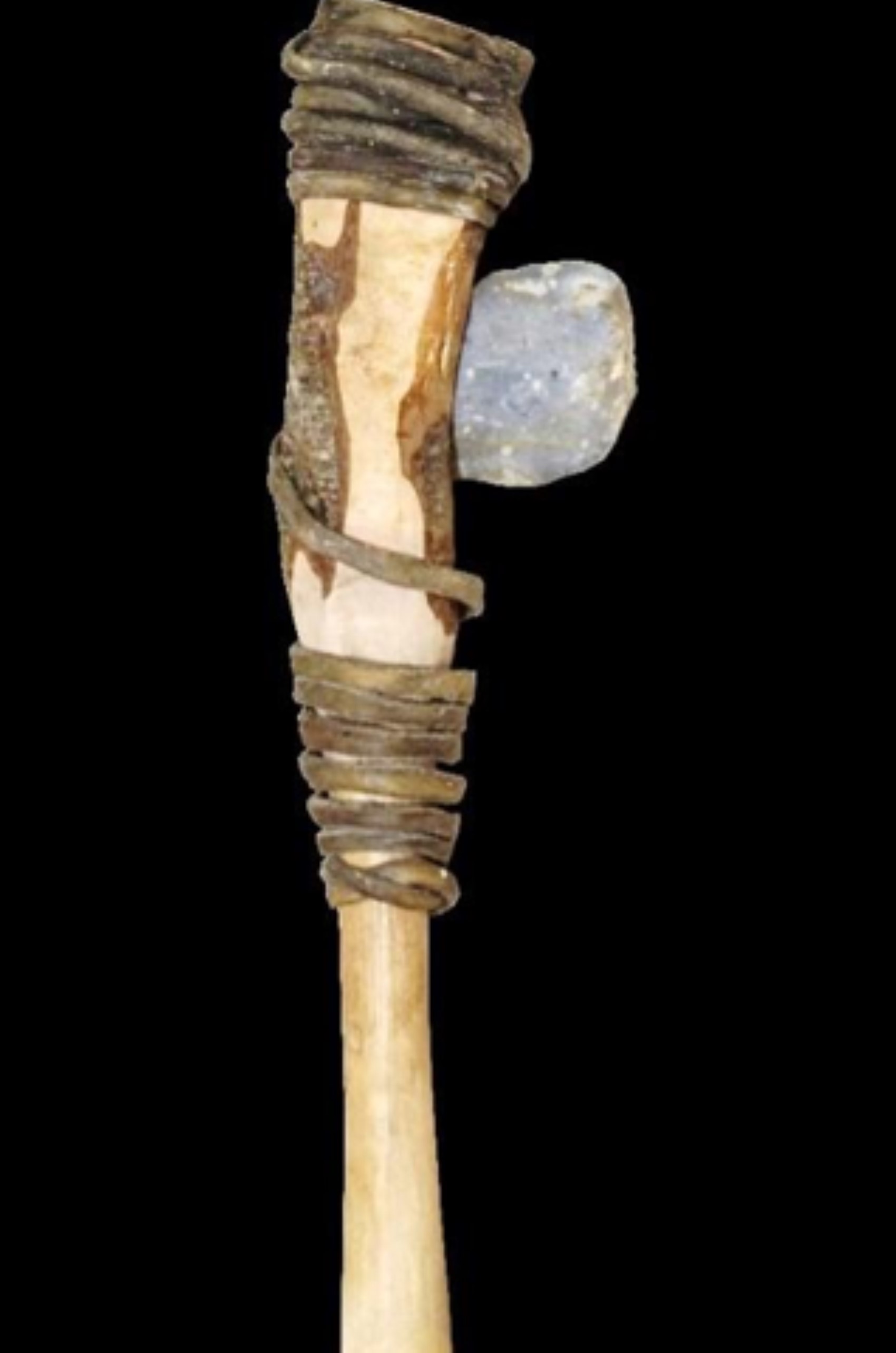
The oldest human traces in Western Anatolia are the approximately 1.2 million-year-old stone tools recovered in the Gediz Basin and the Denizli-Kocabaş skull.
This means that Western Anatolia was one of the oldest migration routes in human history.
Millions of years ago, Homo erectus wandered these lands, following deer herds and struggling to survive while protecting themselves from predators such as the Anatolian leopard and hyenas.
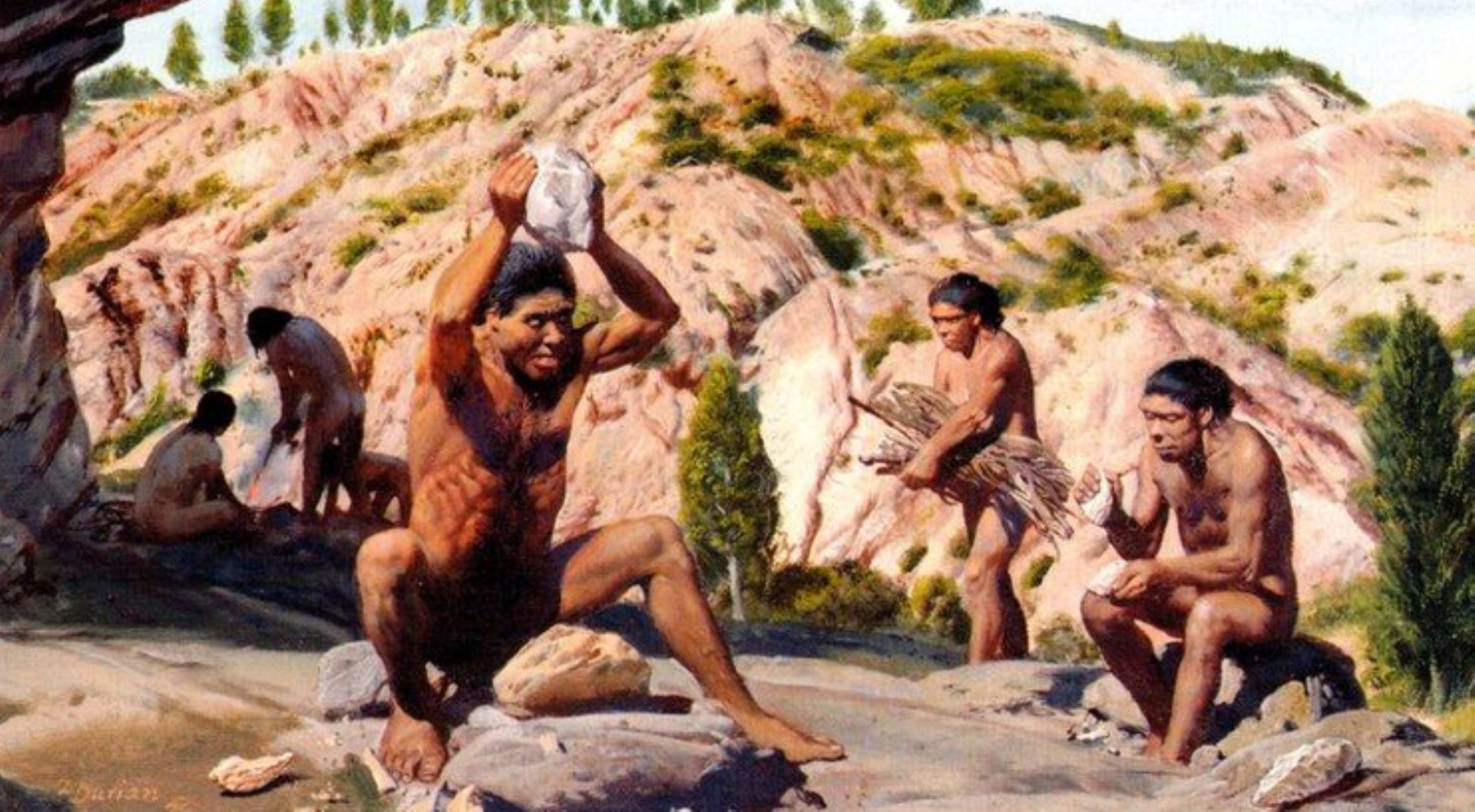
(Homo erectus family. Representative image. https://portal.azertag.az/encyclopedia/post/18751?utm
***
Some Homo erectus groups living in Africa approximately 700–600 thousand years ago evolved over time into a new human species: Homo heidelbergensis. This name was given in reference to traces found near the city of Heidelberg in Germany.
Like their ancestors, this new species left Africa and spread toward Europe and Western Asia. Anatolia was again one of the most important passages for this great migration. For this reason, it is highly probable that Homo heidelbergensis reached Anatolia approximately 700 thousand years ago.
There are also researchers who suggest that the Denizli-Kocabaş skull may belong to Homo heidelbergensis rather than Homo erectus, due to its similar morphological characteristics to the famous skull found in Petralona Cave in northeastern Greece.
However, this view has not yet been confirmed. If future studies confirm this assessment, either the age of the Kocabaş finding or the evolutionary chronology of Homo heidelbergensis will have to be reconsidered.
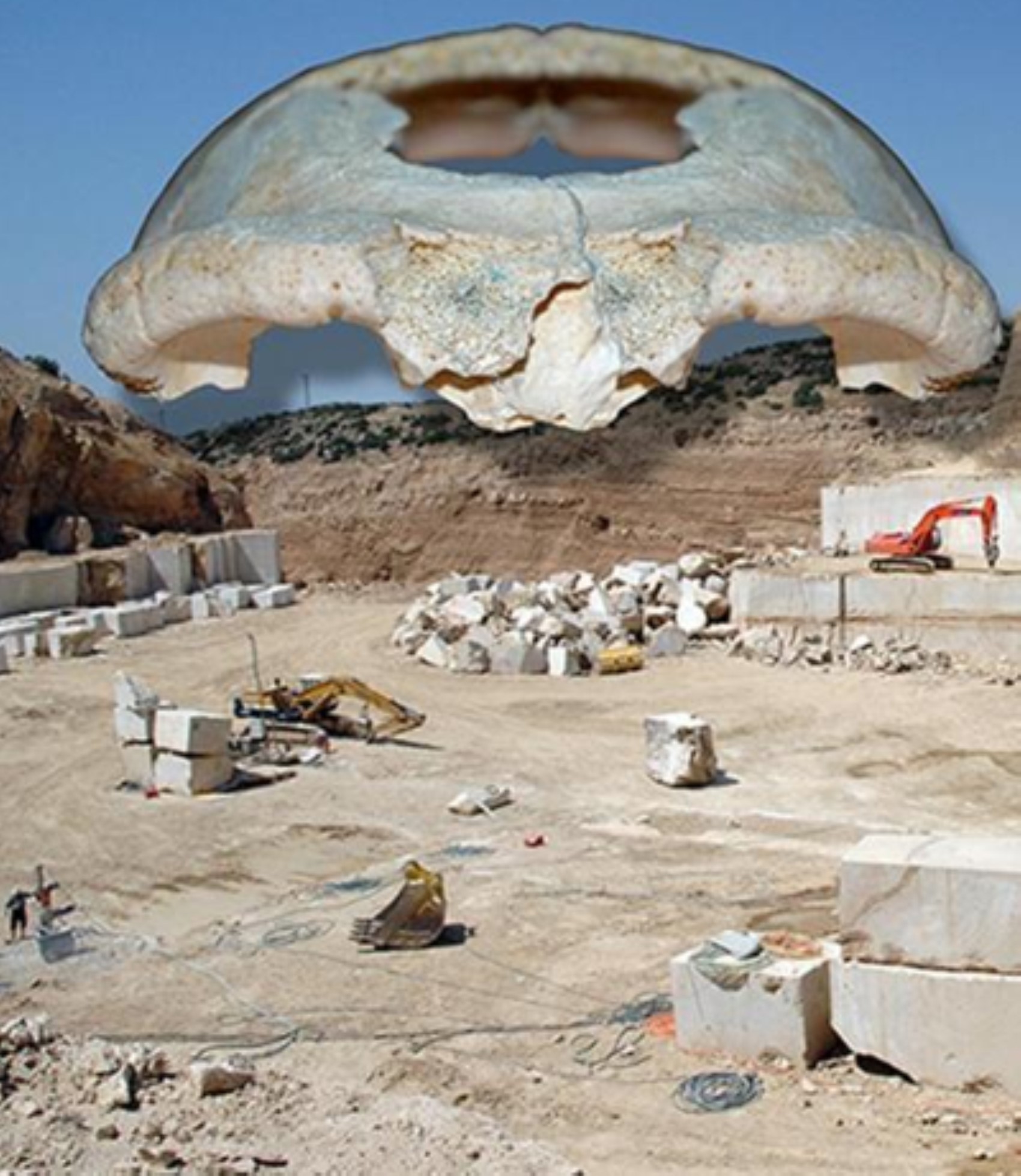
(Denizli Kocabaş travertine area and the skull found there. https://www.cnnturk.com/teknoloji/bilim/denizli-adami-insanligin-dunyaya-yayilisina-isik-tuttu-458083?utm)
It is thought that the stone tools recovered in the lower layers of the Yarımburgaz and Karain caves, dated to approximately 400 thousand years ago, also most likely belong to Homo heidelbergensis groups living in Anatolia.
However, distinguishing Homo erectus from Homo heidelbergensis is not as easy as it is thought.
Because both species used the characteristic Acheulean stone tool culture of the Lower Paleolithic (Old Stone) Age. Bifacial hand axes, choppers, and large cutters, all carefully chipped on both sides, were the common heritage of both species.
Nevertheless, it is seen that some tools belonging to the Homo heidelbergensis period are more advanced examples in terms of craftsmanship, symmetry, and form.

(Karain Cave)
Still, it is not possible to say with certainty which human species made these just by looking at the stone tools.
Unless they are found together with fossil remains, stone tools alone do not constitute sufficient evidence for species identification.
Homo heidelbergensis, which evolved from Homo erectus, came to these lands hundreds of thousands of years later, following the same migration route.
Thus, Anatolia turned into a great migration corridor through which different human species passed one after another for millions of years.
They walked the same valleys, drank from the same water sources, and pursued the same game animals. There were hundreds of thousands of years between them; yet their traces often accumulated on top of each other in the same soil.
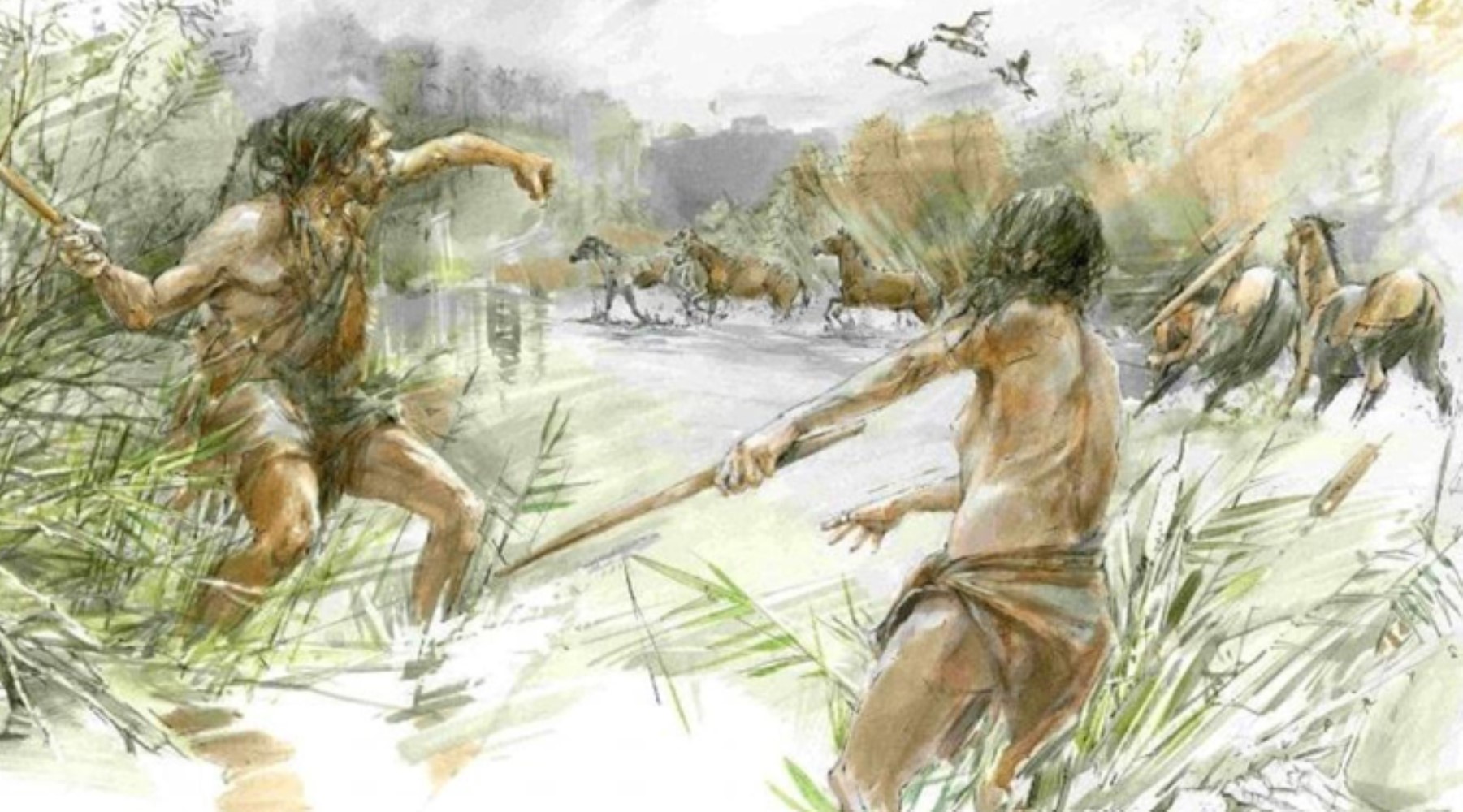
(Homo heidelbergensis hunting. Representative image.https://www.lescienze.it/news/2020/05/04/news/homo_heidelbergensis_bastone_lancio_caccia_paleolitico-4721564/?utm)
***
Some of the Homo heidelbergensis groups that spread from Africa to Europe approximately 700 thousand years ago entered a long evolutionary process 430–400 thousand years ago and turned into Neanderthals.
Adapting to the harsh climatic conditions of the Ice Age, these humans acquired classic Neanderthal characteristics approximately 250 thousand years ago.
Their traces in Anatolia also begin to be seen from these periods onward.
The most important Neanderthal findings in Turkey come from Antalya Karain Cave. The teeth, forearm, finger, and ankle bones found here clearly show that Neanderthal humans lived in Anatolia.
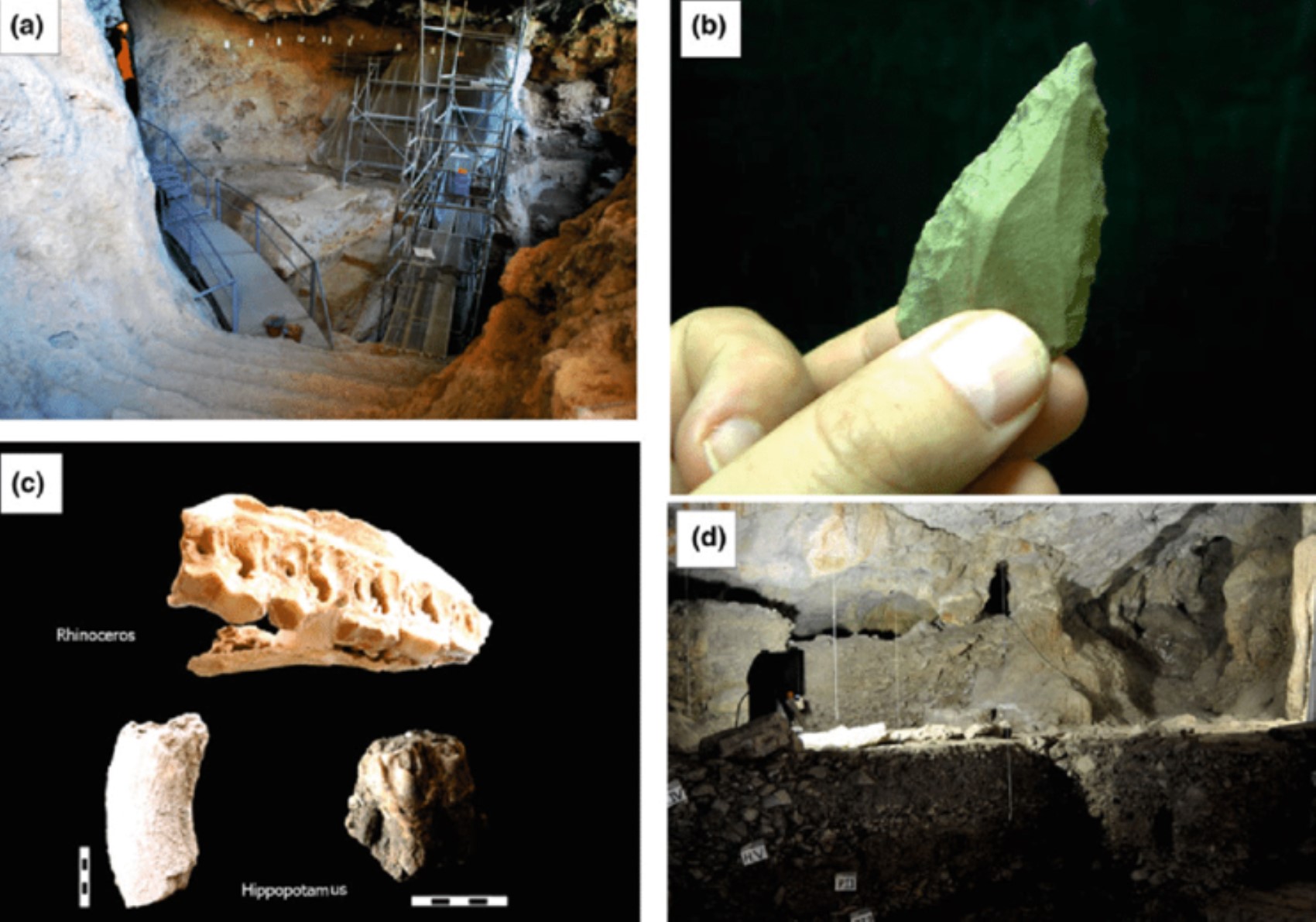
(Stone tools made with Mousterian craftsmanship by Neanderthals found in Antalya-Karain)
Karain is not alone.
The stone tools found in the Su Deresi locality of Aydınlar Neighborhood in the Honaz district of Denizli also carry features specific to Neanderthals.
Cores, sharp points, and side scrapers made of high-quality flint, planned and chipped in advance using the Levallois technique, were recovered in the region.
In addition, finely crafted tools belonging to the Mousterian culture, which is the characteristic stone industry of Neanderthals, were also found.
These findings show that Neanderthal groups lived in Western Anatolia approximately 250–60 thousand years ago.
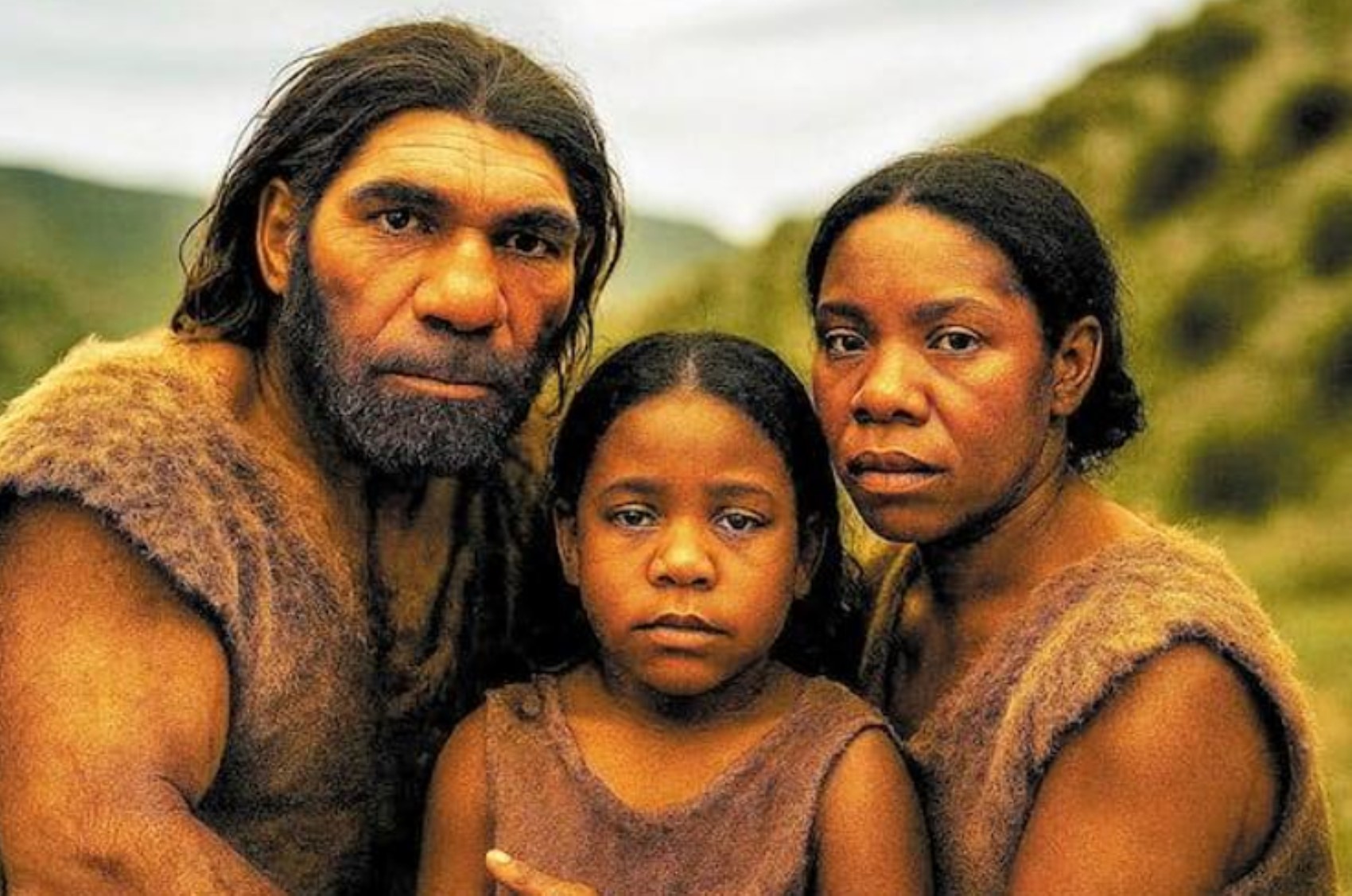
(A Neanderthal family. The women resemble Homo sapiens women. Representative image. https://www.chosun.com/english/industry-en/2026/03/05/C6VMOCD4ORESBIXNJ2KMOXJWRA/?utm)
***
One of the most remarkable Neanderthal settlements in Western Anatolia is the Sürmecik open-air settlement in the Banaz district of Uşak.
More than 88 thousand stone artifacts were unearthed in this area, which is dated to approximately 200 thousand years ago.
Among the findings are Levallois (pronounced Levalva) cores, Mousterian points, side scrapers, hand axes, and various stone tools used in processing animal hides.
Horse and wild cattle fossils recovered in the same layers show that Neanderthal groups hunted these animals.
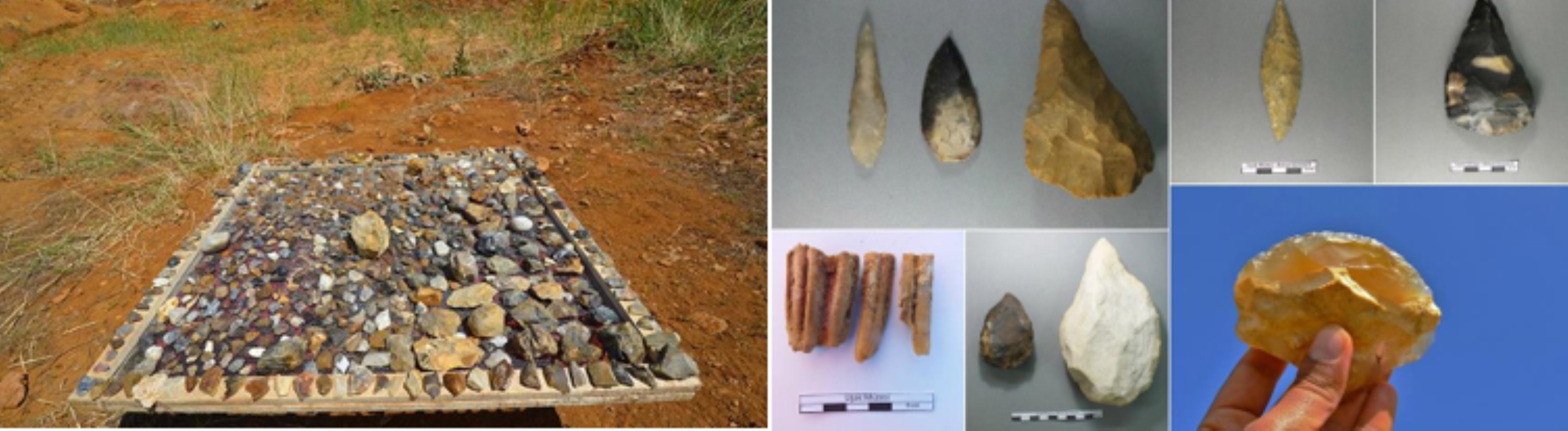
(Uşak-Banaz- Sürmecik findings)
Research reveals that Sürmecik was not just a short-term hunting camp, but also an important open-air settlement where stone tool production was carried out.
According to many researchers today, Sürmecik is one of the most important open-air Paleolithic sites in Turkey in terms of the richness of findings from the Neanderthal period.
Although Neanderthals are generally known for living in caves, Sürmecik shows that they could also live in open areas for long periods when suitable environmental conditions occurred.
The most important reason that likely attracted them here was the hot water sources in the vicinity, the rich water presence, and the large game animals that came to these sources.
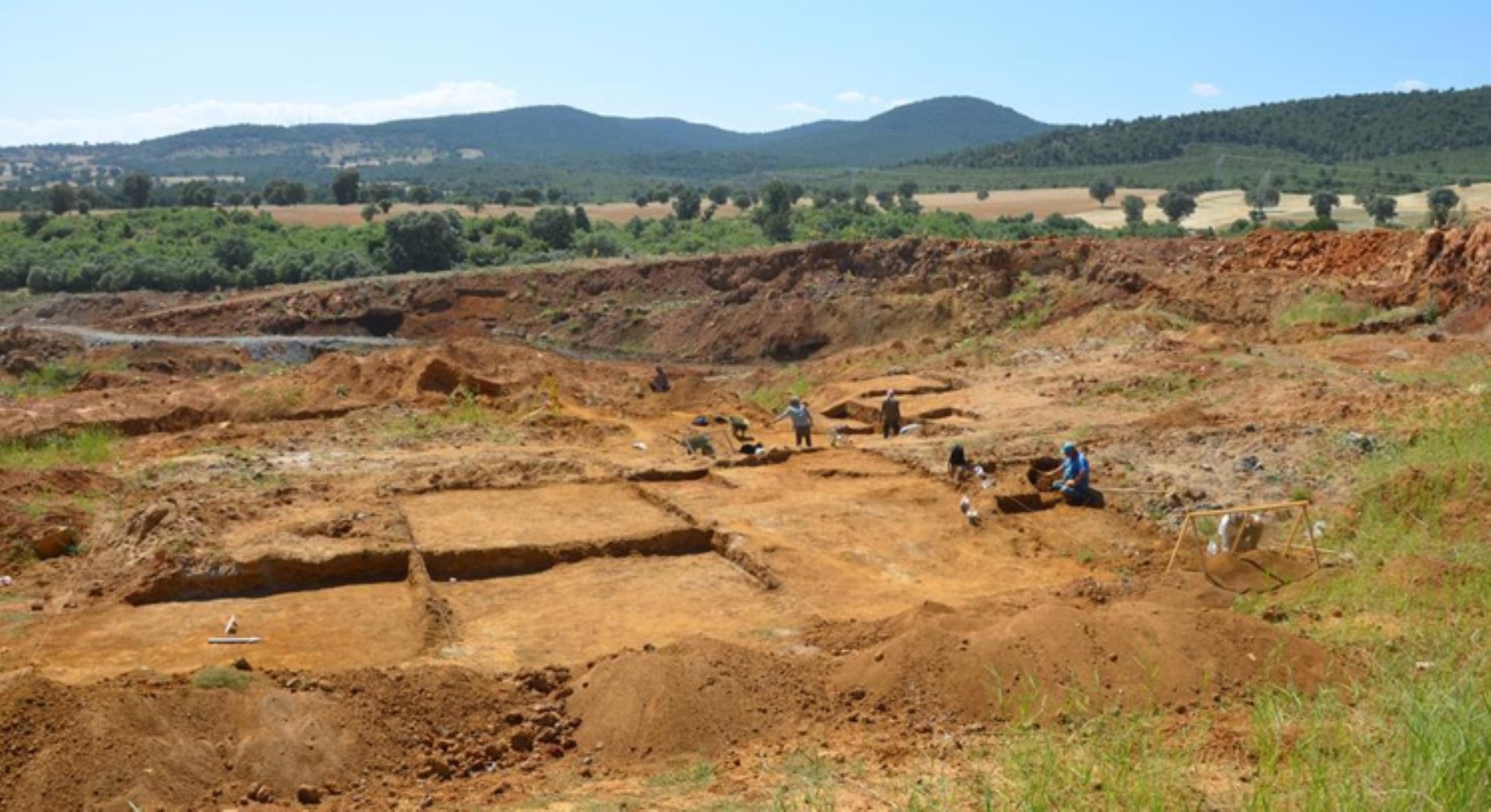
(Uşak-Banaz Sürmecik excavation site: Neanderthal settlement )
***
So, what was happening around İzmir while all this was going on?
Who were the first humans of İzmir?
The findings discovered so far show us that Homo erectus, followed by Homo heidelbergensis, and then Neanderthals lived in Western Anatolia in succession.
In other words, hundreds of thousands of years before Homo sapiens came to these lands, other human species wandered in Western Anatolia.
The stone tools found at Kömür Burnu in Karaburun, İzmir, also take us into this long journey.
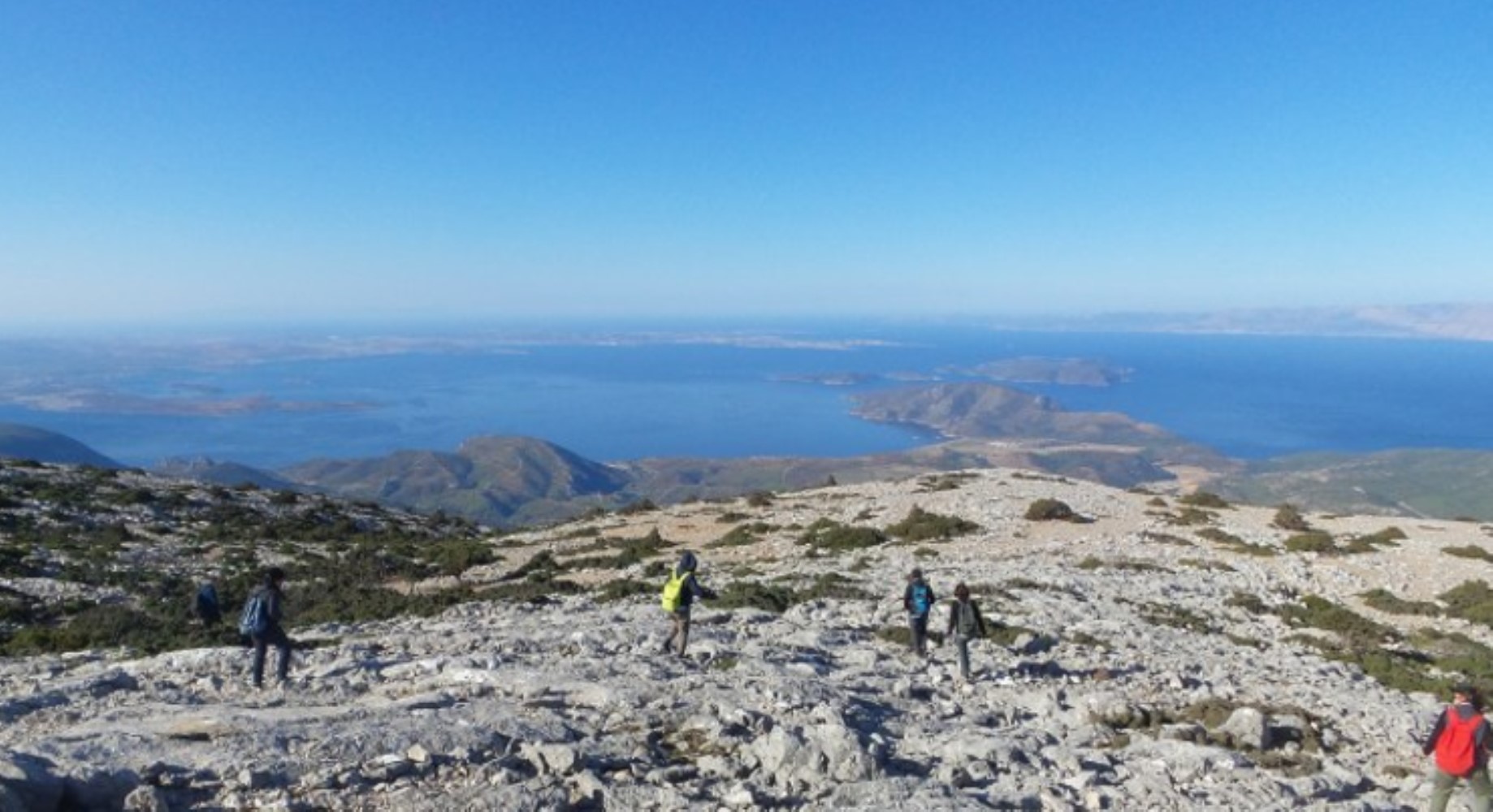
(İzmir-Karaburun-Yeni Liman Kömür Burnu research. cilingiroglu_2025_izmirdergisi.pdf)
Findings dated to the Homo erectus, Homo heidelbergensis, and Neanderthal periods have been recovered in the same region.
The stone tools found in Karaburun, prepared using the Levallois technique (planned in advance), reflect more of the Neanderthal culture.
But the bifacial Acheulean hand axes found in the same area tell us an older story.
These axes suggest that Homo erectus or Homo heidelbergensis groups also lived on these shores.
The findings show that Kömür Burnu has been used by different human groups for at least approximately 300 thousand years.
That is, there are different times accumulated on top of each other in the same place.
According to Prof. Çiler Çilingiroğlu, excavations carried out at a site called Rodafnidia, located on the island of Lesbos, which was connected to Western Anatolia by a land bridge during the Ice Age, approximately 70 km north of Kömür Burnu as the crow flies and south of the Gulf of Kalloni, yielded findings that show very close technological similarities to the Kömür Burnu findings.
The geography is similar.
Humans coming hundreds of thousands of years apart look at the same sky, drink from the same springs, and wander the same hills.
The Aegean north wind cools them too. The same sun warms their shoulders, they hunt on the same seashore, and they spend the night under the same stars.
The only thing that has changed today is time; the sky is still the same sky.
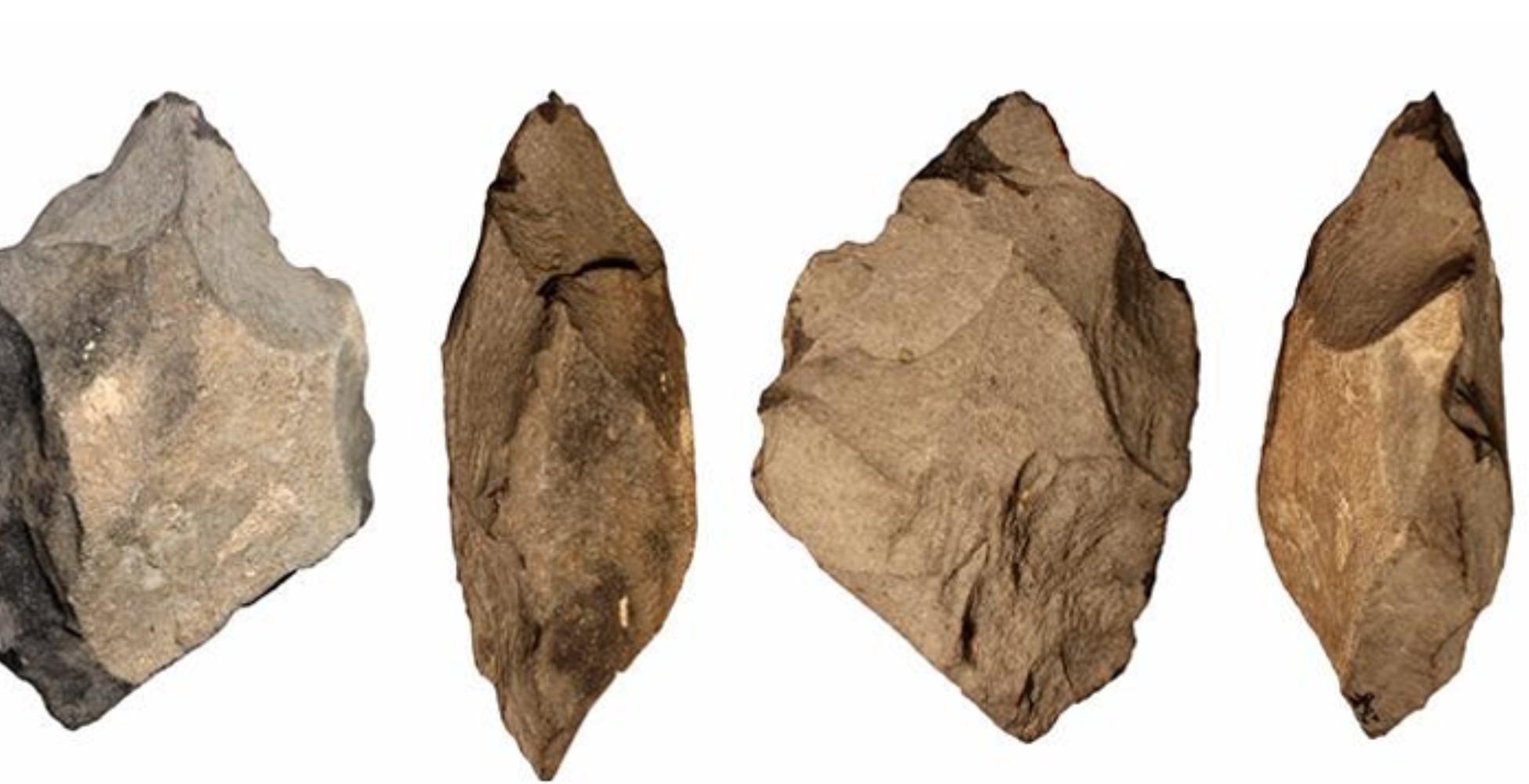
(Almond-shaped bifacial hand axes found in İzmir-Karaburun-Yeni Liman-Kömür Burnu. cilingiroglu_2025_izmirdergisi.pdf)
***
In addition to Karaburun, very ancient humans also lived around Urla.
A hand axe made of flint, worked on both sides, was found in the Menteş region, northeast of Özbek Village in Urla, on the northern skirts of Dedetepe.
Prof. Dr. Şevket Aziz Kansu dated this tool to approximately 400–300 thousand years ago and suggested that it most likely belonged to Homo erectus groups that left Africa and spread to Anatolia via the Near East.
Perhaps this hand axe is one of the oldest witnesses we have today of the human journey that extended from the Gediz Basin to Karaburun hundreds of thousands of years ago.
According to information provided by Dr. Tayfun at Nevşehir University, another hand axe from this period was found in the Abdullah Ağa Farm locality on the skirts of the high Çatalkaya mountain in Narlıdere, south of the Gulf of İzmir.
The tool reflects the characteristic bifacial Acheulean stone tool tradition of the Homo erectus and Homo heidelbergensis periods. For now, no direct findings belonging to Neanderthals have been encountered in this area.
Traces of Neanderthals in Western Anatolia are concentrated more around Denizli, Uşak, and Kütahya.
Denizli Honaz-Aydınlar, the Kütahya Kureyşler Dam Lake Basin, and especially the Sürmecik open-air settlement in the Banaz district of Uşak are among the most important centers shedding light on the Antalya-Karain Neanderthal life.
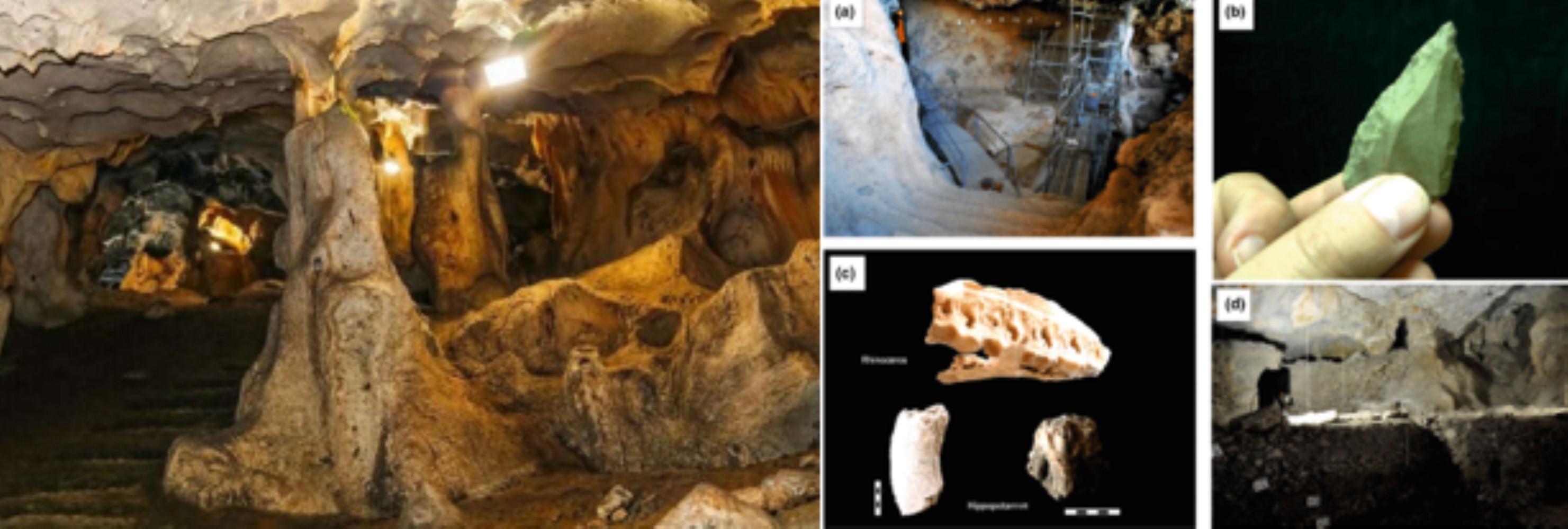
(Antalya-Karain Cave and Mousterian stones with sharp points specific to Neanderthals)
As we mentioned above, Sürmecik stands out as an important open-air settlement where Neanderthal groups stayed, hunted, and produced stone tools between approximately 200 and 40 thousand years ago. (https://dergipark.org.tr/tr/pub/tubaar/issue/37968/438466)
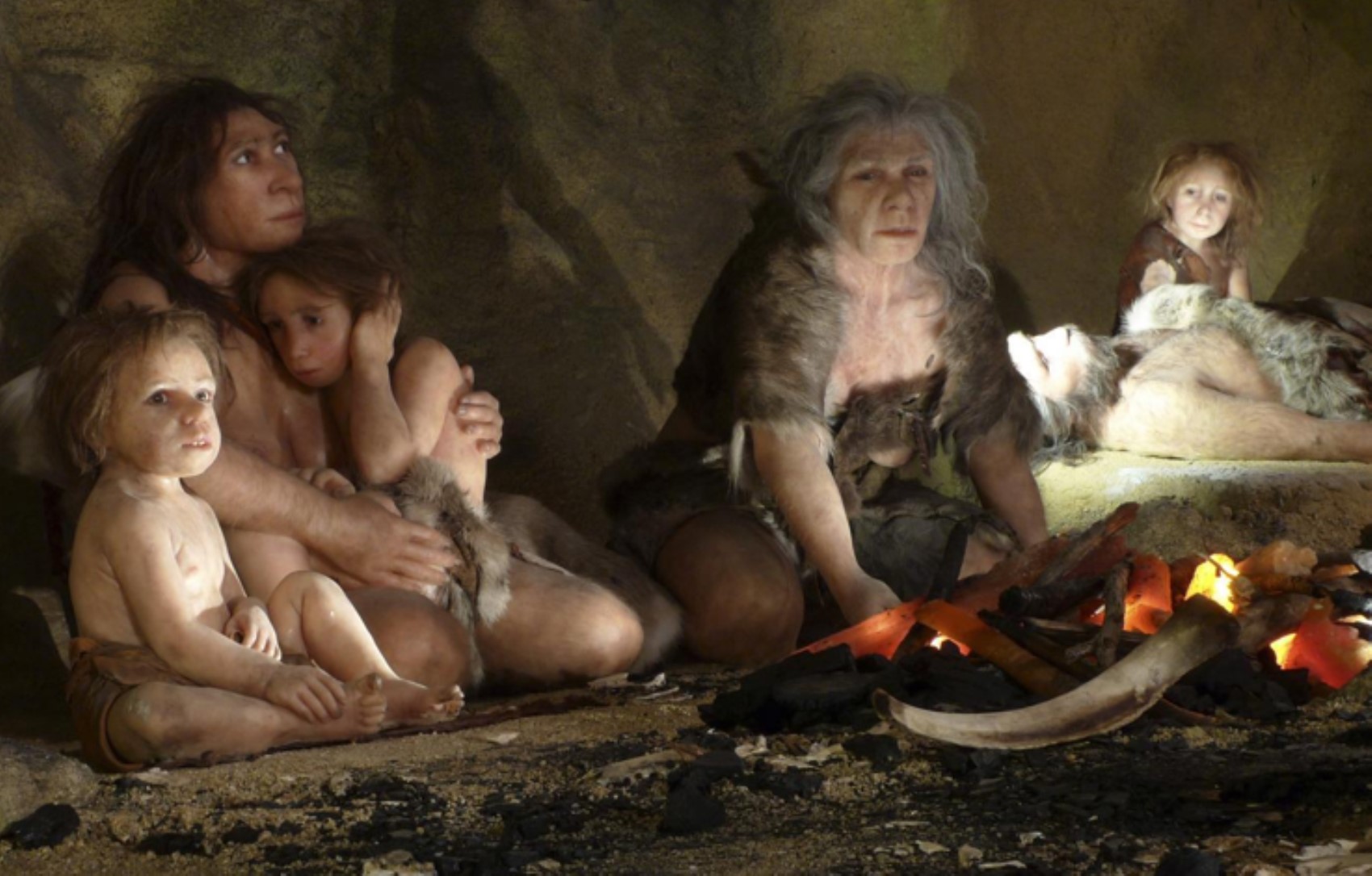
(Neanderthals-Representative image. https://www.indyturk.com/node/235871/bilim/iklim-de%C4%9Fi%C5%9Fikli%C4%9Fi-neandertal-teknolojisini-nas%C4%B1l-geli%C5%9Ftirdi?utm_source=chatgpt.com)
***
And finally, Homo sapiens enters the scene.
That is, us...
Homo sapiens, which emerged in Africa approximately 300 thousand years ago, constitutes the last link of human evolution that reaches the present day.
One of the most important stops of the long journey that started from Africa is again Anatolia.
Üçağızlı Cave in Hatay provides one of the strongest pieces of evidence for this first arrival.
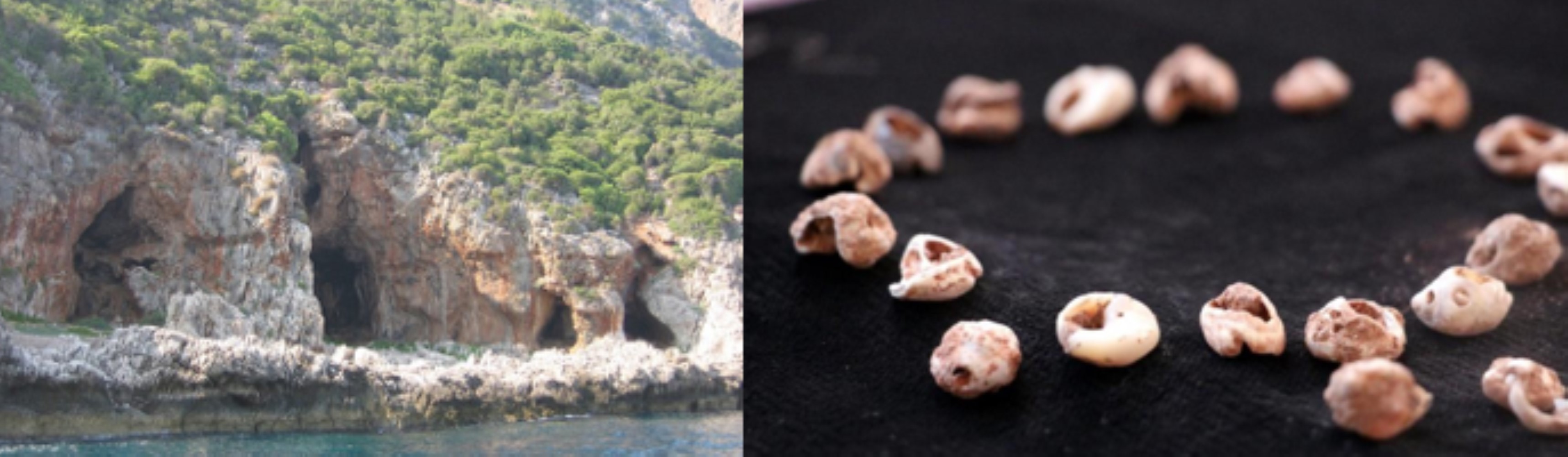
(First Homo sapiens settlements in Anatolia. Hatay-Yayladağ-Üçağızlı Cave and findings)
The Homo sapiens remains and Neanderthal remains found here show that the two human species lived in Anatolia at the same time for a short period.
Homo sapiens remains found in the Üçağızlı and Merdivenli caves in Hatay and Karain Cave in Antalya are dated to approximately 40 thousand years ago.
The Antalya Beldibi rock shelters bear traces of hunter-gatherer groups living in Anatolia approximately 20 thousand years ago.
No direct fossil belonging to Homo sapiens has been found in Western Anatolia yet.
But when looking at the general settlement table of Anatolia, it seems highly probable that Homo sapiens groups lived in Western Anatolia and around İzmir 40 thousand years ago.
It is also considered a strong possibility that some of the groups living around Karain and Üçağızlı spread toward Western Anatolia over time.
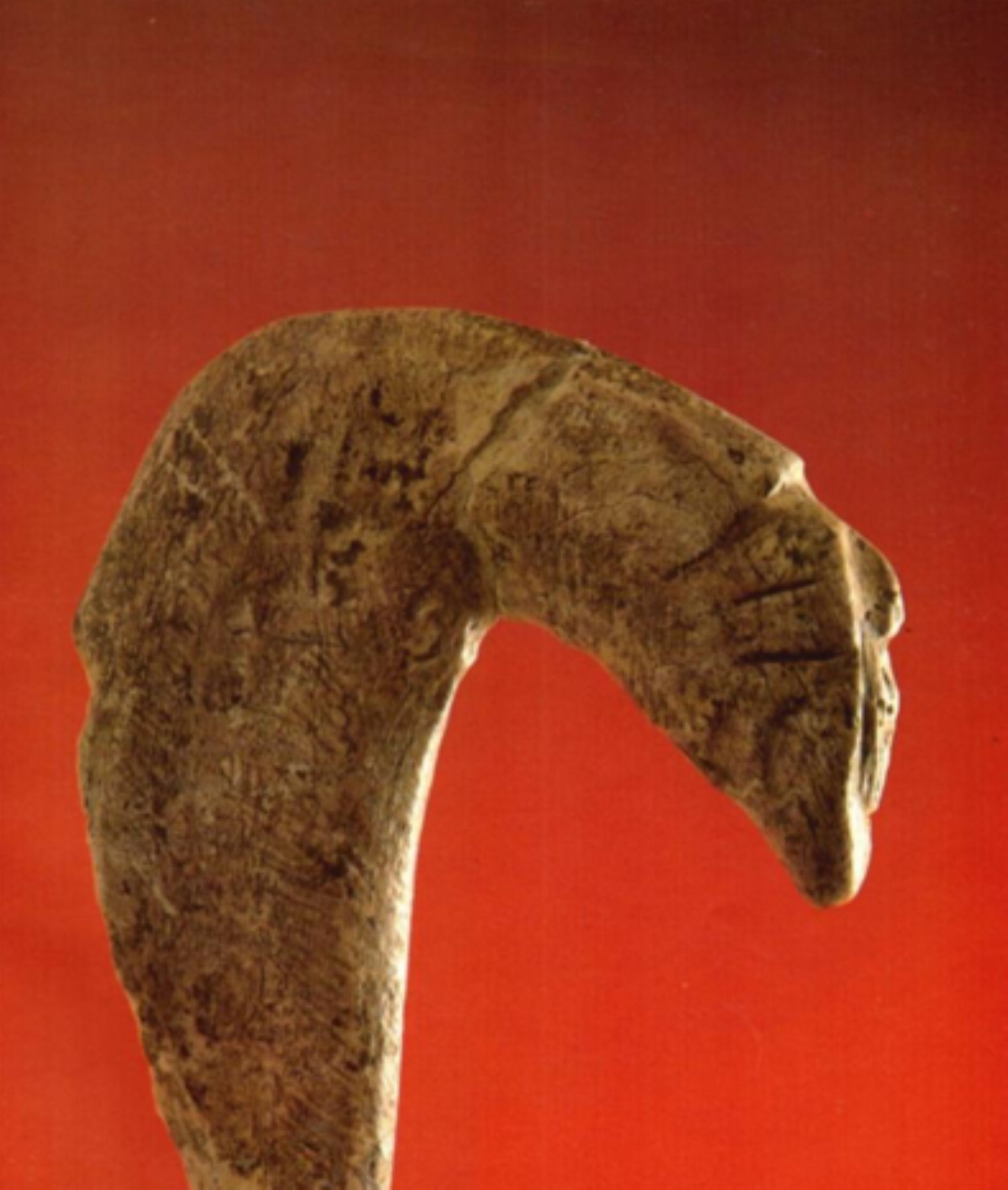
(A deer symbol found in Antalya-Karain)
***
According to the data obtained, the two-gallery Girmeler Cave, located on a rocky hill on the shore of the Eşen Valley in the Seydikemer district of Muğla in Western Anatolia, also became a home for Homo sapiens in Anatolia.
In the 2020-21 archaeological test excavations in Girmeler, chipped stone findings and rare graves dated to the end of the Ice Age (the end of the period called the Pleistocene), 20-12 thousand years ago, were unearthed.
According to information provided by Prof. Dr. Erdoğu, who conducted the excavations, the first settlement in Girmeler goes back to 14 thousand years ago.
Homo sapiens is now the master of Anatolia. Neanderthals are gone.
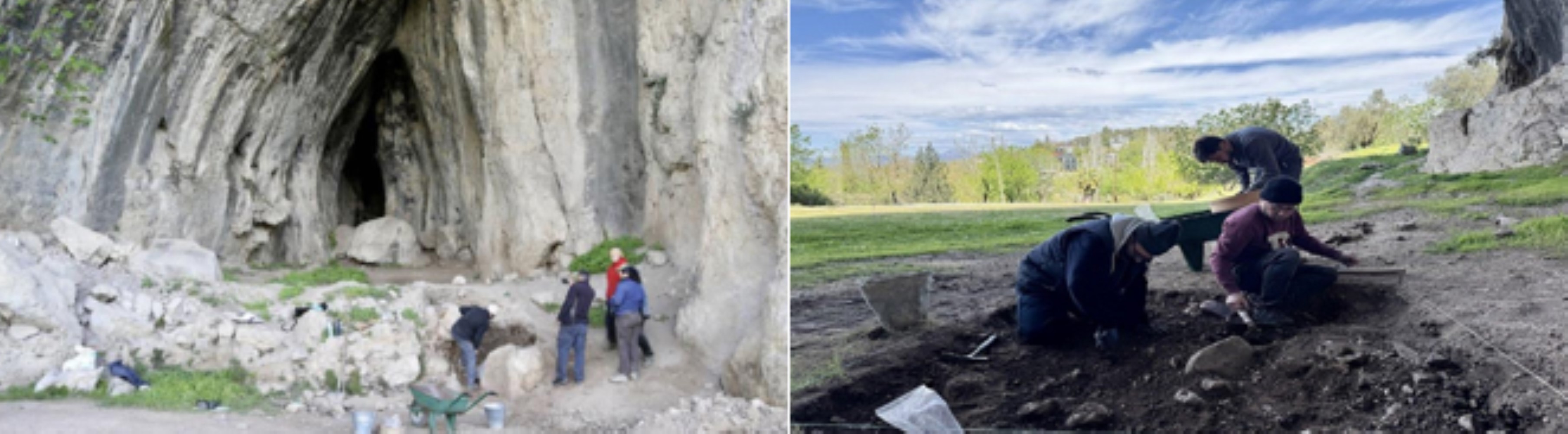
(Muğla-Seydikemer-Girmeler Cave. ("Early Anatolian gene" was found in the Girmeler Mound settlement excavation)
Erdoğu reports that people in the 9th millennium B.C. lived in round-planned huts here, and that it is understood that Homo sapiens (that is, us), despite being a hunter-gatherer society, attempted agriculture for the first time.
He believes that DNA studies on the bones in the graves found belong to the “early Anatolian gene.” ("Early Anatolian gene" was found in the Girmeler Mound settlement excavation)
It is understood that Homo sapiens, who came from such long distances, overcame the difficulties of existence and has now made Anatolia their home.
Moreover, they are evolving from hunter-gatherers to farmers.
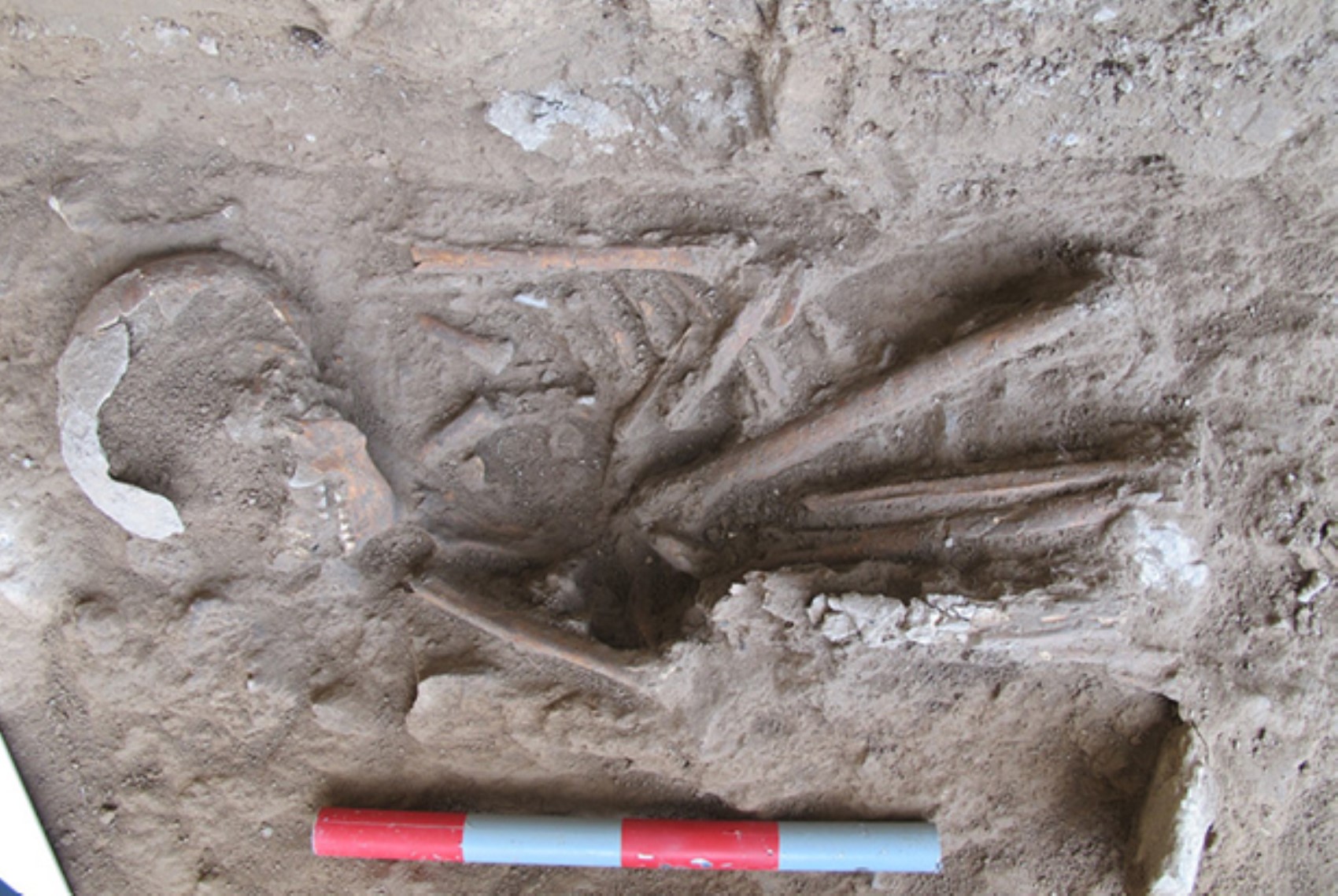
(First Homo sapiens bones removed from graves found in Muğla-Girmeler, dated to 14 thousand years ago)
***
Findings unearthed in research conducted in İzmir-Karaburun between 2016-2020, and rescue excavations carried out in 2020 in Ballık Cave on the steep slopes of Dikili Karadağ facing the island of Lesbos, are adding new pages to the history of Western Anatolia.
It is reported that traces found in localities called Çakmacık and Adaboğazı near Tepeboz village on the Karaburun peninsula indicate that Homo sapiens lived here in the period called the Upper Paleolithic, dated to 50-18/12 thousand years ago.
This period is the time when the Homo neandertalensis lineage began to go extinct and Homo sapiens began to dominate the world.
What was found in Çakmacık are large tools that function as spearheads, knives, or scrapers, which we call blades, along with fine stone flake production, and the core stones from which they were made.
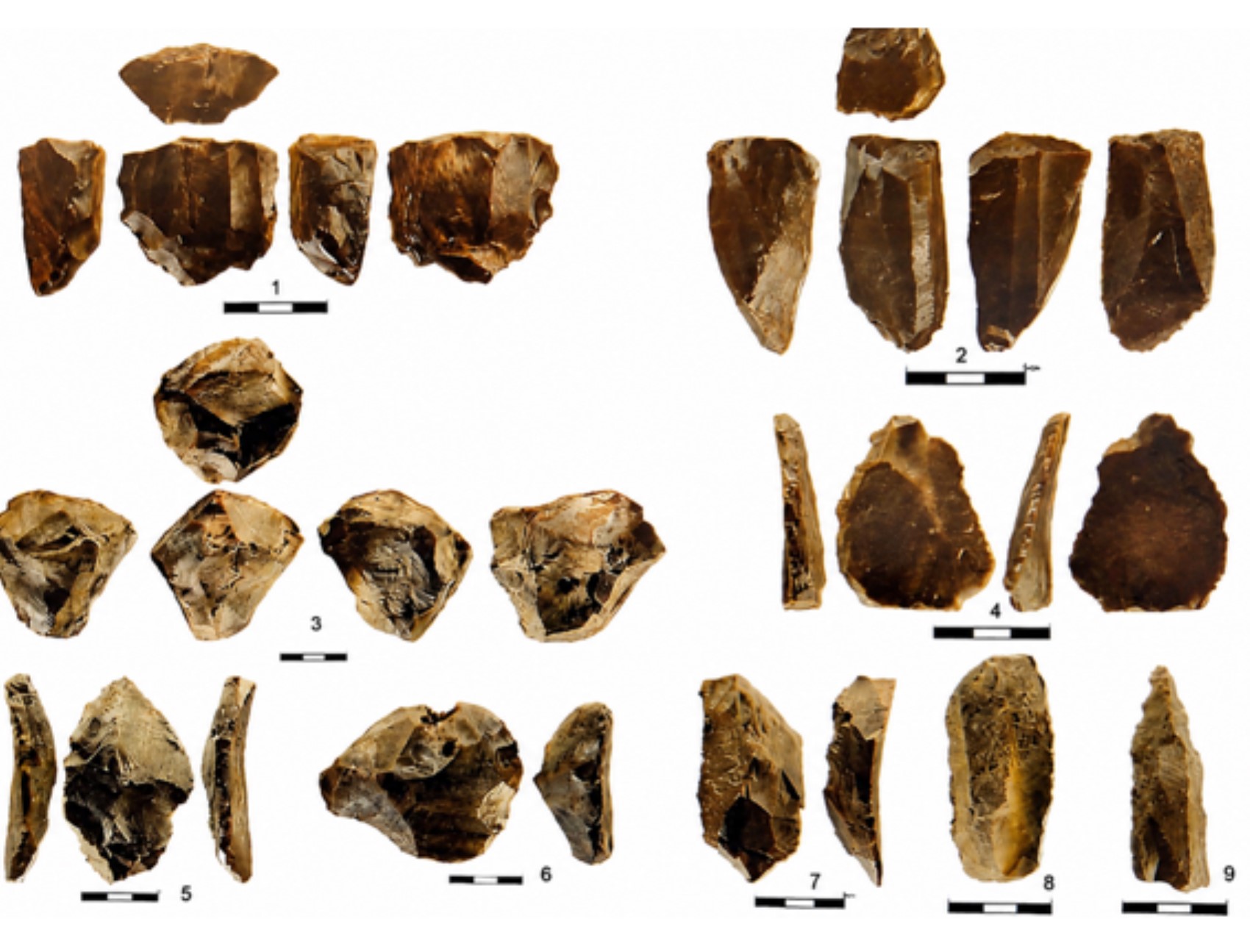
(Chipped stone tools made by the first İzmir residents in İzmir-Karaburun-Çakmacık)
In that period, with the technology developed by Homo sapiens, the production and use of fine blades, bone needles, bows, and arrows had become widespread, and this technique was specific to Anatolia.
It is proof of the presence of Homo sapiens.
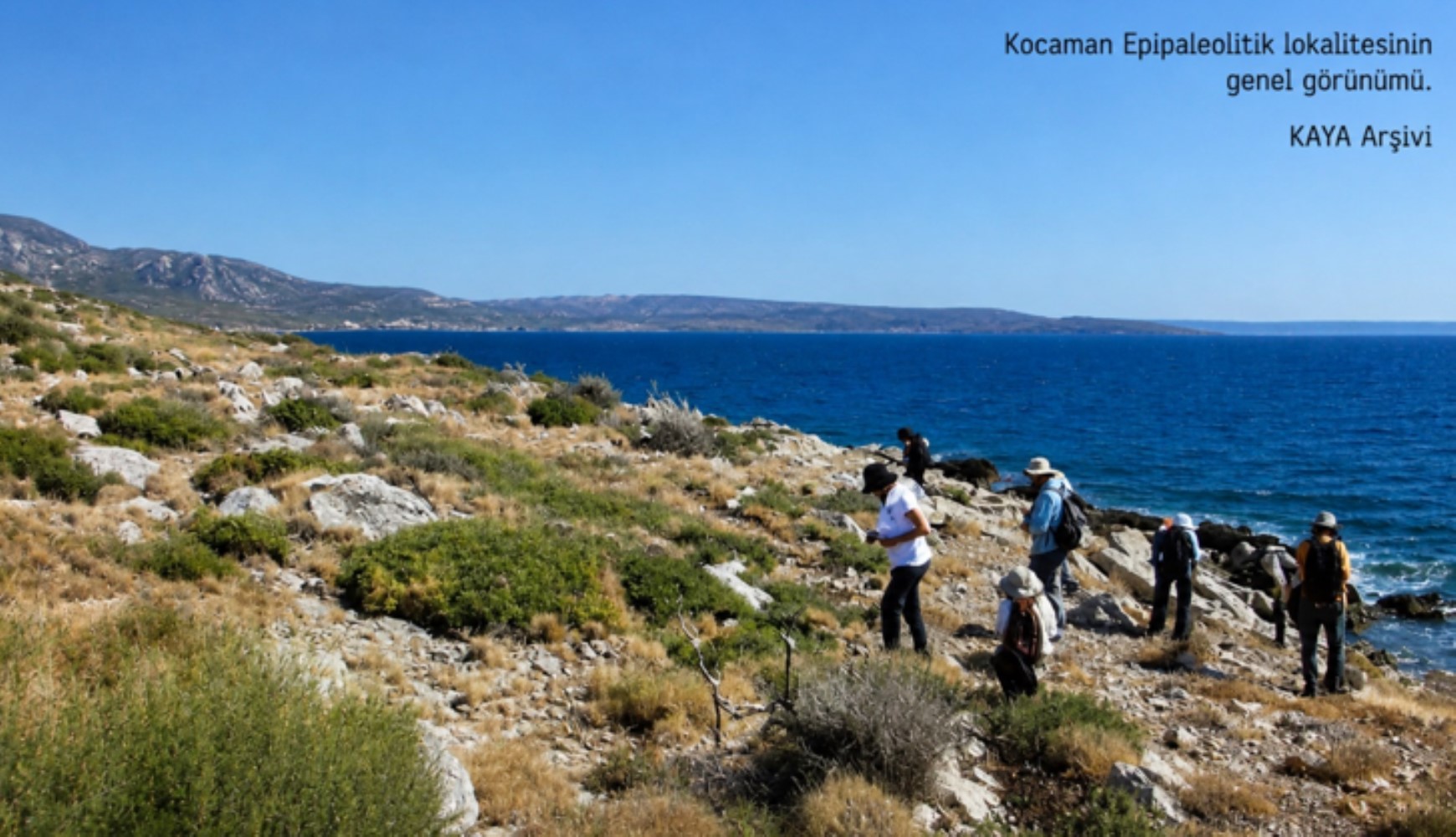
(Research conducted in places where the first İzmir residents lived in İzmir-Karaburun-Kocaman)
In 2016, many tools collected in a locality called Kocaman, found on a slope parallel to the existing coastal area in the southeastern part of the Karaburun Peninsula, show that hunter-gatherer human (Homo sapiens) groups lived in this region and produced these tools at the end of the Last Ice Age (11 thousand-9 thousand years ago).
These tools are small, geometrically shaped chipped stone tools called “microliths,” produced to be used as arrowheads, sickle teeth, etc.
They are suitable for the climate and game animal species that changed with the end of the Last Ice Age.
It is now understood that the first humans existed in the region with a hunter-gatherer lifestyle. (cilingiroglu_2025_izmirdergisi.pdf)
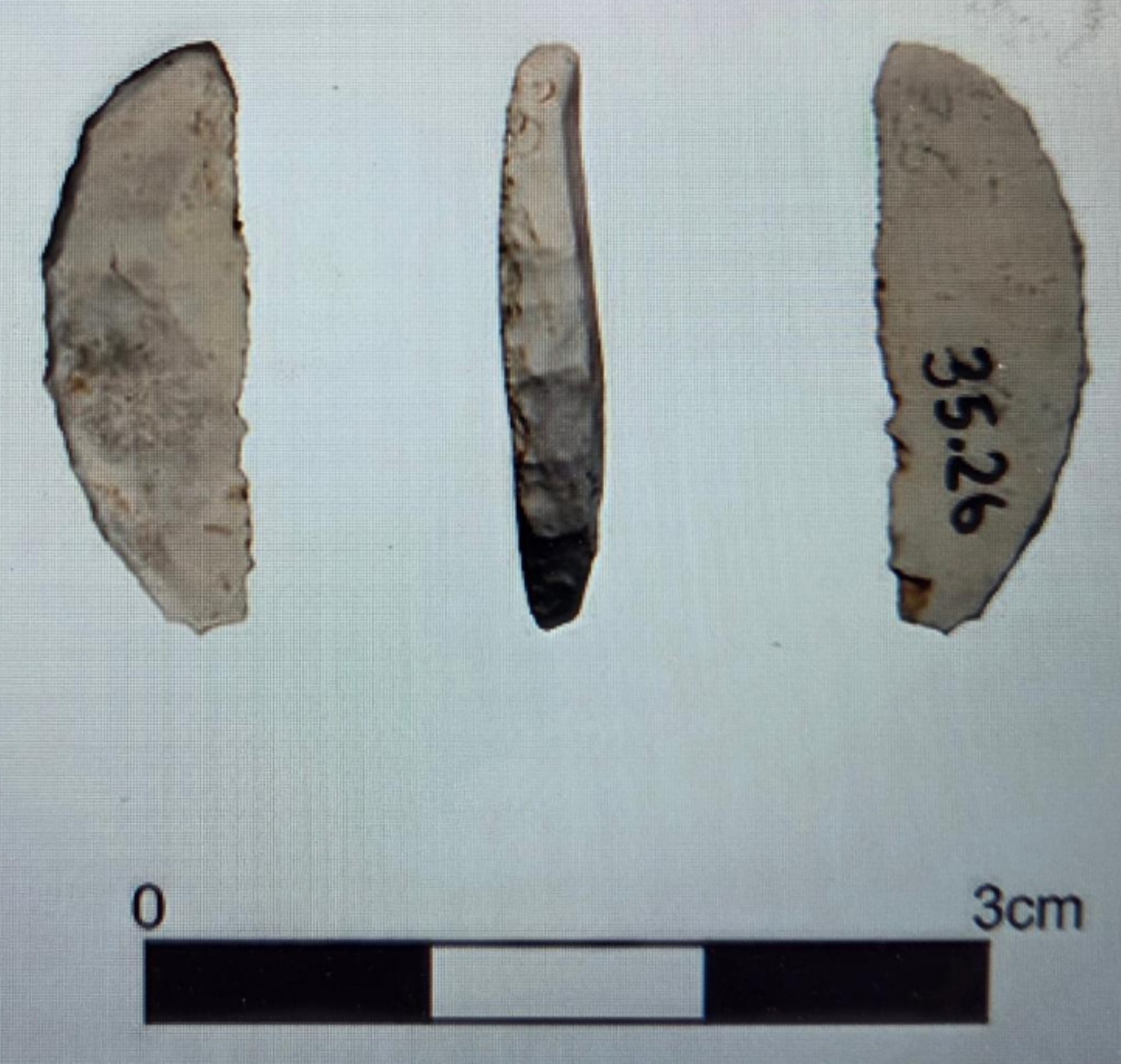
(Microlith tools made by the first İzmir residents in İzmir-Karaburun-Kocaman)
***
Recent research shows that the first Homo sapiens İzmir residents also existed around Dikili-Ballık Cave.
It has been determined that the stone tools and bones found in excavations and research conducted under the leadership of Prof. Dr. Harun Taşkıran, a faculty member of the Department of Archaeology at Ankara University Faculty of Languages, History and Geography, and Bergama Museum Director Nilgün Ustura, with the participation of the German AE, date back to 14 thousand years ago through radiocarbon dating.
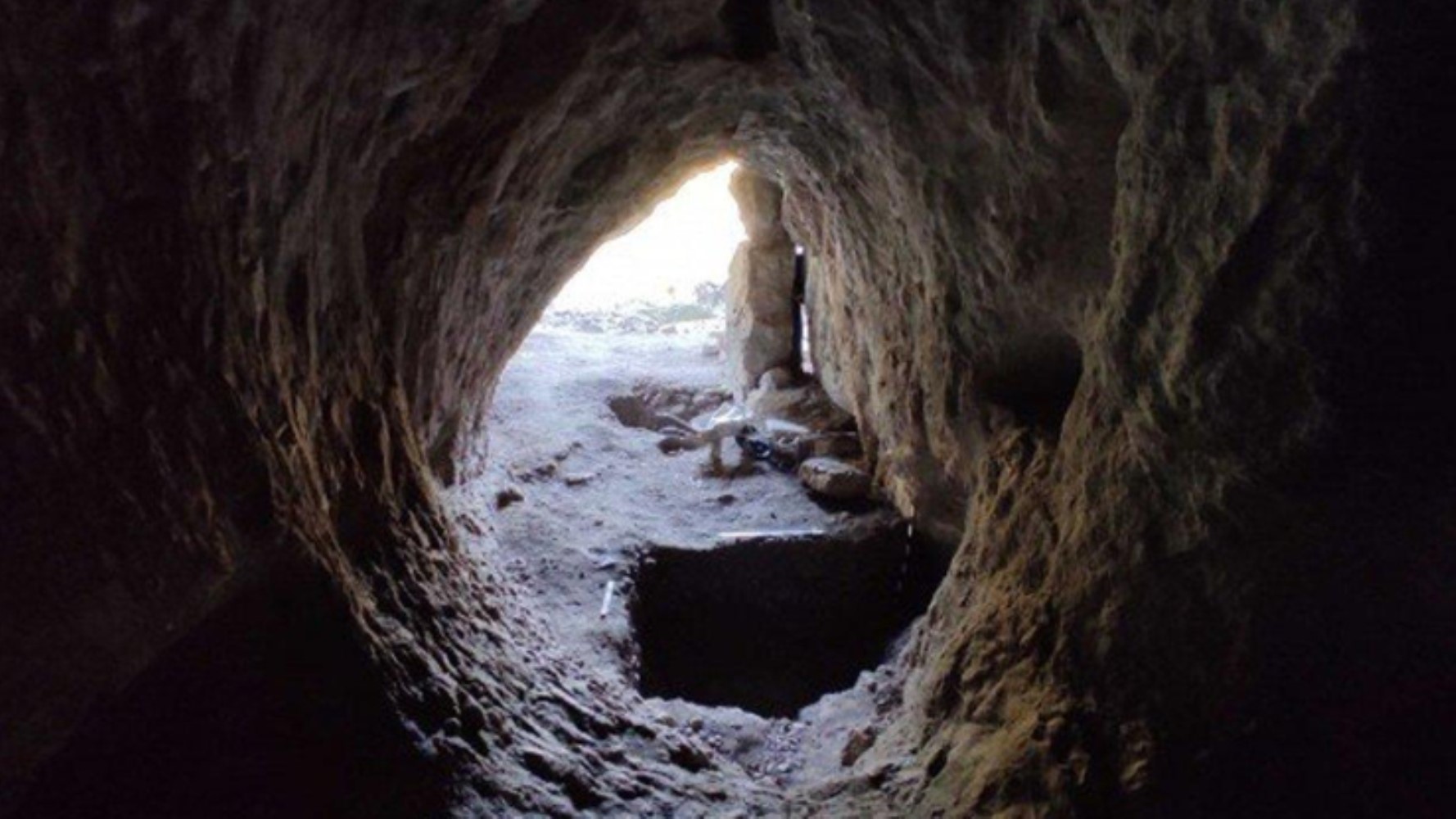
(İzmir-Dikili Ballık Cave. One of the places where the first İzmir Homo sapiens lived. https://arkeofili.com/izmirdeki-bir-magarada-14-000-yillik-tas-aletler-bulundu)
Among the findings, tools made of flint, flint cores, and chipping waste were recovered.
Researchers think that Ballık Cave was a short-term camp site used seasonally in the late Middle Stone Age, close to the transition to the Neolithic, rather than a permanent settlement.
Surface findings belonging to the Paleolithic (Old Stone) Age on the Aegean coast had been known for a long time.
However, these findings offer very reliable evidence, such as bone remains, showing the transition from the Paleolithic to the Neolithic (New Stone Age-Agricultural Revolution).
This is where the importance of Ballık Cave and the Karaburun findings emerges. These discoveries add a new page to the prehistory of Western Anatolia.
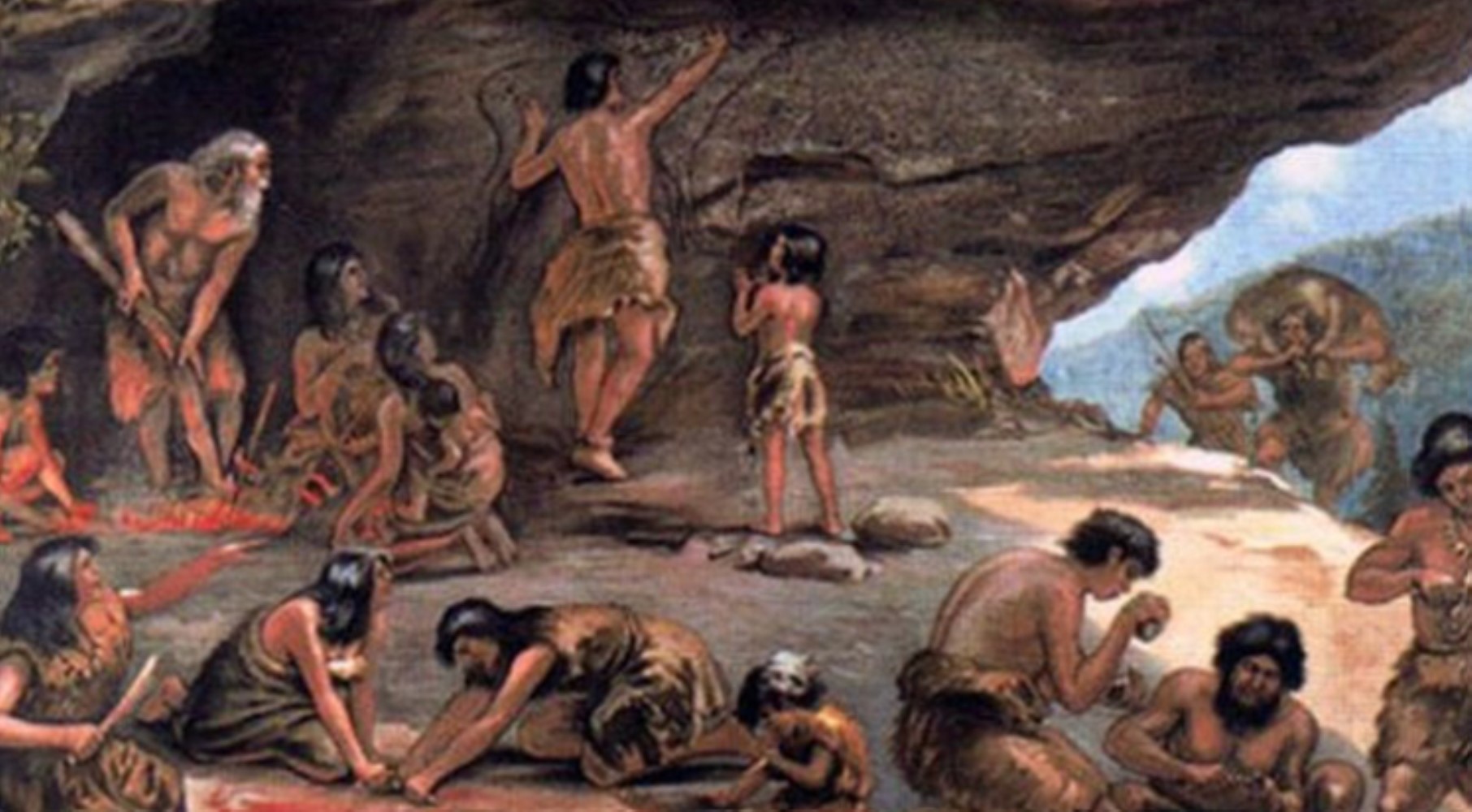
(A reconstruction picture of a Homo sapiens/Wise human group that lived 50-12 thousand years ago)
Approximately 14 thousand years ago, only Homo sapiens lived in Anatolia.
Neanderthals had long since withdrawn from the stage of history. Homo erectus and Homo heidelbergensis are also gone.
In other words, those who came and went to Ballık Cave, those who wandered the windy Karaburun slopes, are now Homo sapiens. That is, it is us.
Hunters and gatherers... Traveler humans who changed places according to the seasons...
Moreover, according to researcher Harun Taşkıran, Ballık Cave has the distinction of being the first important finding site unearthed in the Aegean Region in a stratigraphic (science of layering) context belonging to the Paleolithic Age.
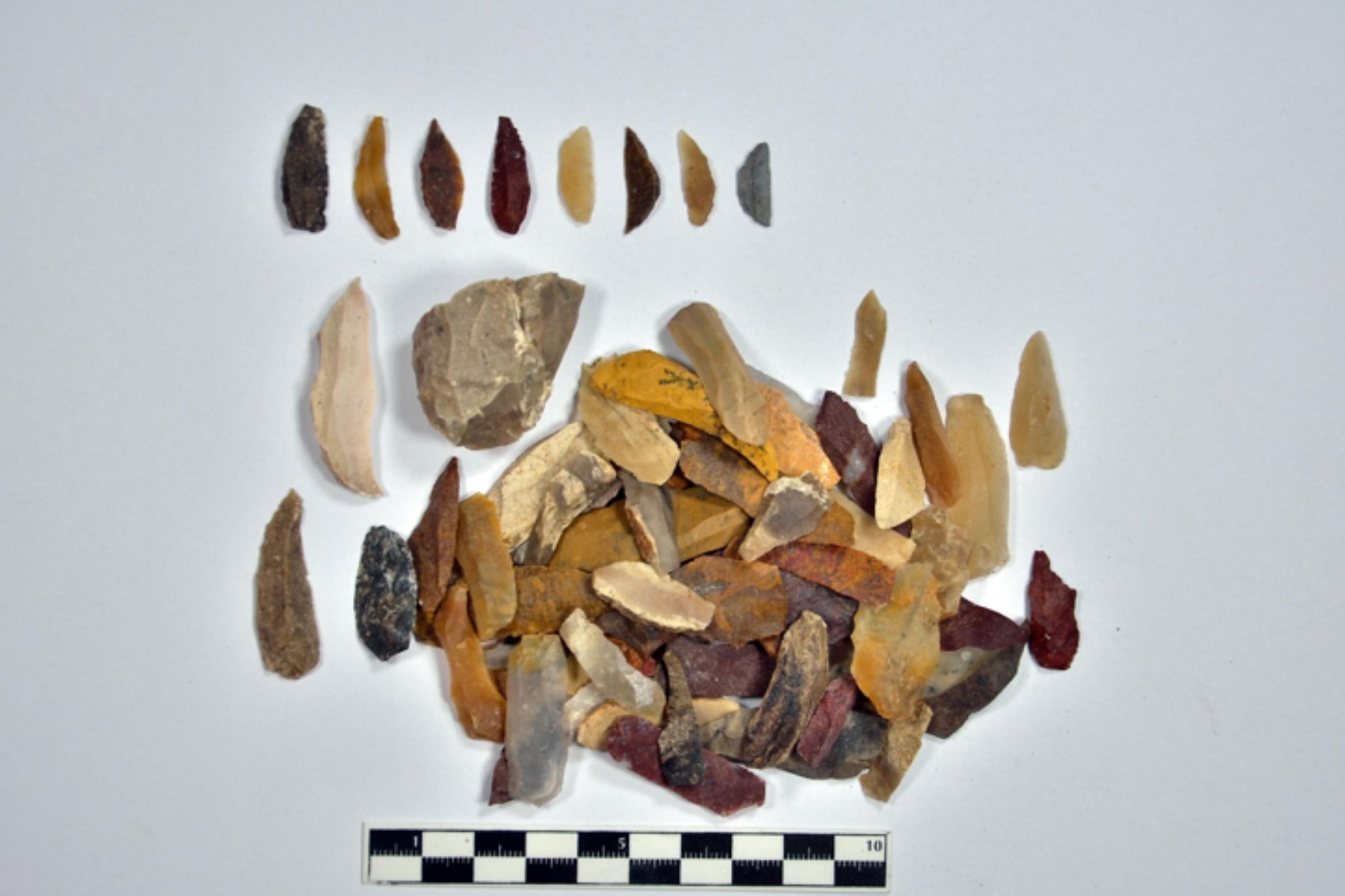
(Tools made and used by the first İzmir residents found in Dikili Ballık Cave. https://arkeofili.com/izmirdeki-bir-magarada-14-000-yillik-tas-aletler-bulundu)
Dikili-Ballık Cave completes one of the missing links in İzmir's prehistoric map.
The human journey, which started with Homo erectus and continued with Homo heidelbergensis and Neanderthals, reaches Homo sapiens in İzmir-Karaburun and Dikili for now.
Western Anatolia hosted different human species for at least 1 million years.
The timelines of these species overlap in places. Therefore, it seems possible that they shared the same geography in some periods.
However, we do not yet have direct evidence to confirm this with certainty. Perhaps new excavations will add new sentences to these silent pages of human history.
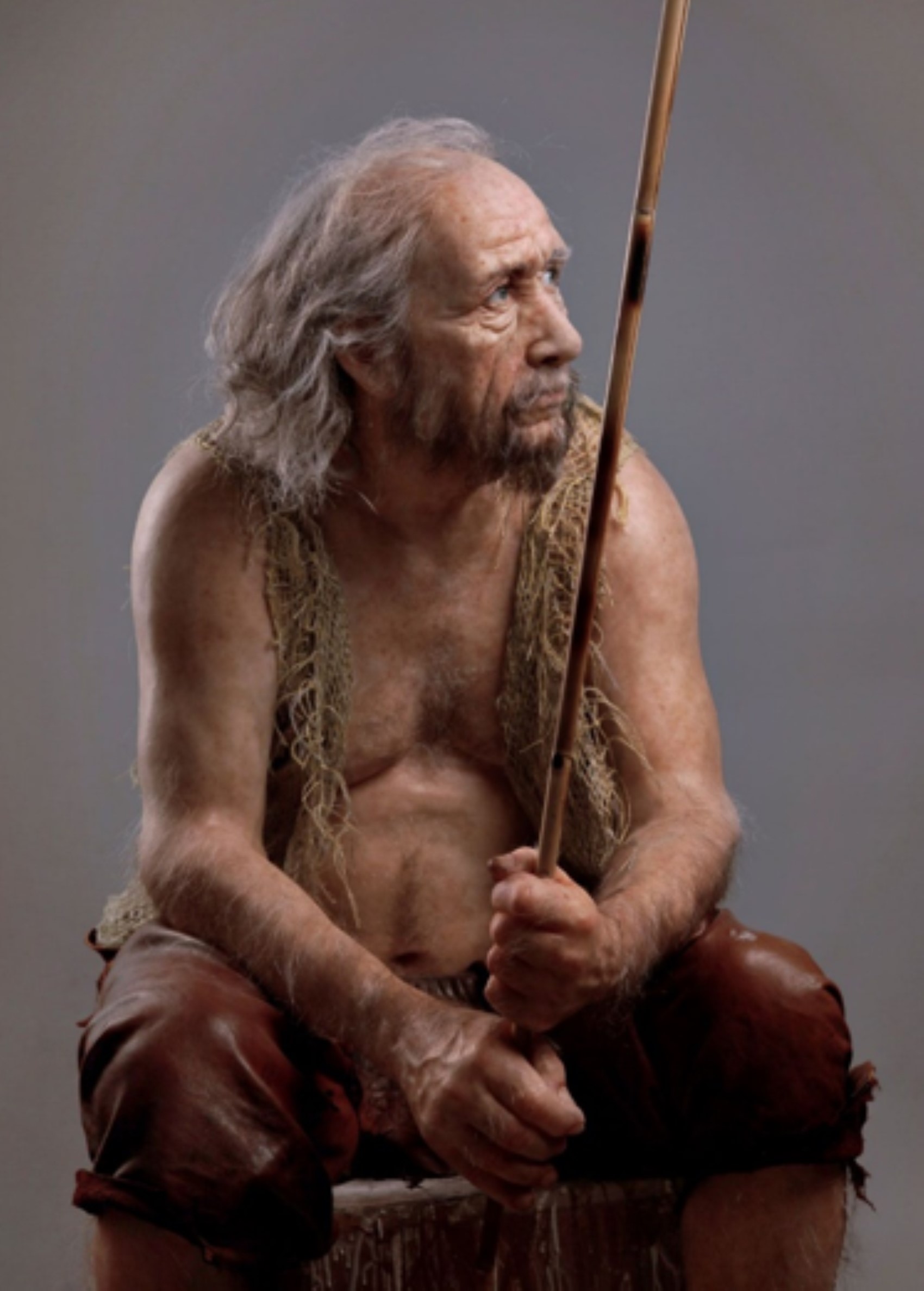
(A reconstruction of a Homo sapiens (called Cro-Magnon) who lived in Europe during the last ice age)
***
A farmer in Şanlıurfa encountered a stone that got caught in his plow while plowing his field. Late 1980s...
The stone did not look ordinary. He took it to the museum. It waited in the warehouse for years; no one could understand what it was.
In 1994, German archaeologist Klaus Schmidt saw that stone in the warehouse. He had encountered similar ones in another mound where he had previously excavated. He recognized it. He went to the field. He immediately understood what was lying under the soil.
Its name is Göbeklitepe.
Excavations began.
A world that no one expected emerged from under the soil.
Giant T-shaped stones weighing 40-60 tons... Wild boars, foxes, scorpions, snakes on them... Monumental structures arranged in circles...
And the date is surprising:
Approximately 10,000 B.C.
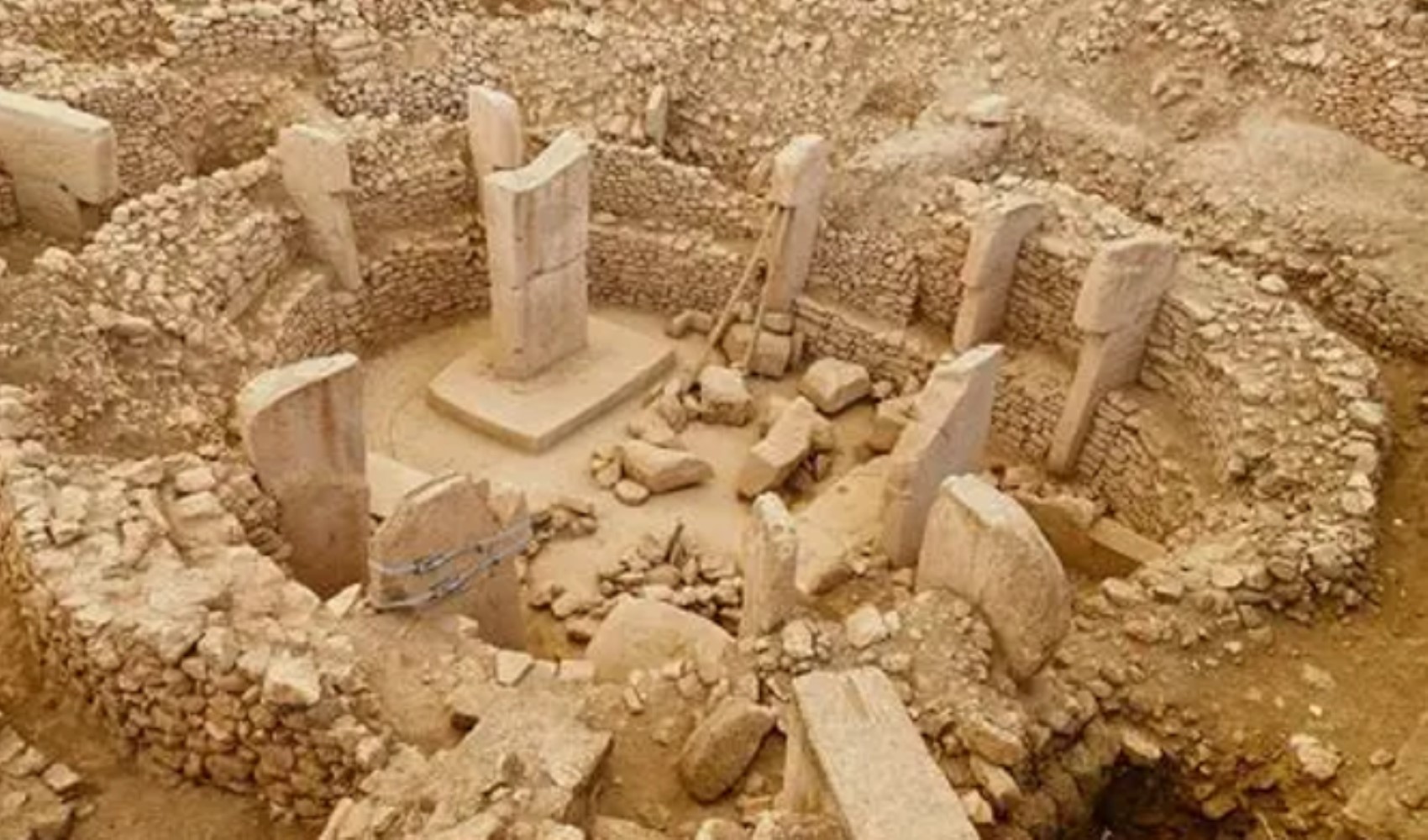
(What Homo sapiens built in Urfa-Göbeklitepe)
Agriculture has not yet begun. There is no settled life yet.
So how did people cut such heavy stones, transport them for kilometers, and erect them?
For this, hundreds of people had to work together and in coordination for a long time.
Yet, in the same centuries, the people in the İzmir-Dikili-Ballık Cave were using the cave for a short time and leaving. They were hunting in the İzmir-Karaburun mountains.
The same human...
The same intelligence...
The same hands...
But two completely different lifestyles...
Why?
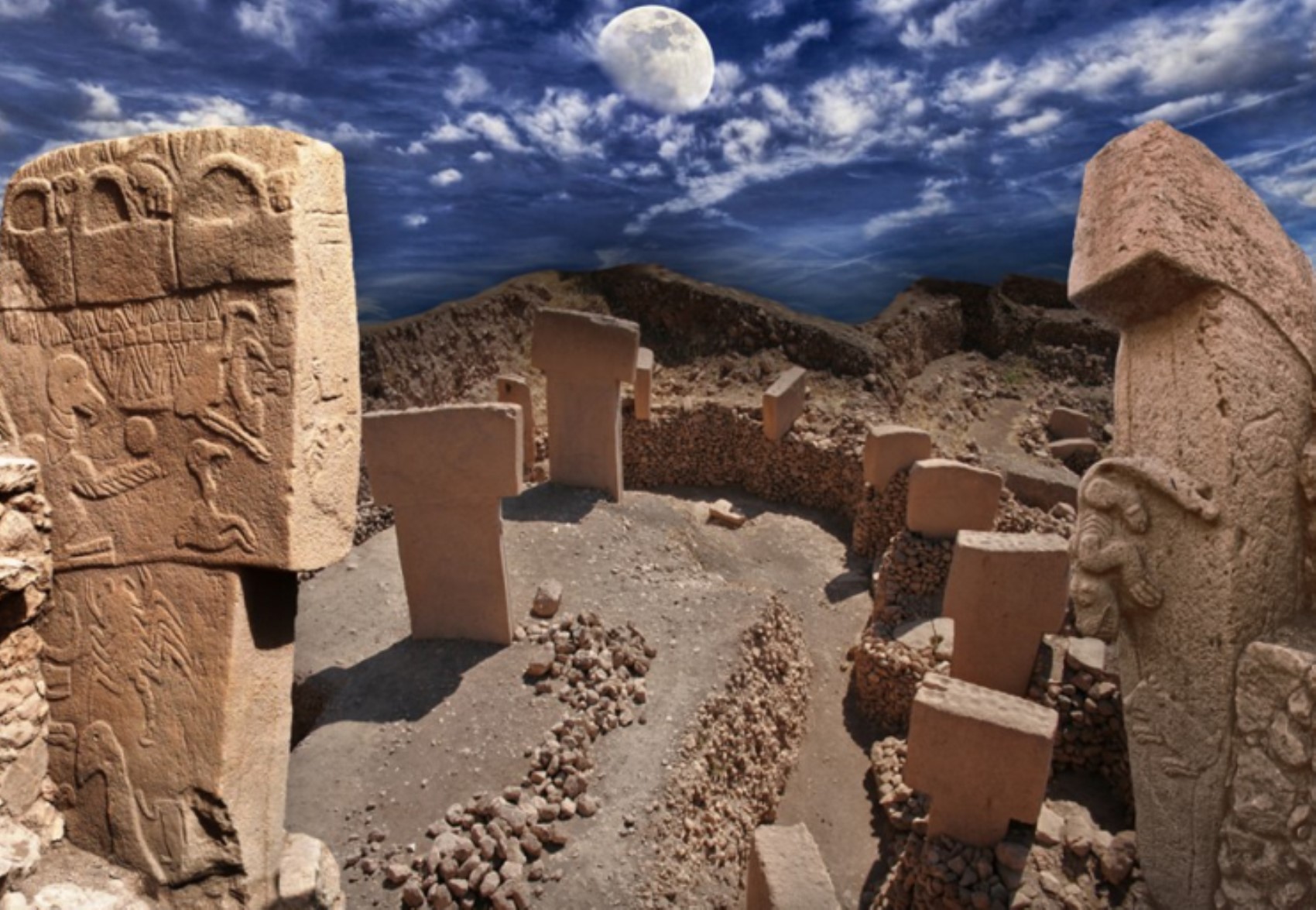
(Homo sapiens' Urfa-Göbeklitepe stones, who dealt with stones for hundreds of thousands of years)
***
Perhaps the name of the answer is geography.
The area around Şanlıurfa is a fertile region abundant in wild wheat, almonds, and game animals.
This richness allowed human groups to spend most of the year in the same place and build common structures.
The Western Anatolian coast offered a completely different world. People lived more mobile lives, changing places according to the seasons.
Perhaps while one was stacking stones, the other was following the sea and the hunt.
But Göbeklitepe was not alone either.
Today, Karahantepe, Sayburç, Sefertepe, Boncuklu Tarla, and many other settlements are being unearthed around it.
Now, this region is seen as a large cultural area called the "Stone Hills."
It is understood that not just a single group was coming here.
Different human groups met here at certain times, held ceremonies together, shared knowledge, and perhaps established a common world of belief.
Perhaps there were reasons we do not yet know!
Girmeler Cave in Muğla tells another story.
It is almost the same age as Ballık...
It dates back to approximately 12-14 thousand years ago.
There are no monumental structures there.
But there is something else:
Continuity.
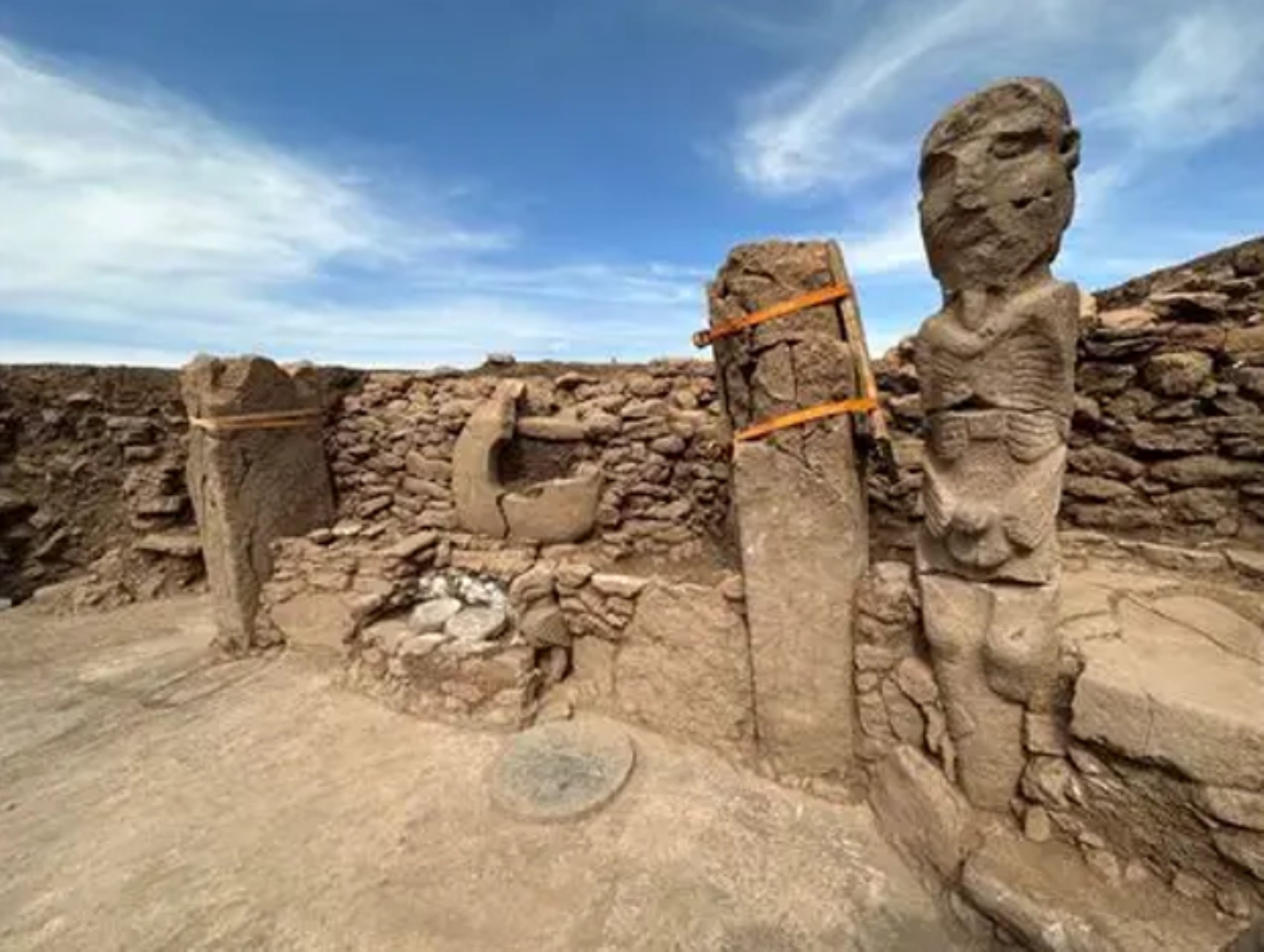
(Homo sapiens statues in Şanlıurfa-Anatolia)
People return to the same cave not just once, but again and again for thousands of years.
From the Neolithic (Stone Age) to the Chalcolithic (Copper Age), from the Hellenistic Period to the Roman Age...
Three places...
Three different lifestyles...
Monuments rise in Göbeklitepe.
People stay seasonally in Ballık.
In Girmeler, they turn to agriculture, and now they have graves.
The same species...
The same era...
But three different paths...
Today, most of the Aegean coast is under the sea.
After the last ice age, the sea level rose; the coasts changed.
Perhaps Western Anatolia's own Göbeklitepe is lying under the waves today.
Perhaps it was never built.
Perhaps it has not been found yet.
Who knows?
Perhaps history is the story not only of humans but also of the geography they live in.
The same Homo sapiens...
The same intelligence...
The same hands...
But one built Göbeklitepe.
One stayed seasonally in Ballık Cave.
One turned to a change in lifestyle thousands of years later in Girmeler.
The human was the same; what was different were the opportunities offered by the environment they lived in.
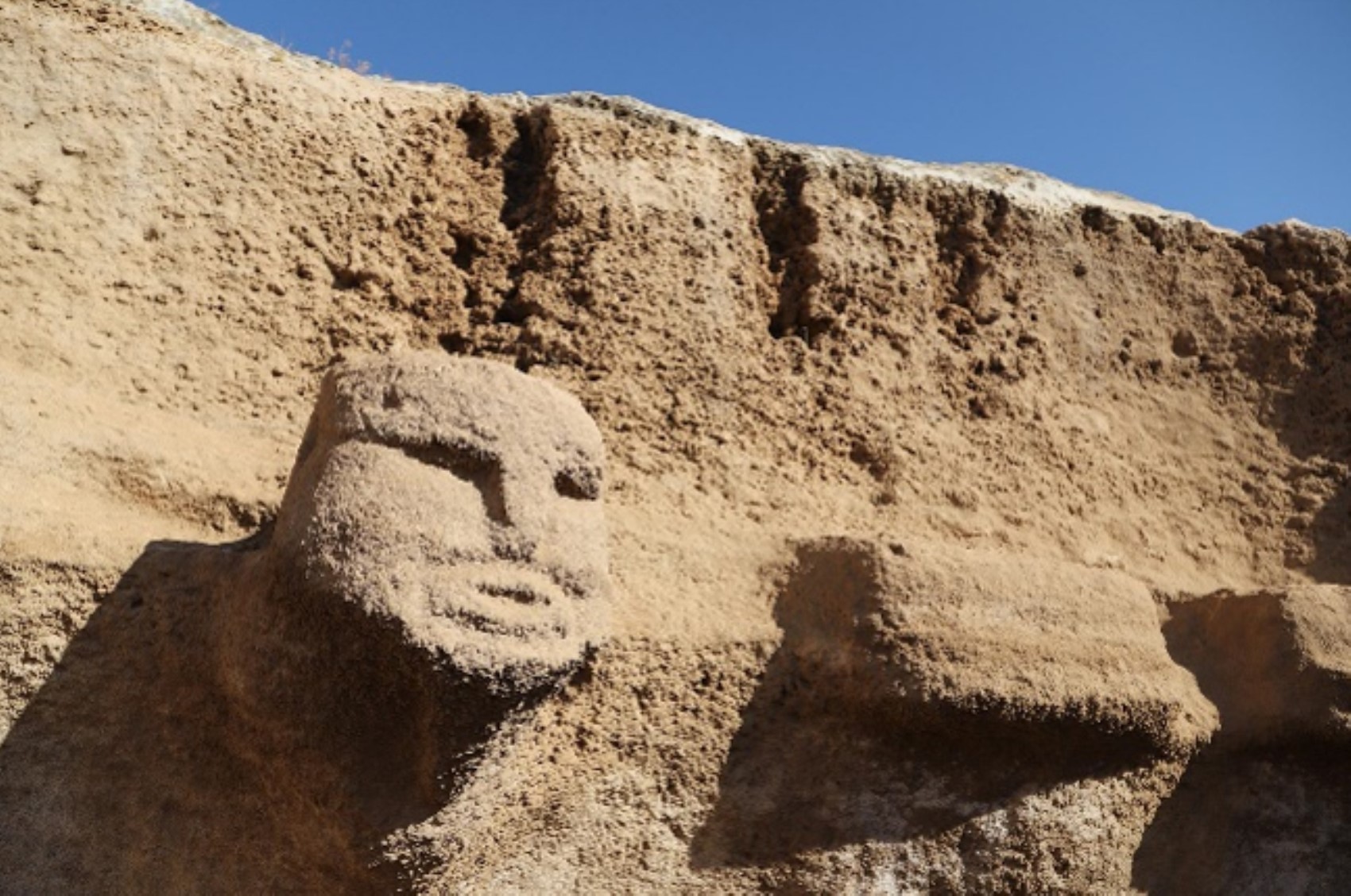
(The head of a Homo sapiens in Şanlıurfa-Anatolia)
***
After approximately 6500 B.C., a new era began around İzmir.
Anatolia's first farmer Homo sapiens groups established the first villages in Yeşilova, Ulucak, and the surrounding area.
The hunter-gatherer life that lasted for millions of years slowly left its place to agriculture and animal husbandry.
Humans were no longer content with only what nature offered; they were working the land, domesticating animals, and beginning to make the place they lived their home.
And that is how the road to civilization began.
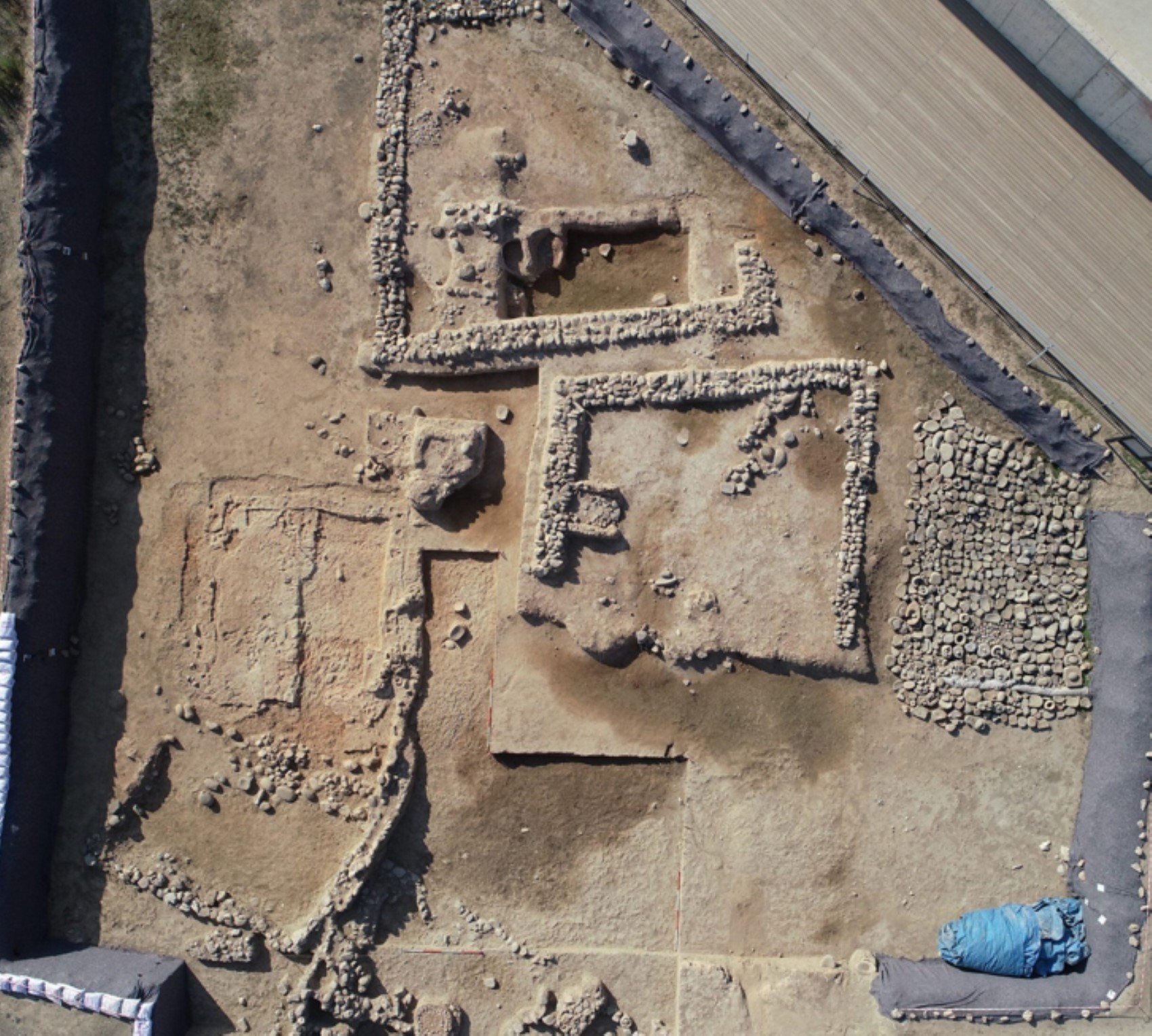
(When Homo sapiens arrived in İzmir-Yeşilova, they were already building houses)
Western Anatolia, İzmir, and its surroundings are also a stop on this road...
According to our current knowledge, the traces of the first humans or humanoids to reach the İzmir region appear 300 thousand years ago in Karaburun and 300-500 thousand years ago in Urla.
Then, approximately 12-14 thousand years ago, we see the footprints of Homo sapiens in Karaburun and Dikili.
Approximately 8,500 years ago, settled life begins in Bornova-Yeşilova.
After thousands of years, humans left their permanent marks in old Smyrna in Bayraklı approximately 5 thousand years ago.
2500 years ago, they moved to the skirts of Kadifekale, where modern İzmir is located today.
From where to where…
Thus, the long walk that started in the savanna turned into the story of a civilization that built cities on the Aegean coast.
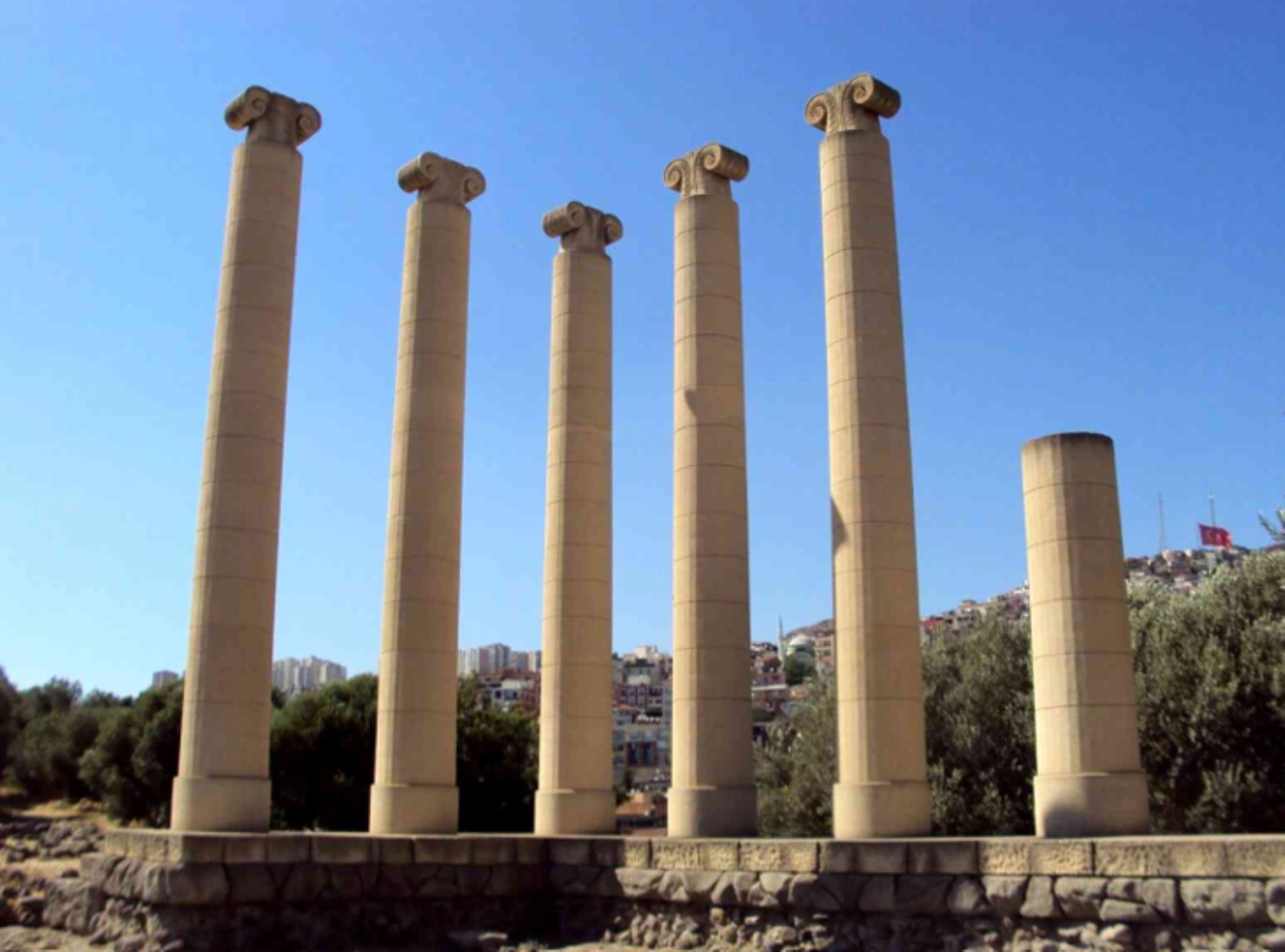
(First Smyrna-Tepekule-Bayraklı)
***
The world kept turning…
Humans walked…
Walked, walked, walked…
And finally, Homo sapiens reached these days.
That first human who stood up on the African plains millions of years ago did not know where they were going.
They did not know that one day their feet would step on Anatolian soil, they would walk on the Aegean coast, their hands would chip these stones, their eyes would see this turquoise sea.
They would lean against Çatalkaya in İzmir…
But they walked.
Because they had no other choice.
Because evolution was not a story of superiority; it was a story of the struggle for survival.
Now we are here...

(Today. İzmir-July-2026. Photo: S.Taşkın)
The same hands…
The same eyes…
The same curiosity…
Perhaps we still carry the trace of that first step.
While we are busy with being a property owner, a landlord, we are actually living in the last link of that great walk that started millions of years ago.
And we are still walking.
We still don't know exactly where we are going.
But this time, we know where we came from.
Perhaps this is the greatest journey of humanity.
Not to forget where you came from while looking for where you are going...
Main Sources Used
• Chris Stringer – The Origin of Our Species
• Ian Tattersall – Masters of the Planet
• Yuval Noah Harari – Sapiens
• Richard Leakey – The Origin of Humankind
• Jean-Jacques Hublin's studies on Homo sapiens
• Max Planck Institute for Evolutionary Anthropology publications
• Relevant articles published in Nature, Science, and PNAS journals
• Smithsonian Institution Human Origins Program
• Paleoanthropology and archaeology studies published in Turkey
Sefa Taşkın
02.08.2026
Dikili/İzmir
Would you like to get notifications about new developments and save news?
- NotificationsNew developments and breaking news
- SaveNews is stored in the app
Most Read

Murat Ağırel’s police statement has been revealed

Video response to Kim Jong-un claims

Azerbaijan issues arrest warrants in absentia for 7 people living in Turkey

The Orionid meteor shower will be visible from Turkey!

The penalty for Ronaldo, who left the national team camp, has been announced

Fatoş Seğmen reveals the cause of her daughter's death

Injury shock at Liverpool: He may miss the Fenerbahçe match

Latest status in the race between AKP and YENİ Party revealed

Who authorized the concert held in a parking garage?

From brotherhood to a distant partnership...